Many bookshelves in Singapore homes release formaldehyde from engineered wood. Learn how to identify safer materials and choose a non-toxic bookshelf for your family.

If you are furnishing a nursery, setting up a children’s study corner, or simply refreshing your home, bookshelves probably feel like a straightforward purchase. Pick a size, pick a colour, done.
But here is something most furniture shoppers in Singapore do not think about: the bookshelf sitting in your child’s bedroom may be quietly releasing chemicals into the air they breathe every day.
This is not an exaggeration or a scare tactic. It is a well-documented material science issue, and understanding it can help you make a better-informed furniture decision for your family.
Formaldehyde is a volatile organic compound (VOC) commonly used in adhesives and resins that bind engineered wood products together. When furniture is made from particle board (also called chipboard) or MDF (medium-density fibreboard), formaldehyde-based resins are typically part of the manufacturing process. These two materials are by far the most common in mass-market flat-pack bookshelves, and they tend to contain the highest concentration of resin relative to actual wood content.
Once the furniture is in your home, these resins slowly release formaldehyde gas into the surrounding air. This process is known as off-gassing, and it can continue for months or even years after purchase.
You may have noticed this yourself. That “new furniture smell” when you unbox a flat-pack bookshelf? That is not the smell of fresh wood. It is largely the smell of chemical off-gassing.
Not all furniture carries the same risk profile. Bookshelves tend to be more problematic for a few reasons:
According to health guidelines, formaldehyde exposure affects people differently depending on age and health status. Infants, young children, pregnant women, older adults, and individuals with existing respiratory conditions such as asthma are generally more susceptible to the effects of indoor formaldehyde.
For families with young children, this is worth paying attention to. Kids breathe faster than adults relative to their body weight, meaning they take in proportionally more airborne chemicals in the same room. A bookshelf in a nursery or a child’s bedroom is not a short-term presence. It is something your child grows up alongside for years.
This does not mean every engineered wood bookshelf is dangerous. Formaldehyde emission levels vary widely depending on the grade of material, the type of resin used, and whether the surfaces are properly sealed. Some manufacturers use low-emission (E1 or E0 rated) boards that significantly reduce off-gassing. The issue is that budget furniture often does not specify these details clearly, leaving you to guess.
One of the biggest challenges for Singapore shoppers is that product descriptions are often vague. Here is a practical guide to reading between the lines.
Not all engineered wood is equal. The risk profile varies significantly depending on the type:
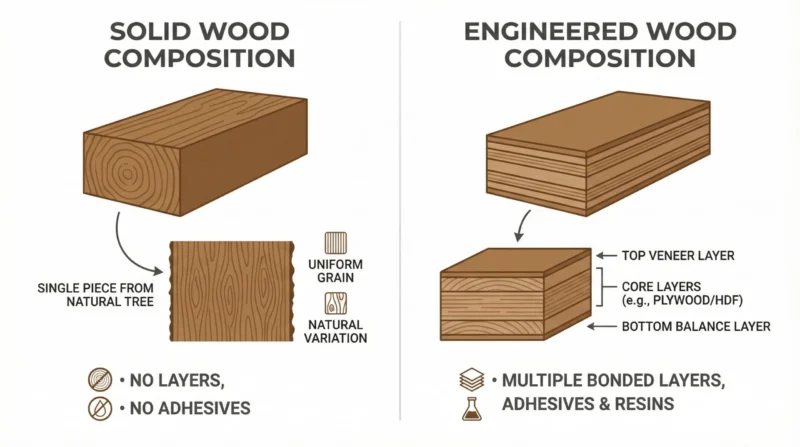
Think of it as a spectrum rather than a simple good-versus-bad split. At the higher-risk end, you have full particle board and MDF construction. In the middle, plywood offers a significant step up in both emission levels and durability. At the other end, solid wood uses no binding resins in the core material at all.
If a product listing simply says “wood” without specifying solid wood or a species, it is very likely engineered. Genuine solid wood furniture almost always names the species because it is a selling point.
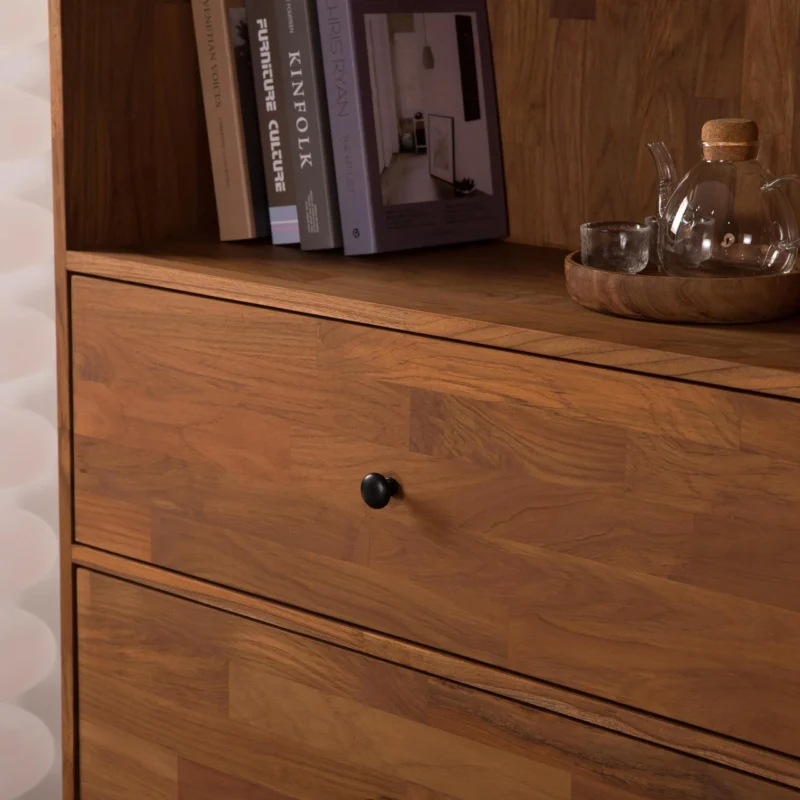
If you are shopping at a showroom, look at the exposed edges and shelf undersides. Solid wood shows consistent grain running through the material. Engineered wood shows a uniform cross-section of compressed particles or fibres, often with a thin laminate or veneer layer on top. The weight also differs noticeably: a solid wood shelf of the same dimensions will be heavier than an MDF equivalent.

The raw material is only half the story. The finish applied to the wood surface also matters.
Many mass-produced bookshelves use lacquers, varnishes, or paints that contain their own set of VOCs. These finishes seal the surface and can look appealing, but some continue to off-gas independently of the wood underneath.
Safer alternatives include water-based coatings and natural wood wax finishes. Natural wood wax penetrates the timber rather than sitting on top as a film, and it is typically free from formaldehyde, heavy metals, and harmful solvents. It is also food-safe in many formulations, which makes it a practical choice for furniture in homes with young children who inevitably touch, lean against, and sometimes mouth furniture surfaces.
When evaluating a bookshelf, ask the retailer specifically: what finish is used, and is it certified non-toxic? If they cannot answer clearly, that is useful information in itself.
Singapore’s year-round humidity (averaging 70% to 90%) adds another layer to the material safety discussion.
Particle board and MDF are particularly vulnerable to moisture absorption. When these materials take on ambient moisture, they can swell, warp, and degrade over time. As the material breaks down, the internal resin bonds can weaken, potentially increasing the rate of formaldehyde release. Plywood holds up considerably better than particle board in humid conditions, though it is still not as naturally resilient as solid timber.
Solid wood, particularly tropical-origin hardwoods like rubberwood and teak, has natural structures that handle humidity fluctuation most effectively. Kiln-dried solid wood that is properly finished with a moisture-resistant coating (such as natural wood wax) maintains its structural integrity across Singapore’s humidity cycles, including the constant shift between air-conditioned interiors and ambient tropical conditions.
This matters for longevity as well as safety. A particle board bookshelf that swells and sags within two years is not just a durability issue. It may also become a growing source of chemical emission as its internal structure deteriorates.

If you are shopping for a bookshelf with safety in mind, here are the key things to look for:
Material:
Finish:
Certifications:
Construction:
Safety features:
The honest reality is that solid wood bookshelves cost more than their MDF or particle board equivalents. A standard flat-pack bookcase from a mass retailer might start at $70 to $140, while a solid wood bookshelf typically ranges from $300 to $800+ depending on size, wood species, and configuration.
However, the cost comparison is not as straightforward as it appears. The cheaper bookshelf that sags, swells, or degrades within two to three years in Singapore’s humidity needs to be replaced. Many homeowners go through two or three budget bookshelves in the same period that a single solid wood unit continues to perform.
If you calculate cost per year of useful life, solid wood often works out comparable to or better than disposable alternatives. And the non-financial value of knowing your child’s furniture is built primarily from real timber with non-toxic finishes, rather than compressed resin-bound composites, is something each family weighs for themselves.

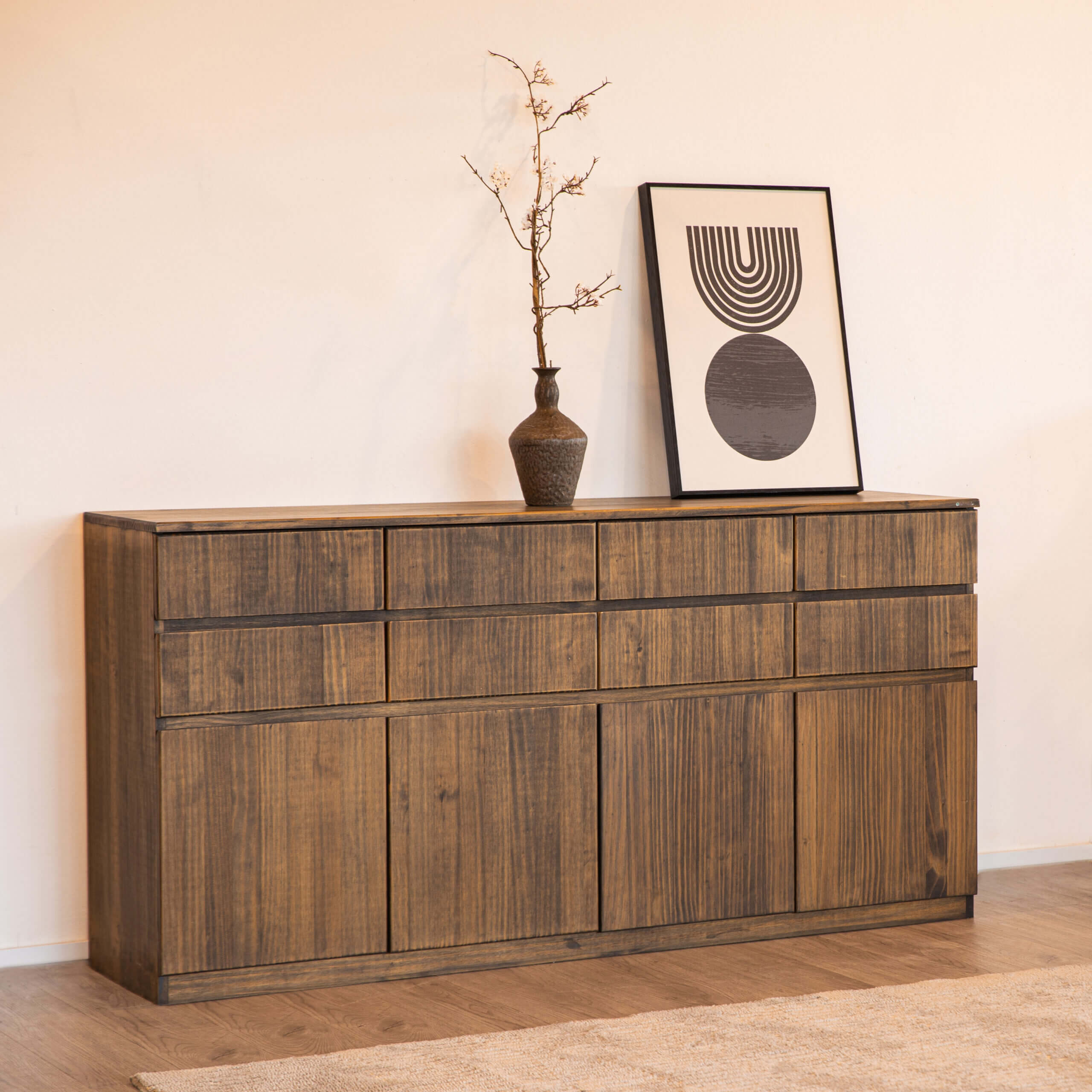
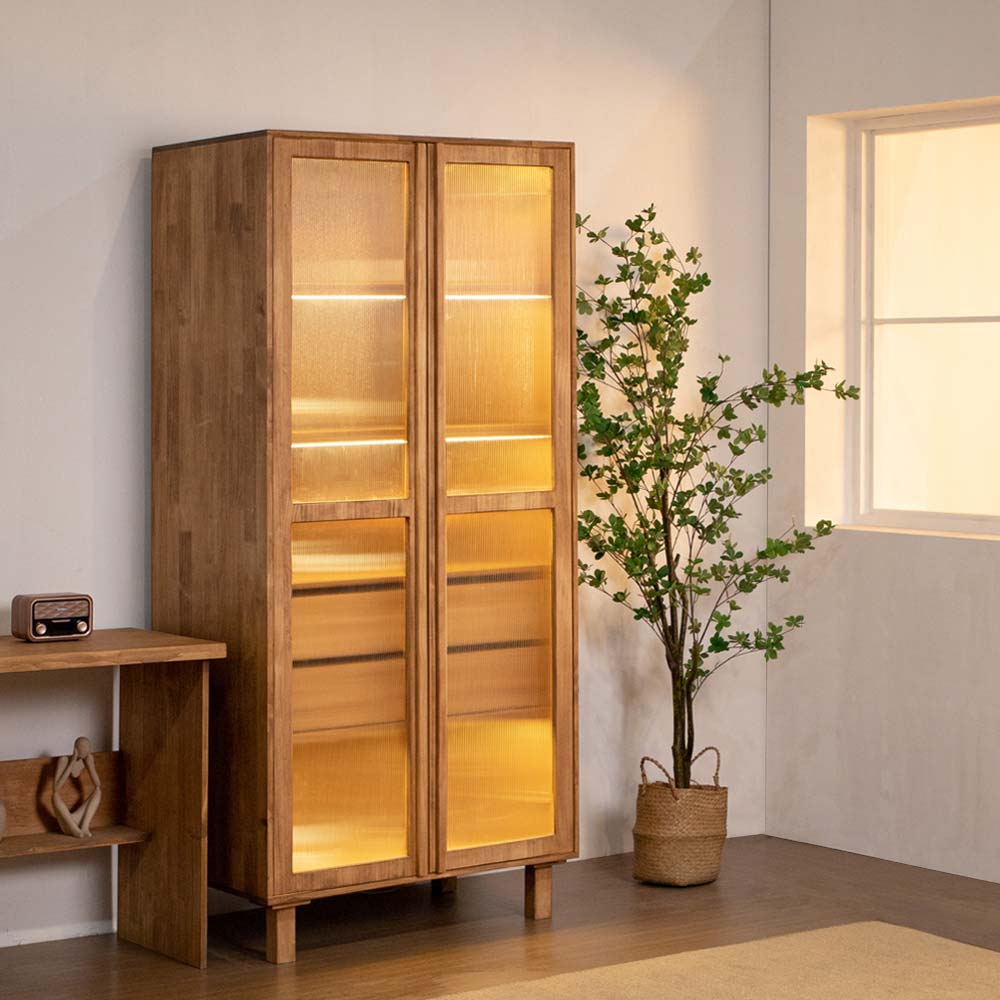
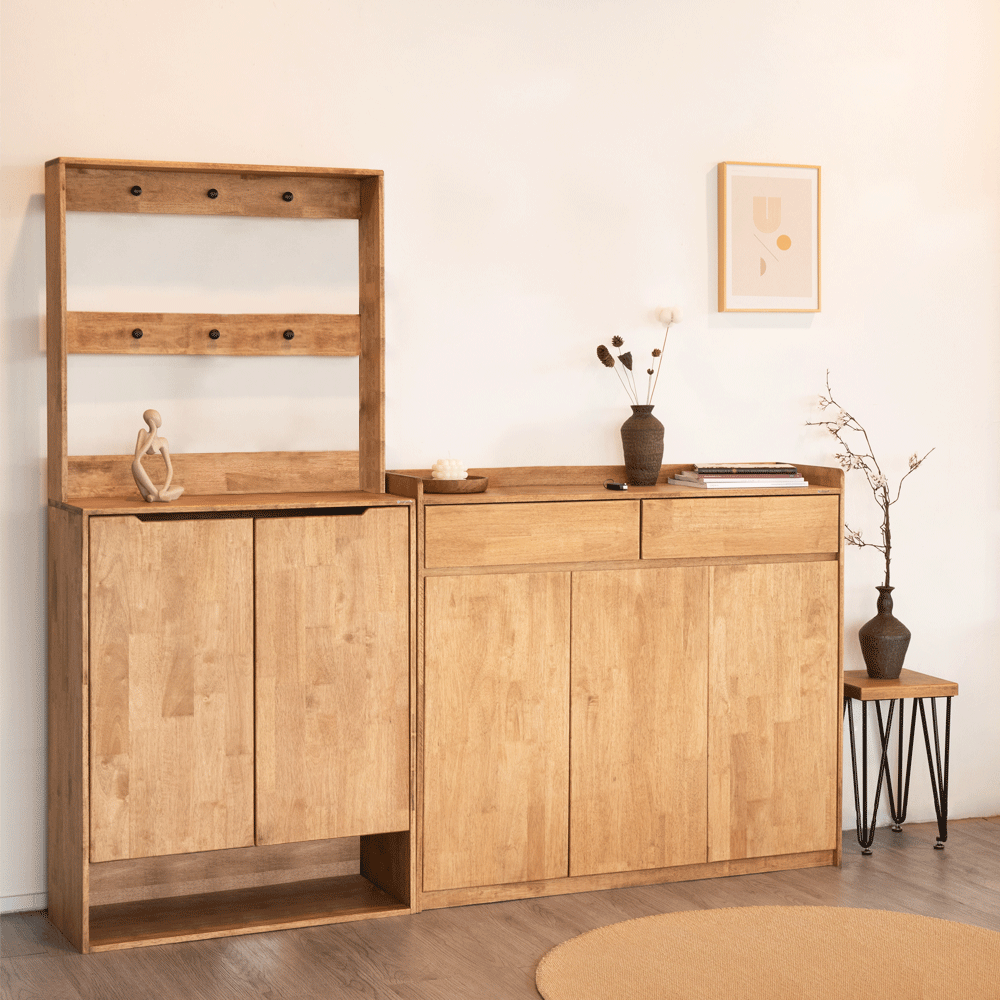
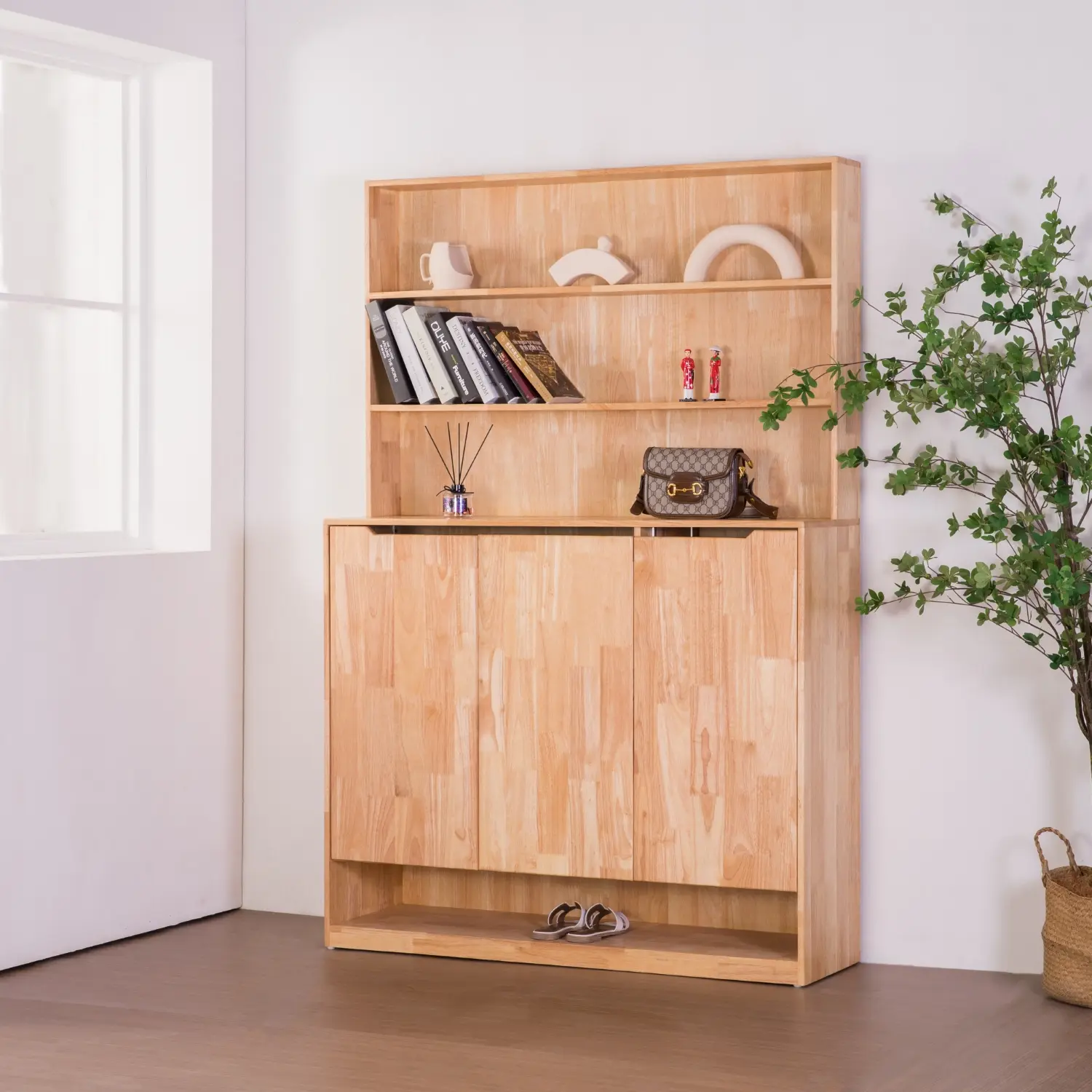
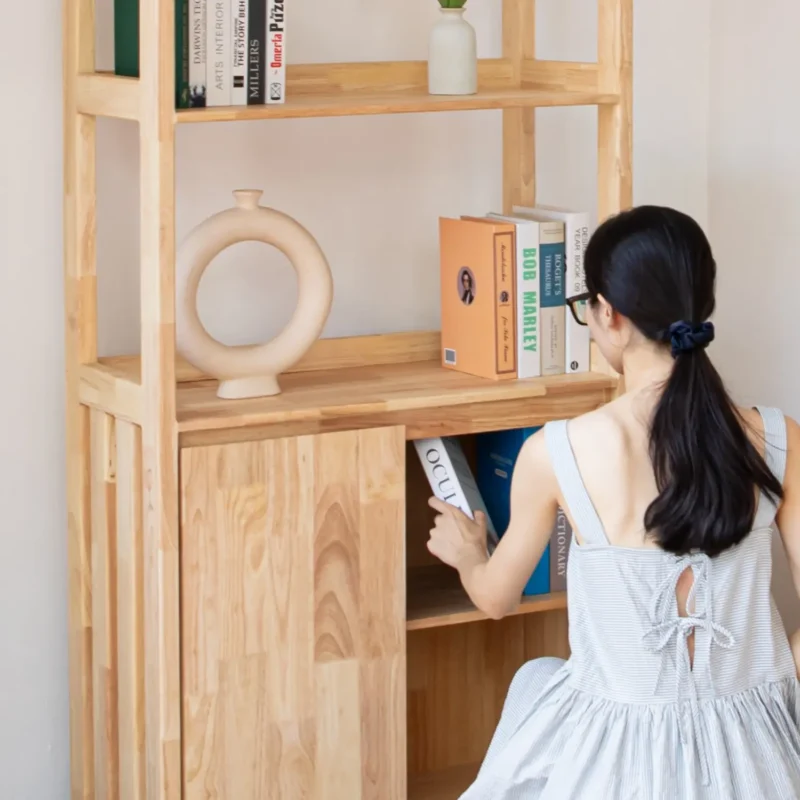
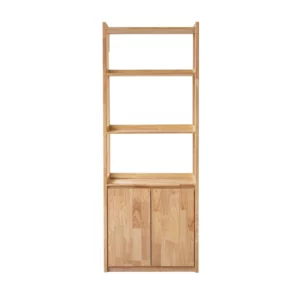
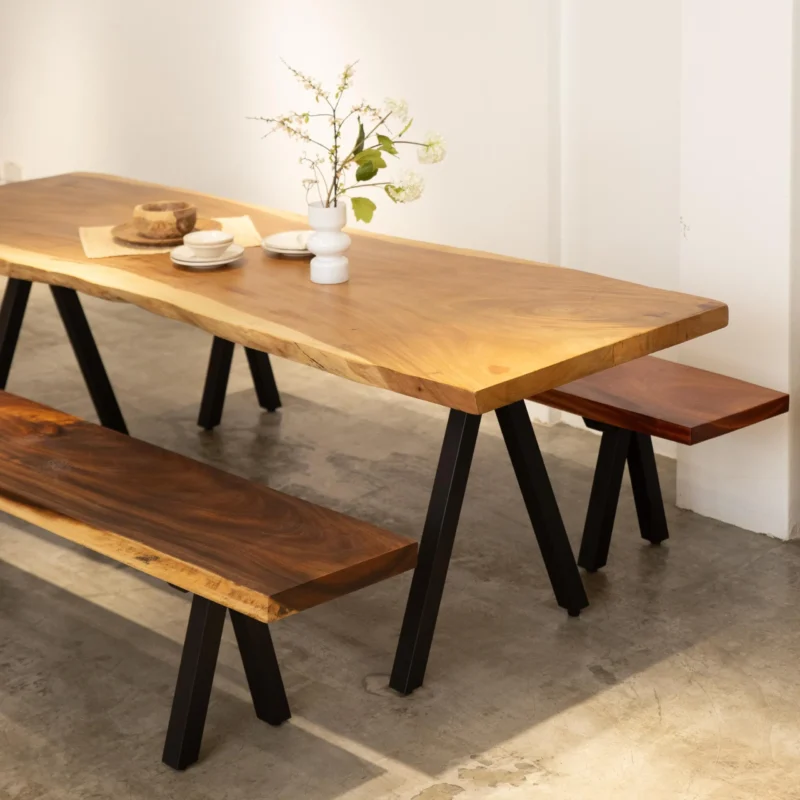
At Myseat.sg, our bookshelves are built with solid wood frames and shelves in your choice of rubberwood, pine, oak, teak, ash, cherry, or black walnut. The wood is FSC-certified, and every surface you see and touch is finished with a non-toxic natural wood wax that is formaldehyde-free and child-safe.
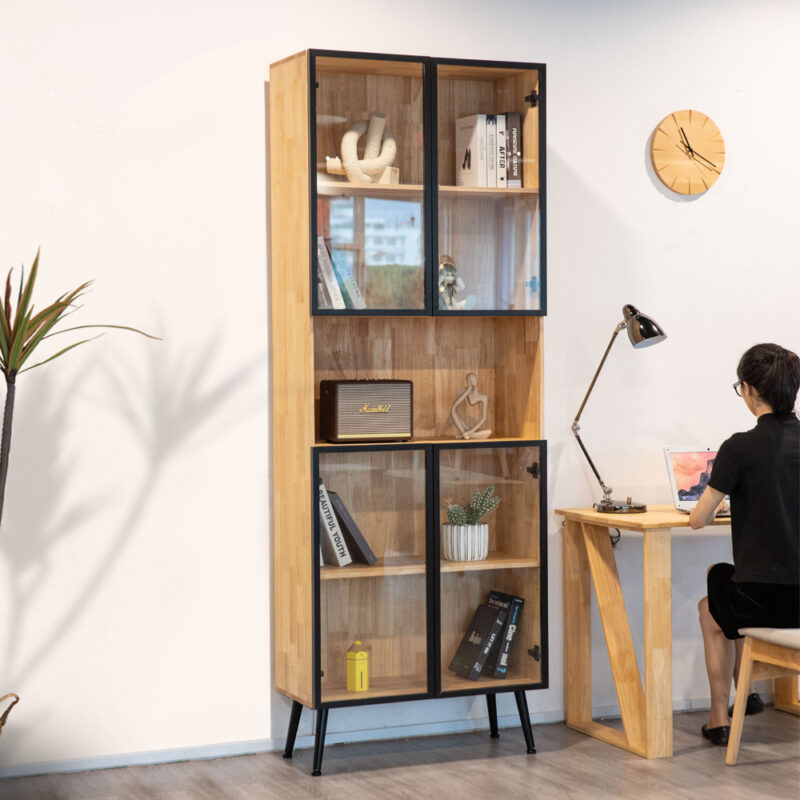
Because we manufacture locally in Singapore, we can also customise dimensions, shelf configurations (open shelves, glass doors, solid doors, drawers), and colour finishes to fit your specific room and needs. If your child’s study room has an awkward wall niche or a specific height constraint, custom sizing means you get a precise fit rather than a compromise.
Our bookshelves come with a 10-year warranty and free delivery with assembly, so you do not need to worry about wrestling a heavy solid wood unit up to your HDB floor on your own.
You are welcome to visit our showroom to see and feel the material in person. Our sales designers can walk you through wood options and finishes, and help you work out the right size and configuration for your space. If you prefer to browse first, our full bookshelf collection is available online with detailed specifications for each model.

Browse our full solid wood bookshelf collection at Myseat.sg and find the right fit for your home.