A pragmatic guide for Singapore parents choosing a long-term student desk. Learn why a 65cm-min height-adjustable solid wood desk offers safer ergonomics, cleaner air, and true lifespan value.

For parents in Singapore, furnishing a room for a Primary 1 student involves a difficult choice between two categories of furniture.
On one side, you have specialized “Ergonomic Study Tables.” These are designed specifically for small bodies (often lowering to 55cm) but tend to be aesthetically rigid—often brightly colored or made of plastic composites that a child outgrows by Secondary school.
On the other side, you have standard adult furniture. It fits the interior design of a modern home, but standard office desks are fixed at 75cm—a height that is ergonomically hostile to a child.
There is, however, a third approach: The height-adjustable standing desk as a lifecycle utility.
This article analyzes the mechanical and practical reasons why specific specifications—namely the 65cm minimum height and material health—offer a balanced middle ground for parents looking to buy one desk to last from Primary 1 through University.
Let’s be ergonomically precise. A standard Primary 1 student is approximately 115cm to 120cm tall. Ideally, they require a desk height of roughly 53cm–58cm to sit with their feet flat on the floor.
Most standard adult electric desks bottom out at 72cm.
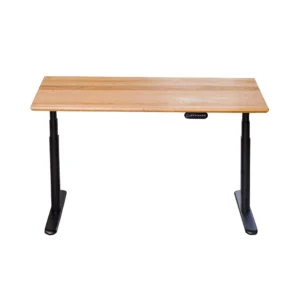
The Myseat DOMINIC model, equipped with 3-stage legs, bottoms out at 65cm.
Is 65cm low enough for a Primary 1 student?
Technically, no. Even at 65cm, a 7-year-old cannot sit with their feet flat on the floor if their elbows are properly positioned on the table.
So, why is 65cm the pragmatic choice?
It drastically reduces the “gap” that needs to be bridged.
From Primary 5 onwards, the desk adapts millimeter-by-millimeter to their growth spurts, eventually serving as a full standing desk (up to 125cm) for their tertiary education years. It bridges the gap between “child” and “adult” far better than a fixed-height table.

When choosing furniture for a growing child, you must evaluate the material on two fronts: Physical Resilience and Chemical Safety.
Children breathe faster than adults and are more susceptible to airborne pollutants. This makes Formaldehyde—a common carcinogen found in furniture glues—a significant concern in small, enclosed HDB bedrooms.
Student furniture faces a high-stress environment: compass points, heavy textbooks, and accidental permanent marker stains.
Solid Wood: This is a homogeneous material. If your child accidentally draws on the desk or scratches it deeply, solid wood offers a “reset button.” You can sand the area down and re-apply oil or wax. A desk that looks worn out after the PSLE exams can be refinished to look brand new for Junior College.
Using an electric motor system around children requires specific hardware safety protocols. The DOMINIC model includes two critical mechanical features for a home environment:
Structural Stability: The frame utilizes Low-Carbon Cold-Rolled Steel in a 3-section column design. This adds necessary mass. A heavier desk is harder for a child to accidentally knock over compared to lightweight plastic alternatives, and the Nylon Damping Foot Pads increase friction to keep the desk planted firmly on the floor.

While we generally advocate for rectangular tops for maximum surface area, there is an ergonomic case for customization for younger students.
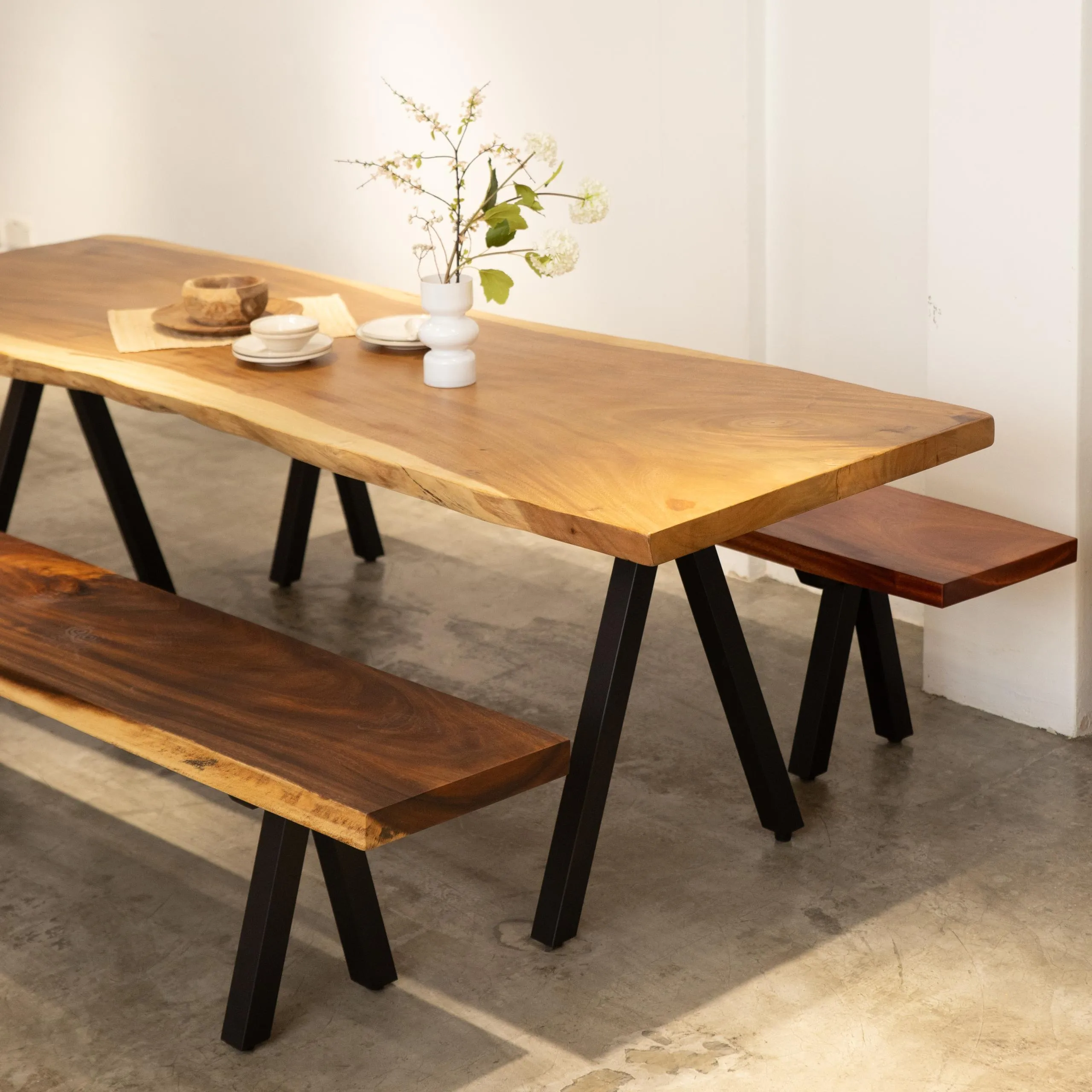
Because we manufacture our solid wood slabs locally, we can customize the tabletop with a concave “Ergonomic Curve” (Moon Cut).
This inward curve allows the child to scoot their chair deeper “into” the desk. This provides support for their forearms on the table surface rather than letting elbows hang off the edge, which can reduce shoulder strain during long writing assignments.
The decision comes down to lifecycle cost and health.
You can buy a plastic composite desk now, which may carry higher VOC risks and eventual obsolescence.
Or, you can invest in a DOMINIC Dual Motor desk. It prioritizes clean air quality through solid wood, offers a repairable surface, and mechanically adapts to every stage of your child’s growth. While it requires a footrest for the first few years (Primary 1–3), it is a piece of infrastructure that never becomes obsolete.
Need a desk for a growing kid? The DOMINIC model offers customizable dimensions (minimum 120cm length × 60cm width) and adjustable height (65-125cm), with wood options perfect for student rooms. View full specifications in our catalogue.