Solid Wood vs MDF Shoe Cabinets: What Singapore Homeowners Should Know Before Buying

Solid wood or MDF for your shoe cabinet in Singapore? We compare durability, mould resistance, formaldehyde safety, and long-term cost in our humid climate.

If you’ve started shopping for a shoe cabinet in Singapore, you’ve probably noticed the same thing: most options fall into two camps. On one side, there are affordable MDF or particleboard cabinets from flat-pack retailers and online marketplaces, typically priced between $80 and $200. On the other, there are solid wood shoe cabinets that start closer to $400 and go up from there.

The price gap raises an obvious question. Is solid wood actually worth two to four times more for something that just holds shoes? Or is it a case of paying extra for a material label that doesn’t make a practical difference?

The honest answer is: it depends on what you need and how long you expect the cabinet to last. This guide lays out the real differences between the two materials, what each handles well, and where each falls short, so you can make a decision that fits your home, your budget, and Singapore’s climate.

What MDF and Solid Wood Actually Are

MDF (Medium-Density Fibreboard) is made from wood fibres bonded together with synthetic resin under high heat and pressure, then covered with a melamine laminate or wood-print veneer for appearance. Particleboard is similar but uses coarser wood chips. Both are engineered products designed for consistency, smooth surfaces, and cost efficiency.

Solid wood means the structural panels, shelves, and doors are milled from actual timber. Common species used in Singapore furniture include rubberwood, pine, oak, and teak. The wood may be finger-jointed (shorter boards joined end-to-end) for dimensional stability, but the material throughout is genuine wood, not compressed fibres with a decorative surface layer.

Neither material is inherently “bad.” Each has legitimate trade-offs. The key is understanding which trade-offs matter more in your specific situation.

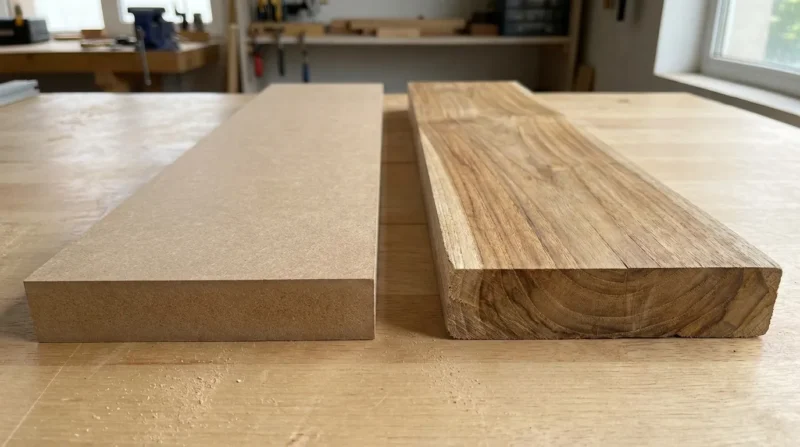
MDF vs solid wood
MDF vs solid wood

Durability in Singapore's Humidity

This is where the two materials diverge most sharply, and it’s the single most important factor for furniture placed in a Singapore home.

Singapore’s average relative humidity sits between 80% and 90% year-round. Entryways, where shoe cabinets live, are especially exposed because front doors open directly to humid outdoor air. On top of that, shoes brought in from rain or after a long day carry additional moisture into the cabinet.

How MDF responds to moisture

MDF absorbs moisture through any exposed or damaged edge. Once water penetrates the laminate surface (through a chip, scratch, or cut edge that wasn’t properly sealed during manufacturing), the fibreboard core swells irreversibly. You’ve likely seen this before: the bottom shelf of a cabinet bubbling up, door edges warping so they no longer close flush, or the laminate layer peeling away from the board underneath.

This process is gradual, not immediate. A well-made MDF cabinet with fully sealed edges can hold up reasonably well for the first one to two years. But in a humid entryway where damp shoes are stored daily, the degradation tends to accelerate after that point. Replacing a shoe cabinet every two to three years is a common pattern among homeowners who go the budget route.

How solid wood responds to moisture

Wood is a hygroscopic material, meaning it naturally absorbs and releases moisture in response to its environment. However, unlike MDF, this process is reversible. Wood swells slightly in humid conditions and contracts in drier ones (such as in air-conditioned rooms), but it returns to its original dimensions rather than permanently deforming.

Harder tropical hardwoods like rubberwood (Janka hardness rating of 960–1,000) and teak are particularly well-suited to Singapore’s climate because they grew in similar conditions. When finished with a quality sealant such as natural wood wax or water-based lacquer, the surface is protected while the wood itself can still “breathe” at a micro level, helping to regulate moisture inside the cabinet.

This doesn’t mean solid wood is immune to humidity. Prolonged direct contact with standing water will damage any material. But under normal household conditions, solid wood maintains its structural integrity for a decade or longer.

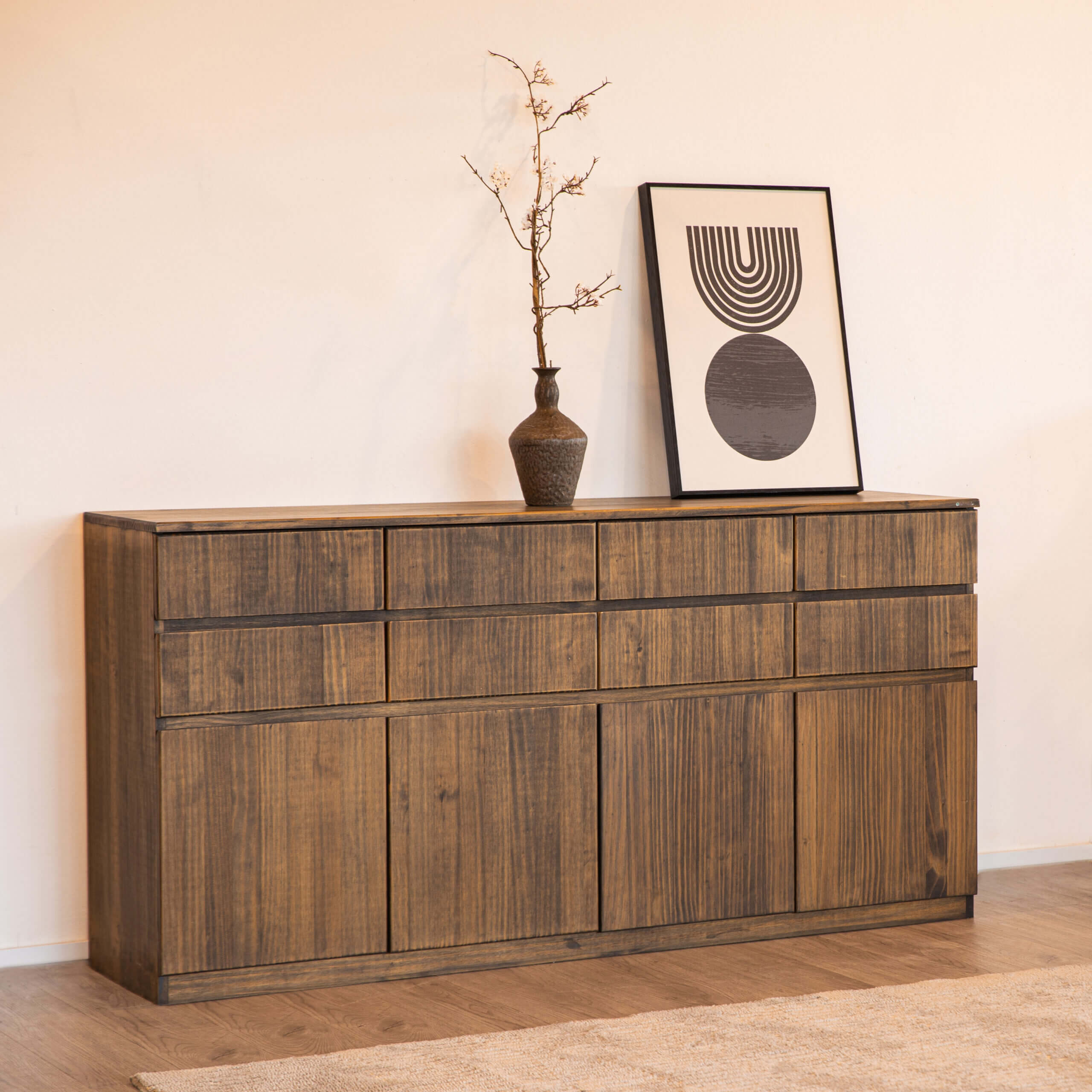
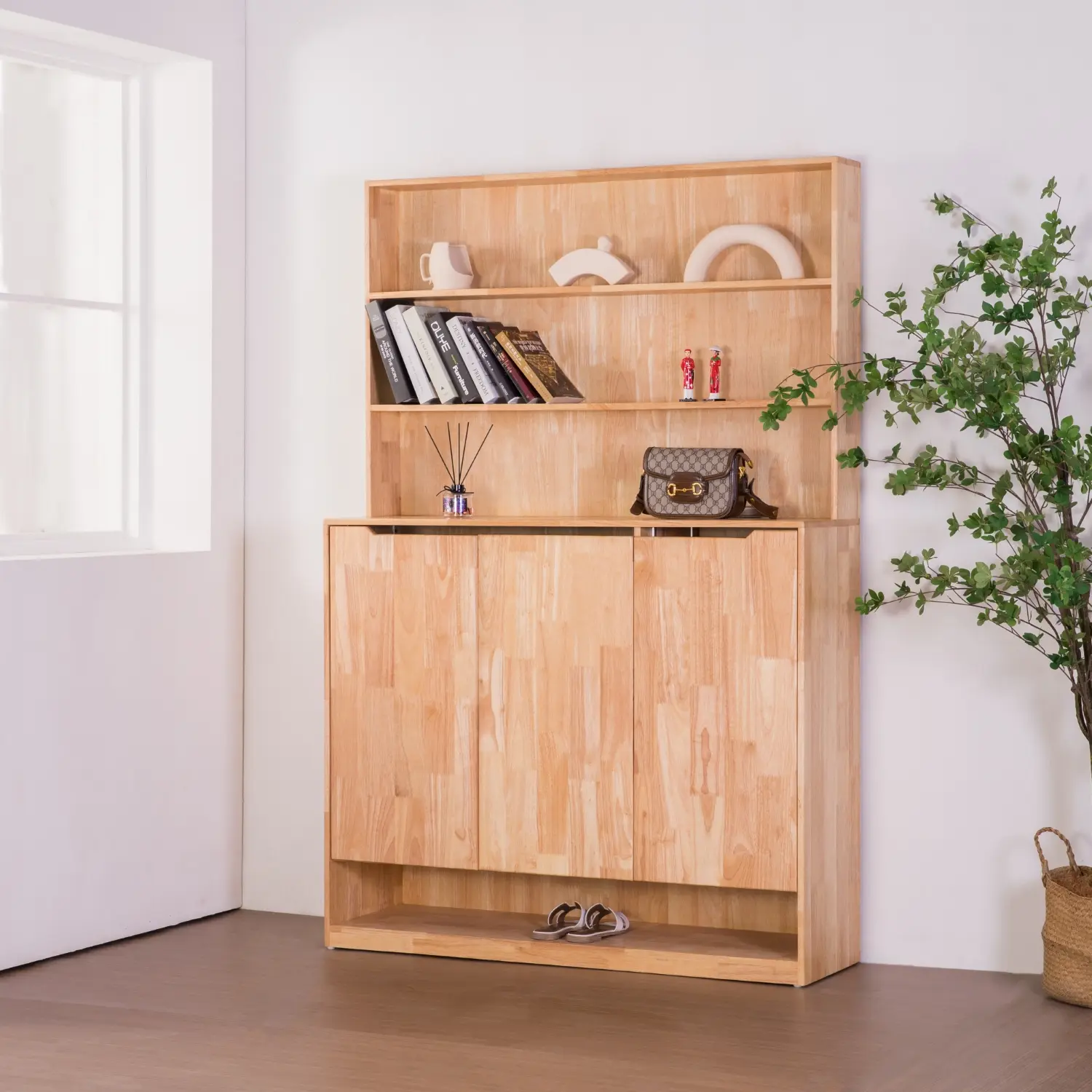
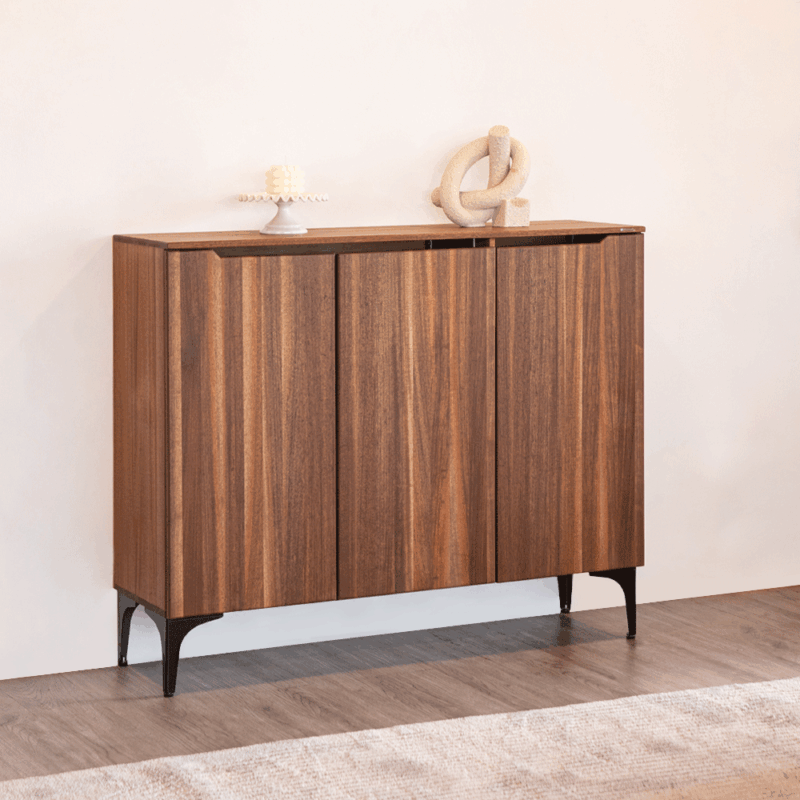
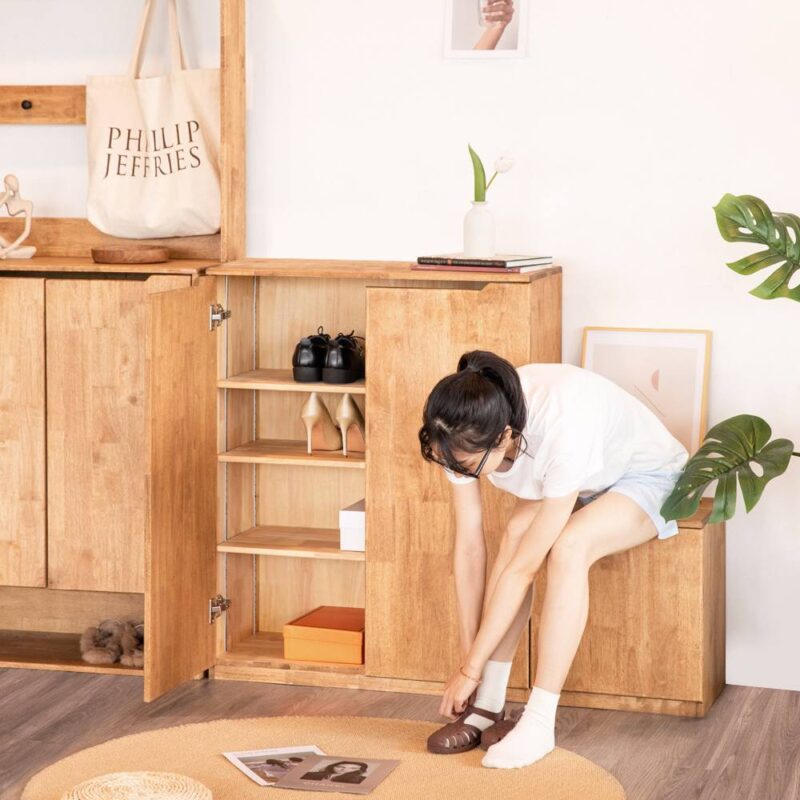
Solid wood shoe cabinet at home entryway

The Formaldehyde Question

This is a factor many buyers don’t think about until after the purchase, but it’s worth understanding upfront.

MDF and particleboard are manufactured using adhesive resins, most of which contain formaldehyde. These resins off-gas formaldehyde vapour into the surrounding air, particularly when the furniture is new and in warm, humid conditions. The World Health Organisation classifies formaldehyde as a Group 1 carcinogen, and Singapore’s NEA has been tightening regulations on formaldehyde in interior products.

The amount of off-gassing varies significantly by grade:

  • E1 grade (≤ 0.124 mg/m³): The most common standard for mass-market furniture. Considered acceptable by most international regulations, but detectable by smell in enclosed spaces.
  • E0 grade (≤ 0.050 mg/m³): A stricter standard, used by higher-quality manufacturers.
  • ENF grade (≤ 0.025 mg/m³): The most stringent classification. Roughly 5 times stricter than E1.

Most shoe cabinets sold on Shopee, Lazada, and budget furniture retailers use E1-grade MDF. The formaldehyde levels are within legal limits, but in an enclosed cabinet sitting at your front door, where your family passes multiple times a day, some homeowners prefer to minimise this exposure entirely.

Solid wood does not require formaldehyde-based adhesives in its construction. When paired with a plant-derived or water-based finish, the result is furniture that contributes virtually nothing to indoor air pollutants. This matters more for households with young children, elderly family members, or anyone sensitive to air quality.

If you are considering an MDF cabinet and formaldehyde is a concern, check whether the retailer specifies the emission grade. If it’s not stated, it is very likely E1 or below.

Ventilation and the Mould Problem

Ask any homeowner in Singapore who has owned a shoe cabinet for more than six months, and the mould topic will come up. Enclosed cabinets trap moisture from shoes, creating a dark, humid micro-environment that is ideal for mould and mildew growth. This leads to musty odours, white or grey patches on shoes, and in some cases, damage to leather or fabric footwear.

MDF cabinets with melamine surfaces create a fully sealed interior. Moisture that enters through the door opening has limited opportunity to escape. Mould remediation companies in Singapore specifically flag enclosed shoe cabinets as one of the most common household mould hotspots.

Solid wood, being a naturally porous material, allows a small degree of moisture exchange through the cabinet walls. This doesn’t replace proper ventilation (no closed cabinet is self-ventilating), but it does reduce the severity of moisture buildup compared to a fully sealed MDF box.

Regardless of material, good ventilation habits help:

  • Let shoes air-dry before storing them, especially after rain
  • Leave the cabinet door slightly open overnight when possible
  • Place silica gel packets or a small dehumidifier pouch inside
  • Choose a cabinet design with ventilation features (louvred doors, open bottom shelf, or back panel gaps)
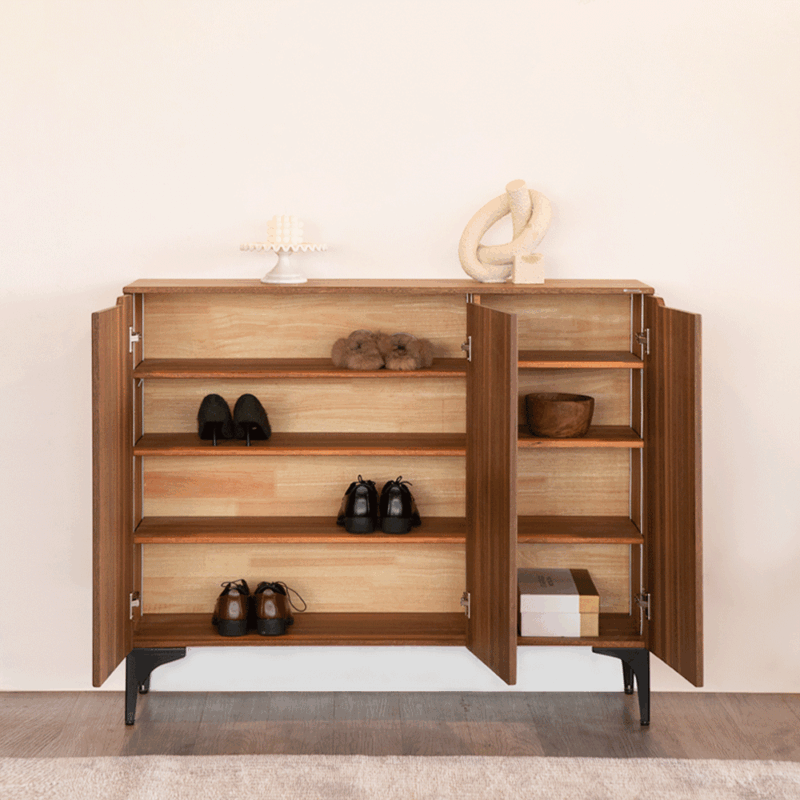
Neatly arranged shoe cabinet with adjustable shelves

Cost: Upfront Price vs Long-Term Value

Here’s the honest maths.

Factor MDF shoe cabinet Solid wood shoe cabinet
Typical price range (Singapore) $80–200 $400–800
Expected lifespan in SG humidity 2–4 years 8–15+ years
Approximate cost per year $30–80/year $30–80/year
Replacement hassle Every few years (disposal + re-purchase + delivery) Rarely, if at all
Warranty (typical) 6 months to 1 year Varies; some brands offer up to 10 years
Resale value Near zero Modest (solid wood holds some value)

On a pure cost-per-year basis, the two options are surprisingly comparable. The difference is in the replacement cycle. Disposing of a swollen, mouldy MDF cabinet, selecting a new one, waiting for delivery, and assembling it again is a real cost in time and effort, even if the financial outlay is similar over a decade.

If your situation is temporary (renting, planning to renovate within a year, or furnishing a transitional space), an MDF cabinet is a perfectly rational choice. There’s no need to invest in solid wood furniture you won’t use long-term.

If you’re furnishing a home you plan to live in for five years or more, the long-term economics favour solid wood.

Customisation and Fit

Standard shoe cabinets, whether MDF or solid wood, come in fixed dimensions. For many Singapore entryways, this is a problem. HDB corridors, BTO foyers, and condo entrance areas vary widely, and a cabinet that’s 5 cm too deep or 10 cm too wide for the available wall space can make a narrow hallway feel cramped.

Most MDF cabinets are mass-produced in a limited set of standard sizes. Customising dimensions is generally not an option from budget retailers.

Some solid wood furniture makers in Singapore offer made-to-order sizing, where you can specify the exact width, depth, and height to fit your space. This is particularly useful for:

  • Narrow HDB corridors where every centimetre of depth matters
  • Walls with DB boxes (electrical panels) that require the cabinet to stop at a specific height
  • Odd-shaped niches or alcoves beside the front door

If your entryway has non-standard dimensions, it’s worth checking whether your preferred brand offers customisation before settling for a standard-size unit that “almost fits.”

When MDF Makes Sense

To be fair to the material, there are scenarios where MDF is the practical choice:

  • Short-term housing. Renting for a year or two? An affordable MDF cabinet does the job without a major commitment.
  • Very tight budget. If the alternative is shoes piled on the floor, a $100 MDF cabinet is far better than no cabinet at all.
  • Enclosed, air-conditioned spaces. If the shoe cabinet sits inside an air-conditioned room (not the typical entryway placement, but some condos have this layout), humidity exposure is reduced and MDF holds up longer.
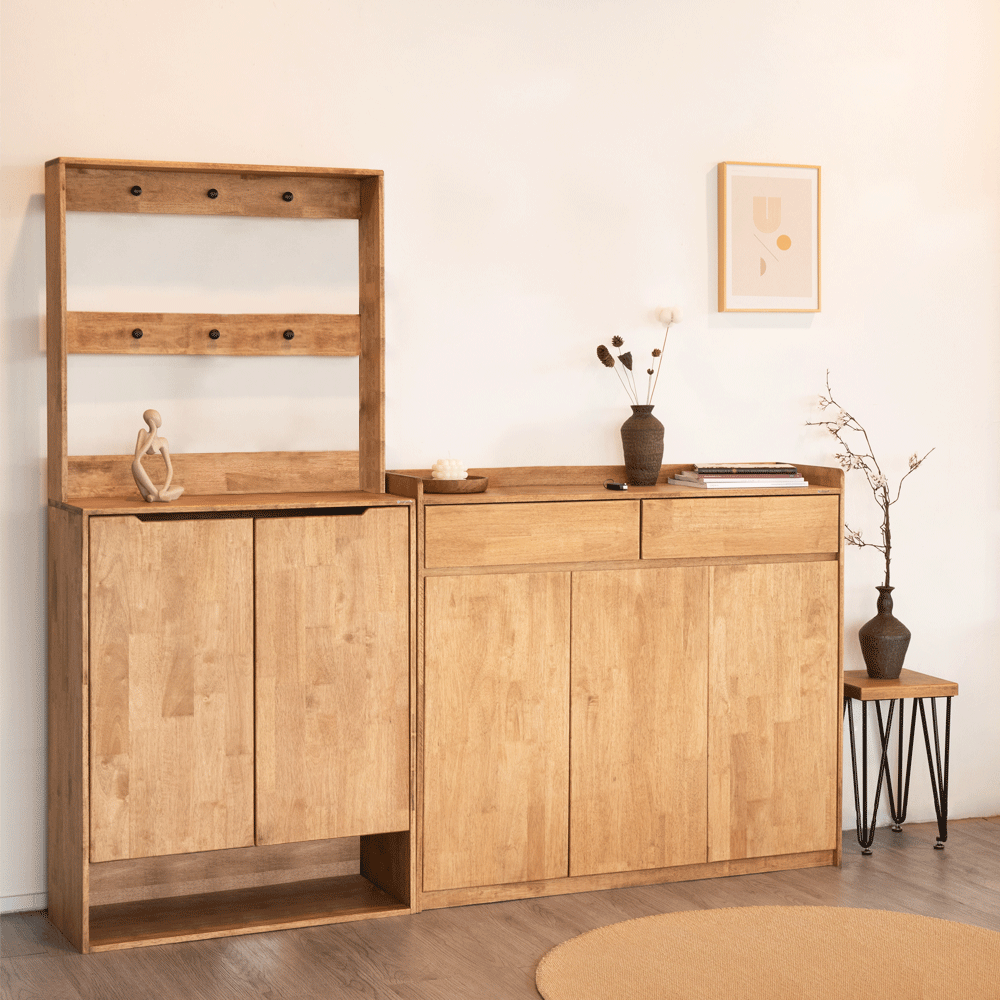
  • Supplementary storage. A small MDF unit for daily-wear sandals at the door, combined with a larger solid wood cabinet for the rest of the collection, can be a smart hybrid approach.

Making Your Decision

The choice between solid wood and MDF comes down to three questions:

  1. How long will you keep it? If the answer is “5+ years,” solid wood is likely the more economical choice over time.
  2. Where will it sit? If it’s in a humid, unair-conditioned entryway (the majority of Singapore homes), solid wood handles the environment better.
  3. Do you have specific size requirements? If your space demands a non-standard dimension, look for brands that offer customisation.
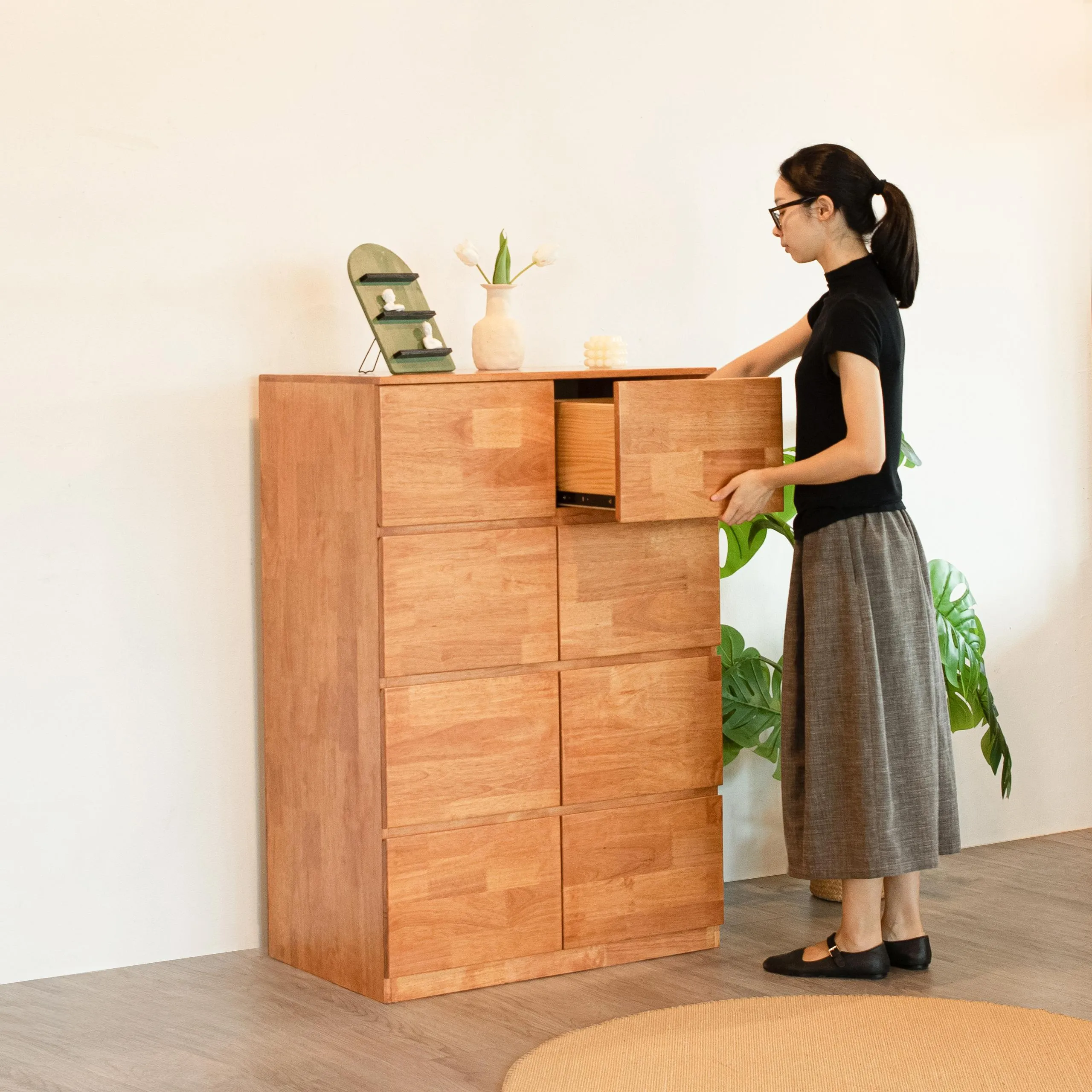
Explore Solid Wood Shoe Cabinets at Myseat.sg

At Myseat.sg, our shoe cabinets are crafted entirely from solid wood with plant-derived, non-toxic finishes and ENF-grade certification for formaldehyde safety. Every unit is customisable in wood type, colour finish, and dimensions, so you can get the exact fit your entryway needs.

With free delivery and assembly, a 10-year warranty on our solid wood furniture, and a showroom where you can see and touch the actual materials before committing, we’ve tried to remove the guesswork from buying furniture online.

Browser The Collection

Browse our Shoe Cabinet Collection or visit our showroom for a personalised consultation with our sales designers, who can help you work through material choices and sizing for your specific home layout.

Solid woods, solid homes

Become a subscriber

Subscribe to our newsletter for special offers, plus find out new products, trends, and promotions.

Affiliate Links

FOLLOW US

Copyright © 2016-2025 MYSEAT.SG. All rights reserved.

Shopping cart

0
image/svg+xml

No products in the cart.

Continue Shopping
Like What You See?

Join the community to receive updates on latest deals, new launches and inspirations.

Plus, enjoy a special offer just for you.

Before You Go

Subscribe for latest deals, new launches and inspirations.

Plus, enjoy a special offer just for you.

Before You Go

Subscribe for latest deals, new launches and inspirations.

As a token of appreciation, enjoy a special offer just for you.