This is often the deciding factor, so let’s look at realistic Singapore pricing.
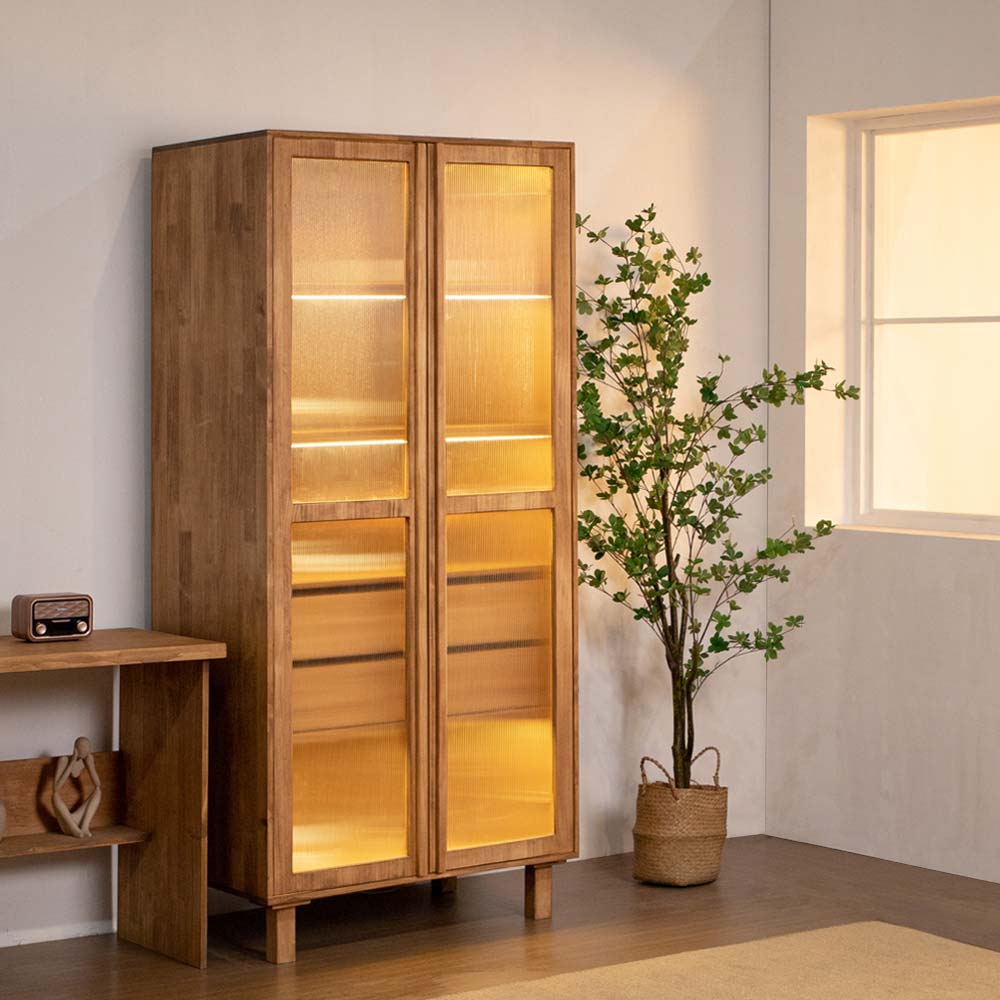
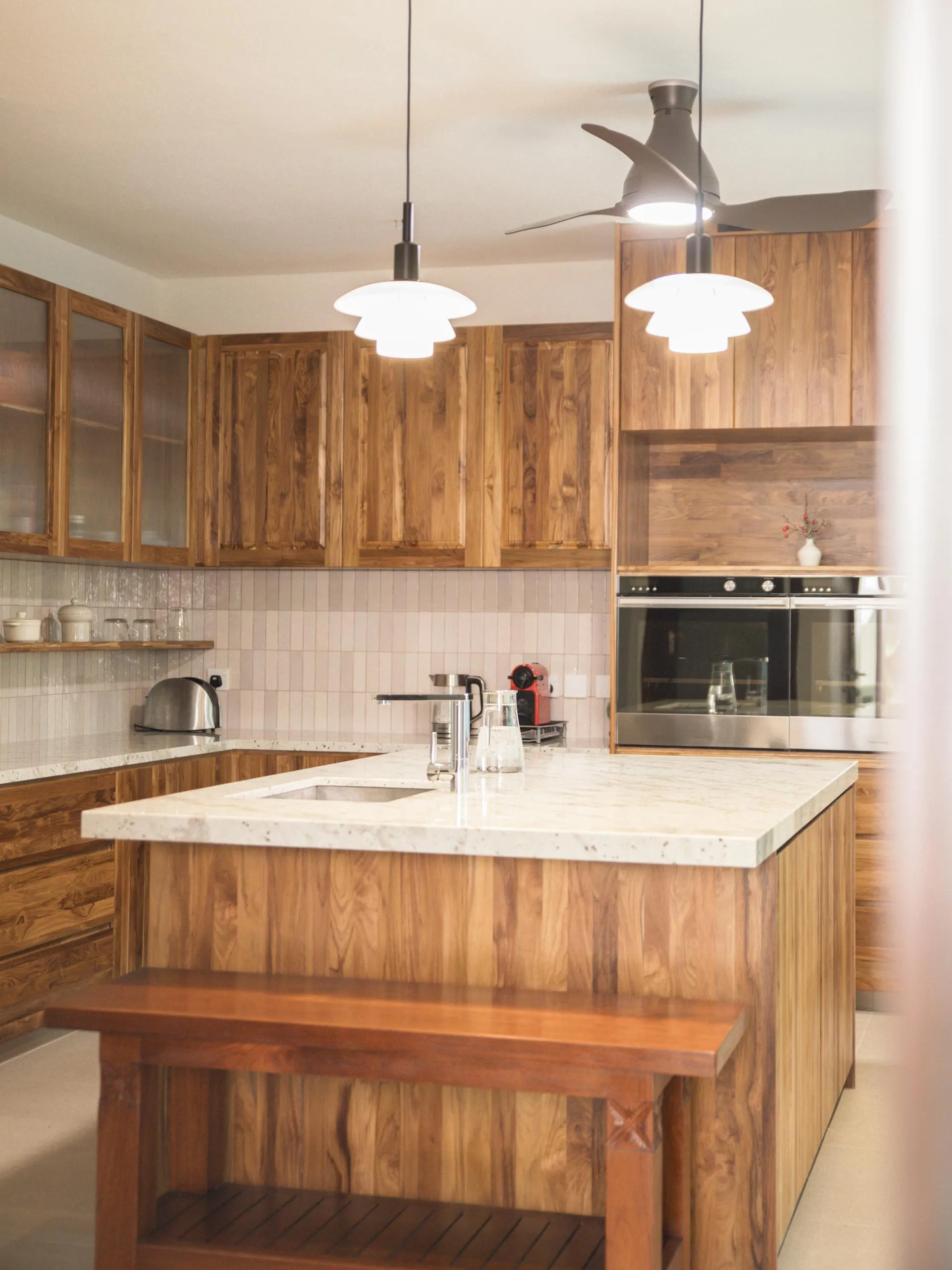
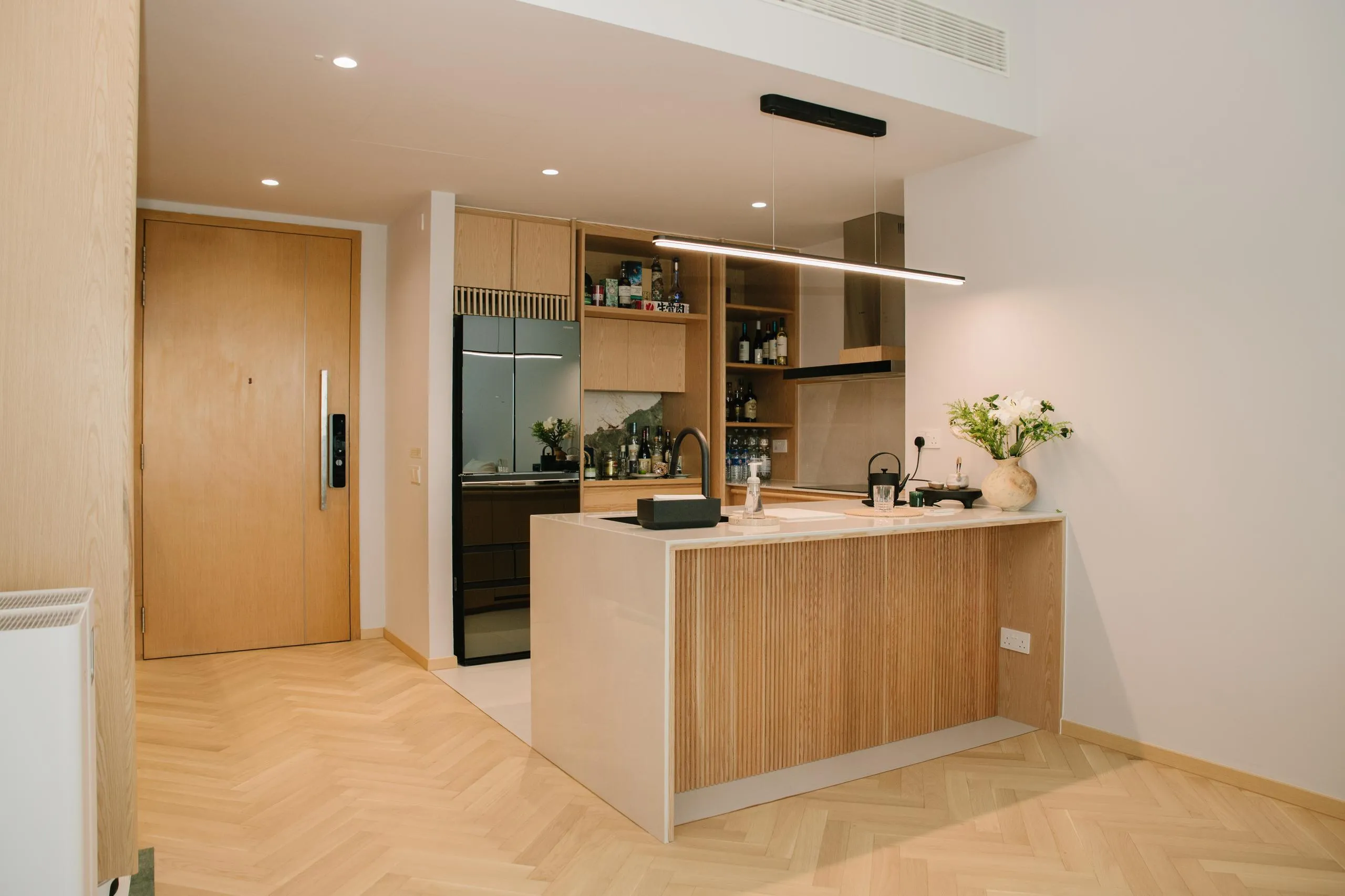
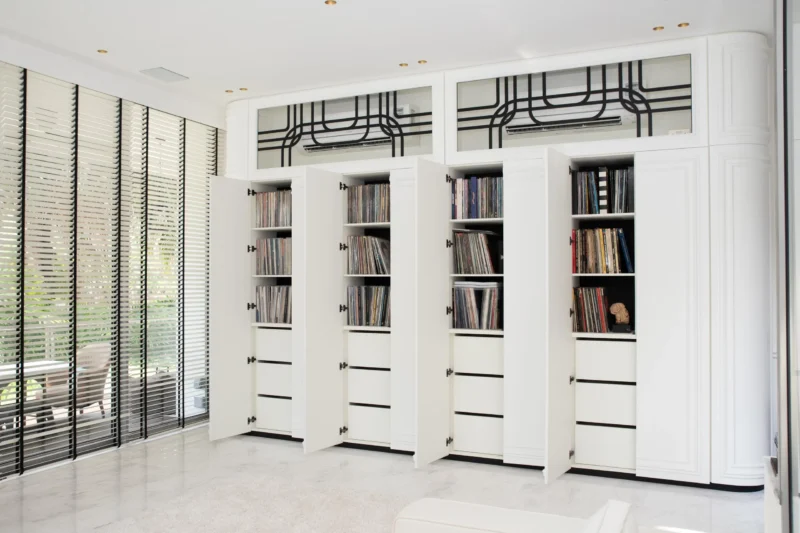
Built-in carpentry bookshelves typically cost between $2,500 and $8,000 depending on size, material grade, and design complexity. A simple floor-to-ceiling unit spanning one wall in a study room might come in around $3,000 to $4,500. More elaborate configurations with integrated lighting, glass doors, or mixed open/closed storage push higher.
These quotes usually include material, labour, on-site installation, and basic finishing. What they often don’t include: the time cost. Carpentry work typically takes 4 to 8 weeks from measurement to completion, during which the room may be unusable. If the carpentry is part of a full renovation, the timeline is absorbed into the overall project. If it’s a standalone job, that lead time can feel long.
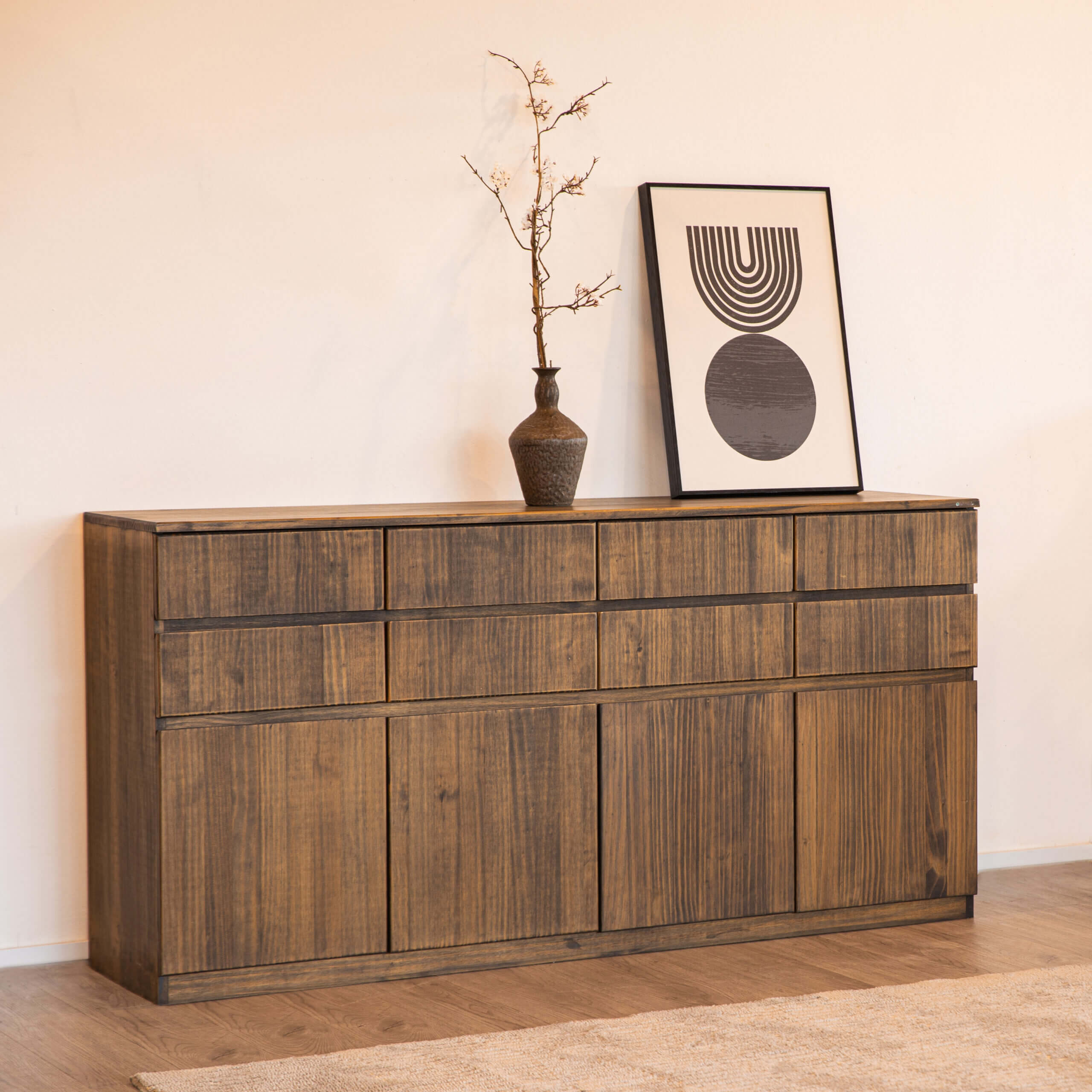
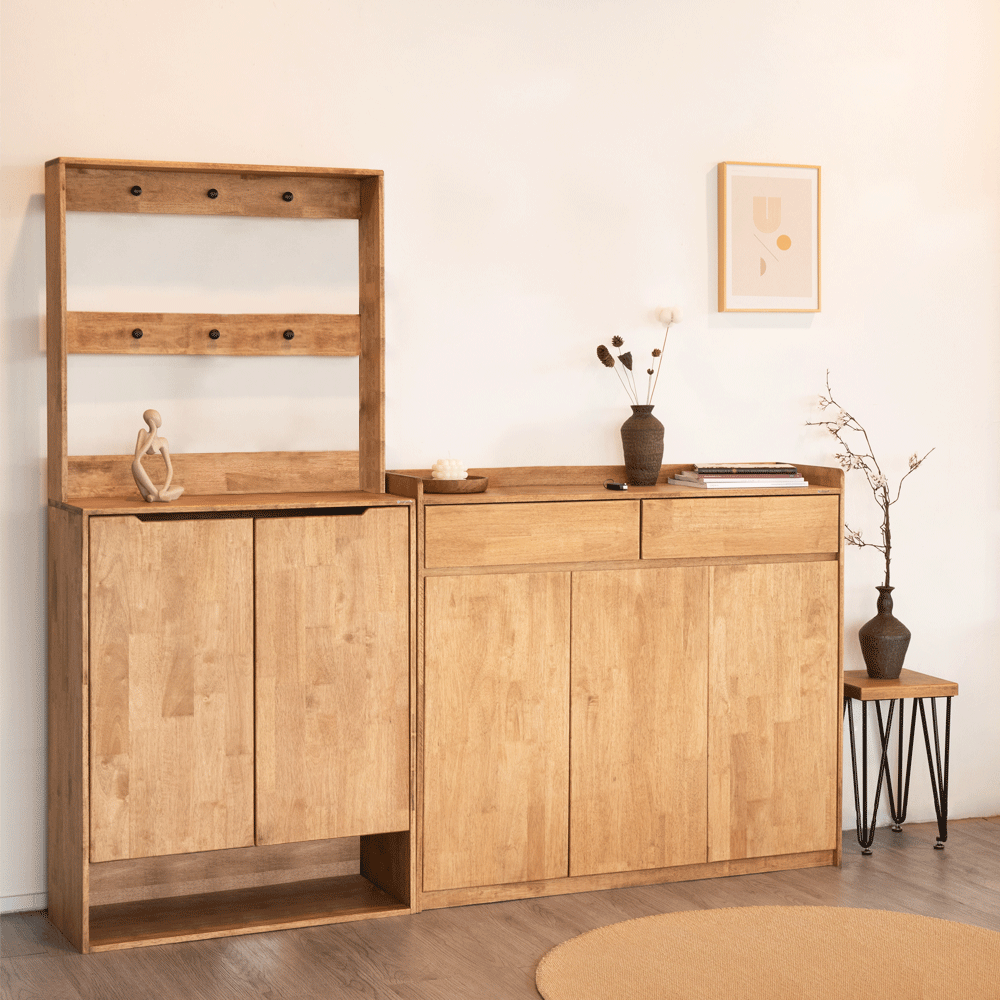
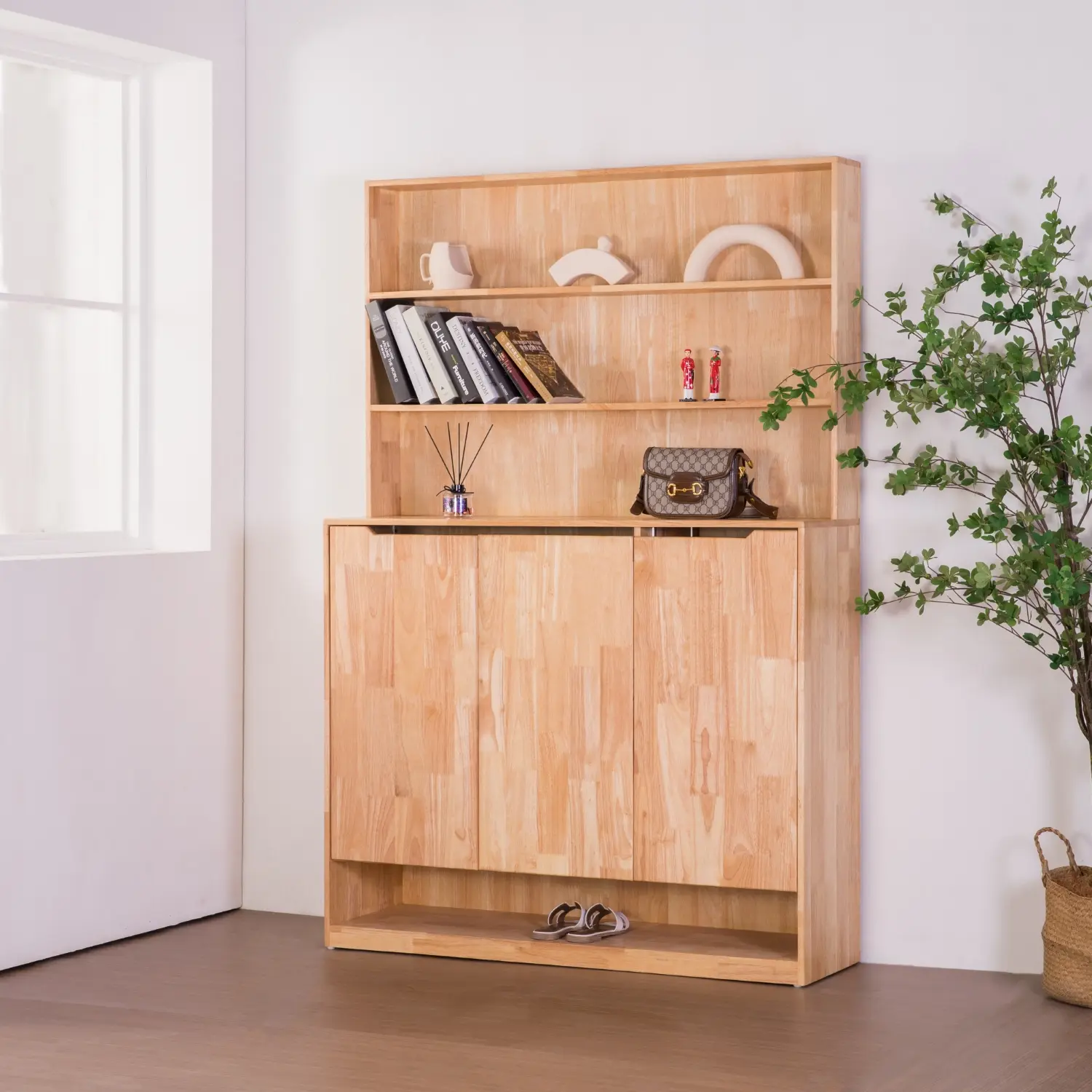
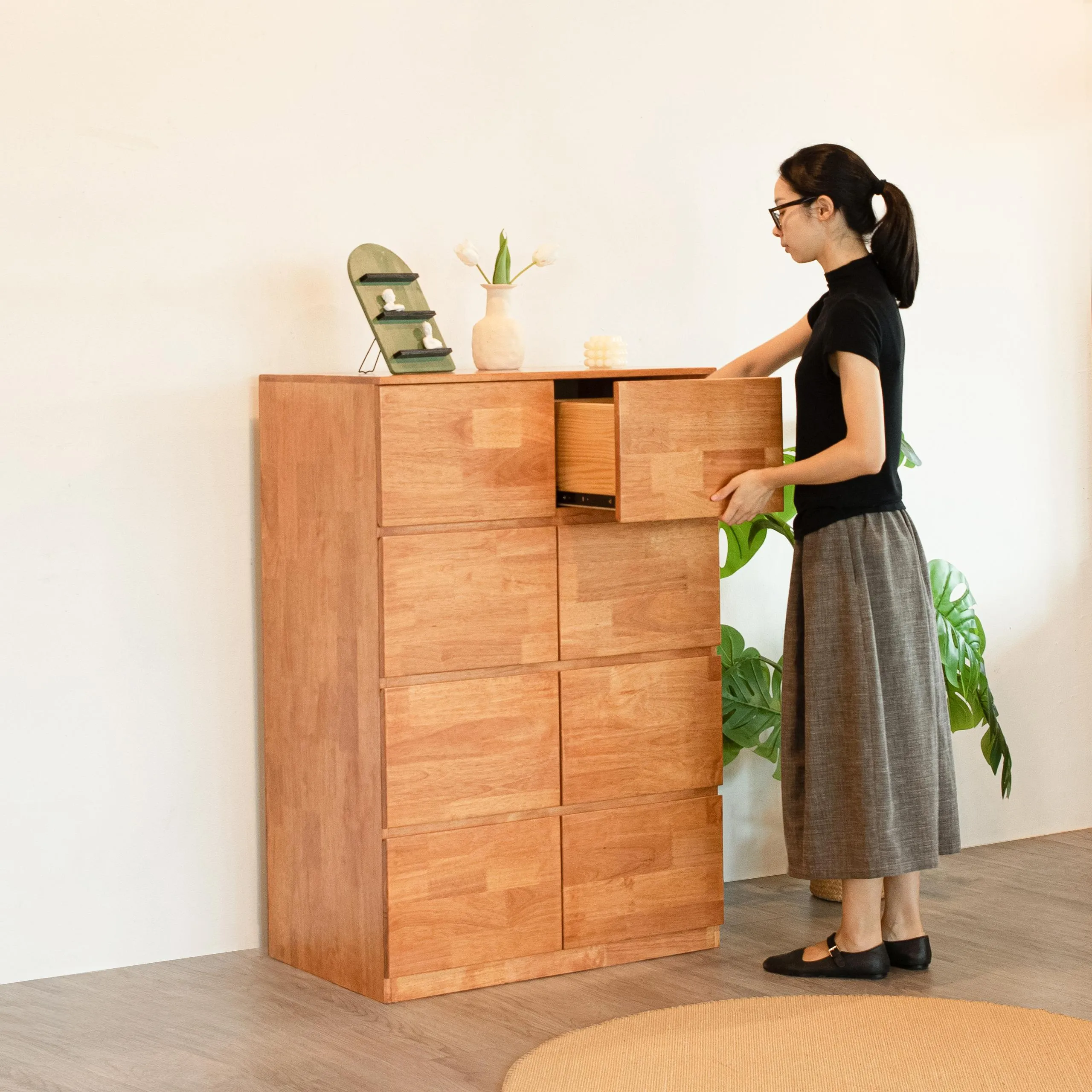
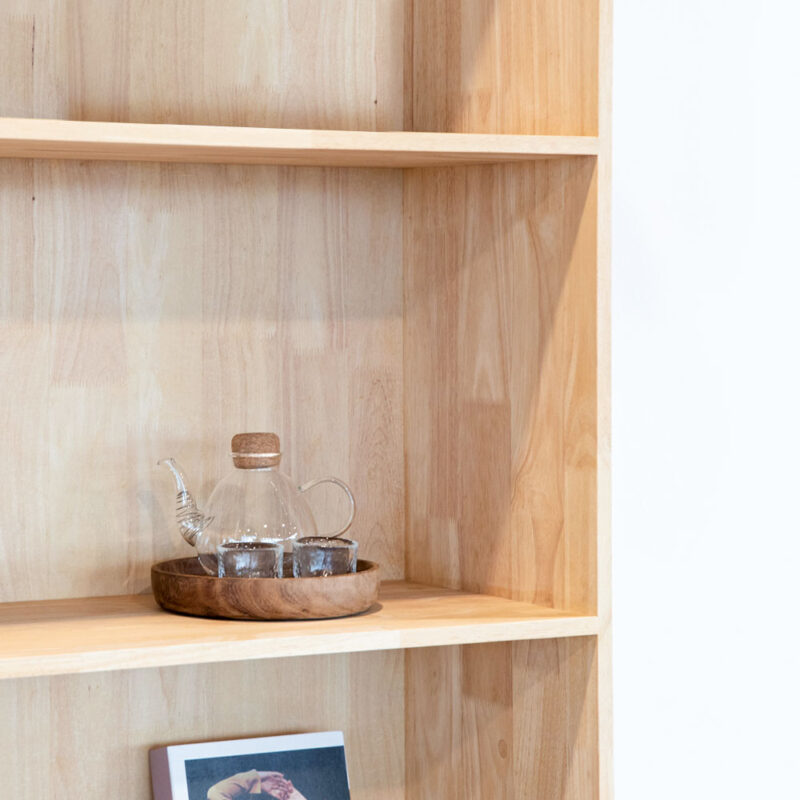
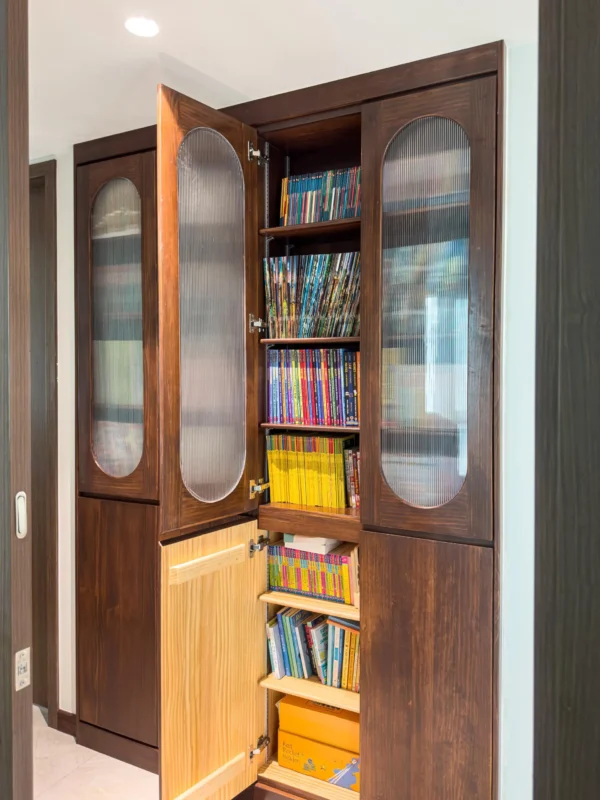
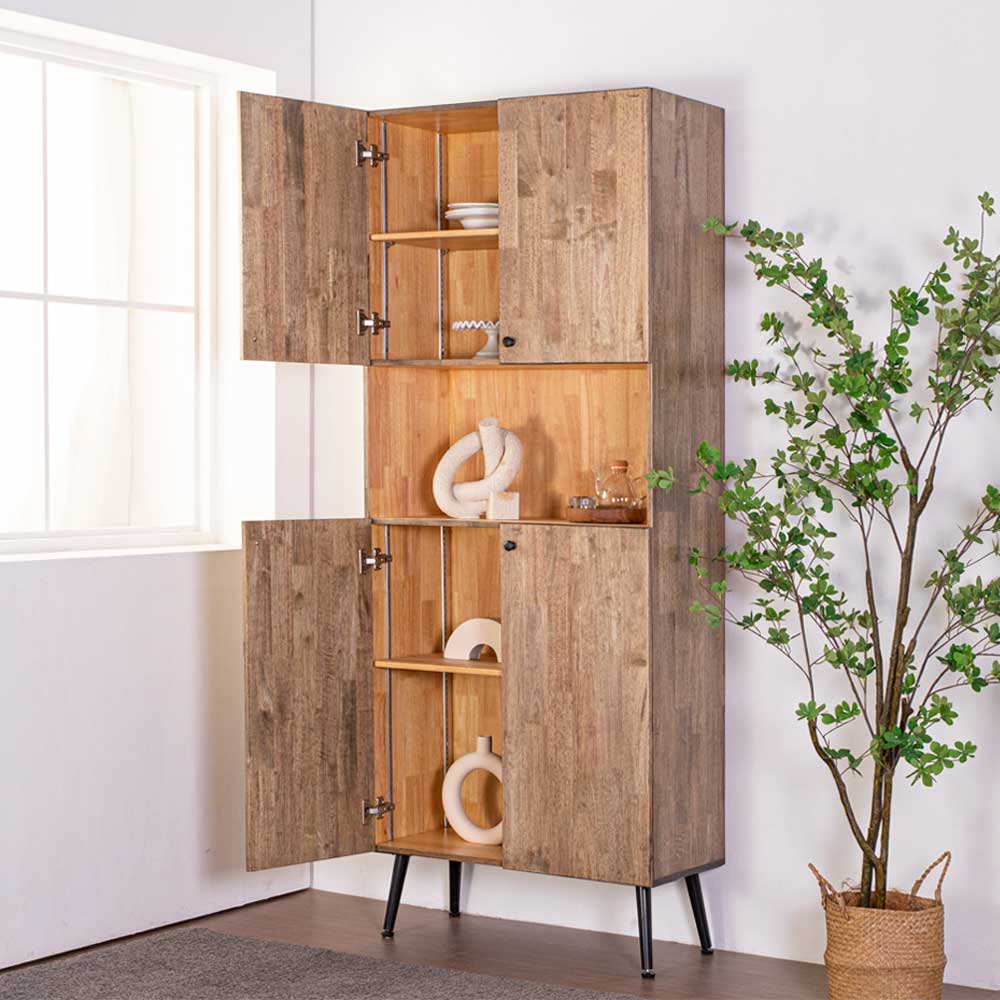
Freestanding solid wood bookshelves in Singapore generally range from $300 to $1,200 per unit, depending on size, wood type, and features (doors, drawers, glass panels). A standard 180 cm tall, 80 cm wide solid wood bookshelf in rubberwood with open shelves typically falls in the $300 to $500 range. A premium hardwood option in oak or walnut with mixed door/open configurations sits in the $600 to $1,000+ range.
The per-unit cost is significantly lower. Even if you place two or three units side by side to cover a full wall, the total is often still less than a single built-in installation. Delivery and assembly for freestanding furniture is usually within 1 to 2 weeks.
One caveat to be fair about: built-in carpentry can achieve a closer-to-wall-to-wall look that freestanding pieces cannot perfectly replicate. That said, “seamless” is relative. Walls and floors in Singapore HDB and condo units are rarely perfectly level or plumb, so even built-in carpentry requires edge finishing and trim work to close the gaps between the unit and the wall or ceiling. It’s not as plug-and-play as it looks in the portfolio photos. Still, if your wall has an unusual angle, a deep recess, or you need shelving that wraps around a corner or spans above a doorframe, built-in carpentry handles those situations more gracefully. A freestanding bookshelf sits against a wall; it doesn’t become part of it.