Bookshelf or Built-In Carpentry? How to Decide for Your Singapore Home

Should you buy a bookshelf or go with built-in carpentry? Compare cost, material, flexibility and lead time to find the right fit for your Singapore home.

If you’re renovating a flat or moving into a new BTO, there’s a good chance you’ve hit this question: should you get your interior designer to build in bookshelves, or should you buy a freestanding bookshelf instead?

It’s not a simple decision. Built-in carpentry looks integrated and makes full use of awkward spaces. A good freestanding bookshelf gives you flexibility, better material choices, and the freedom to rearrange your home down the road. Both have trade-offs.

This guide breaks down the real differences in cost, material quality, practicality, and long-term value so you can make a decision that fits your home, your habits, and your budget.

What "Built-In Carpentry" Actually Means in Singapore

When your ID proposes built-in bookshelves, the work is typically done by a carpentry subcontractor using sheet materials. In most Singapore renovations, the structure (called the carcass) is made from solid plywood, layered with laminate on the visible surfaces. Some budget options use particleboard or MDF instead of plywood.

The shelves, doors, and panels are cut to fit your wall dimensions exactly, then installed on-site. The result looks clean and integrated, almost like part of the wall itself.

Here’s the important thing to understand: built-in carpentry in Singapore almost never uses solid wood. The term “wood” in a carpentry quote usually refers to plywood (layers of wood veneer bonded with resin) finished with laminate (a PVC or paper-based surface layer). It looks like wood on the outside, but the core material and the surface are both engineered. As one HardwareZone forum user researching the topic noted, “solid wood is rare in SG context because it’s expensive and harder to work with. Ask/insist on solid wood carpentry and I suspect most IDs will just say ‘cannot, not an option.'”

This doesn’t mean built-in carpentry is bad. Plywood is a workable, reasonably durable material. But it’s worth knowing exactly what you’re paying for.

What a Freestanding Solid Wood Bookshelf Offers

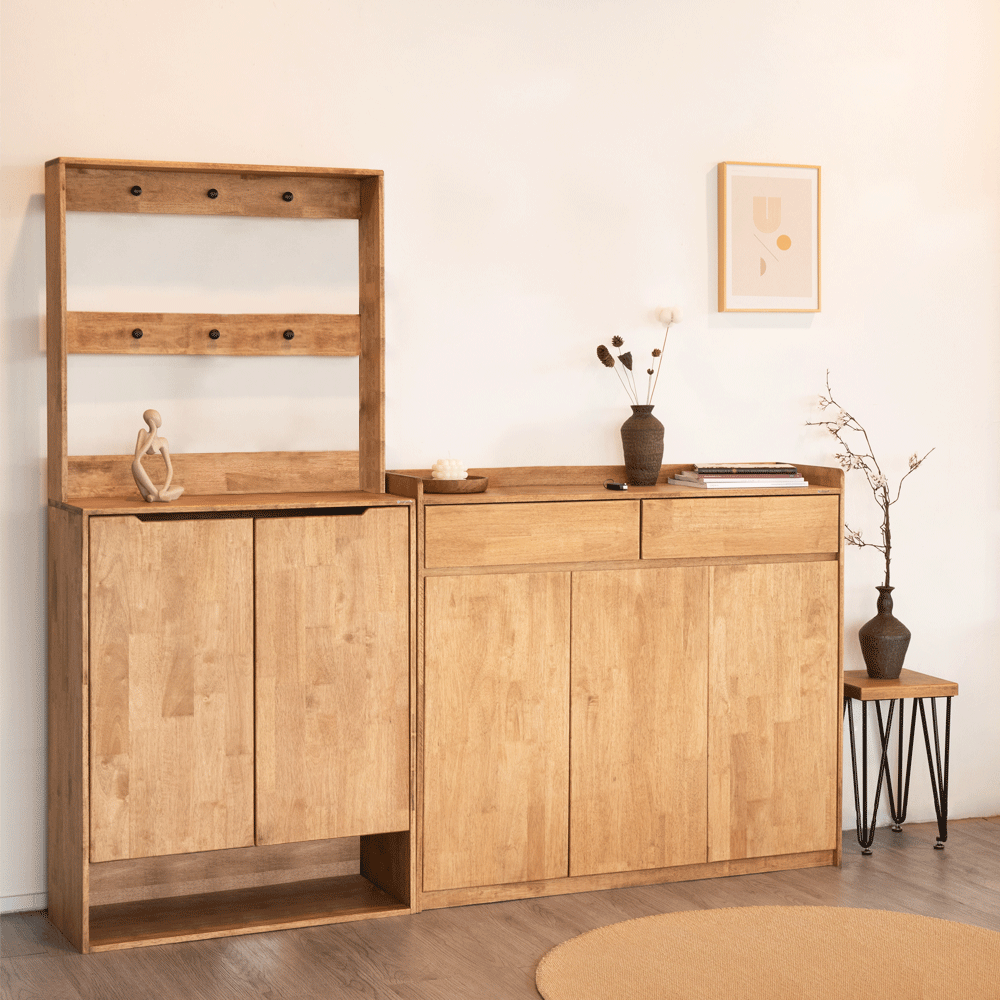
A freestanding bookshelf is a standalone furniture piece, typically assembled and delivered ready to place. Unlike built-in carpentry, it isn’t fixed to your wall structure.

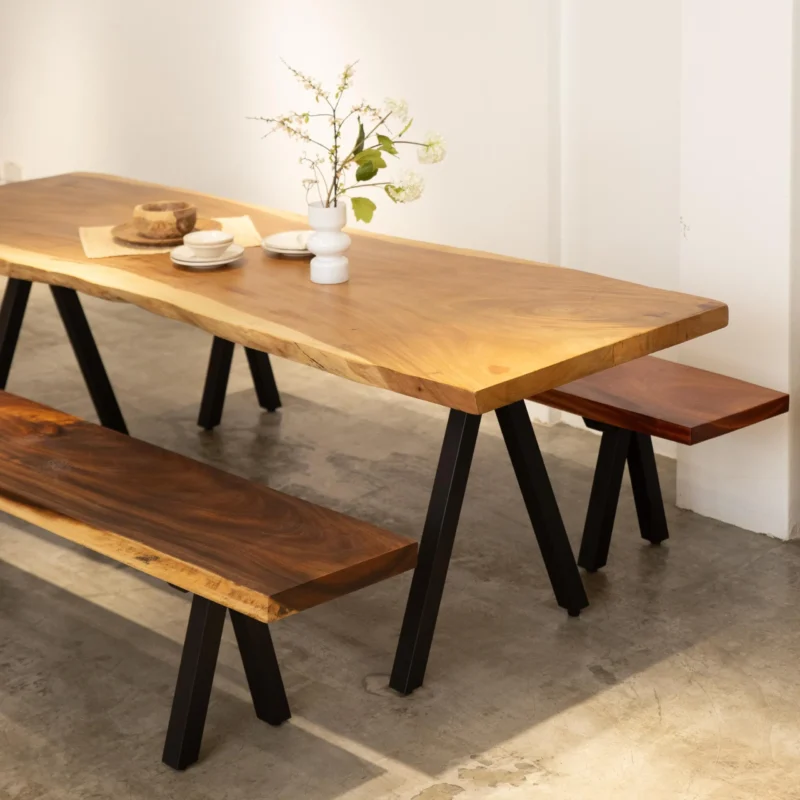
When the bookshelf is made from solid wood (rubberwood, oak, teak, pine, or other hardwoods), the material is natural timber throughout, not a composite or laminate-covered panel. The surface is the actual wood grain, typically protected with a natural wood wax or water-based finish rather than a plastic laminate layer.

This matters for a few practical reasons. Solid hardwood resists shelf sagging better than plywood or MDF over long periods under load. A 3/4-inch solid oak shelf, for instance, holds a full row of hardcovers at a 90 cm span without visible deflection for years. The same span in particleboard will start to bow within 12 to 18 months. And unlike laminate surfaces, real wood can be sanded and refinished if it gets scratched or scuffed, giving the piece a much longer usable life.

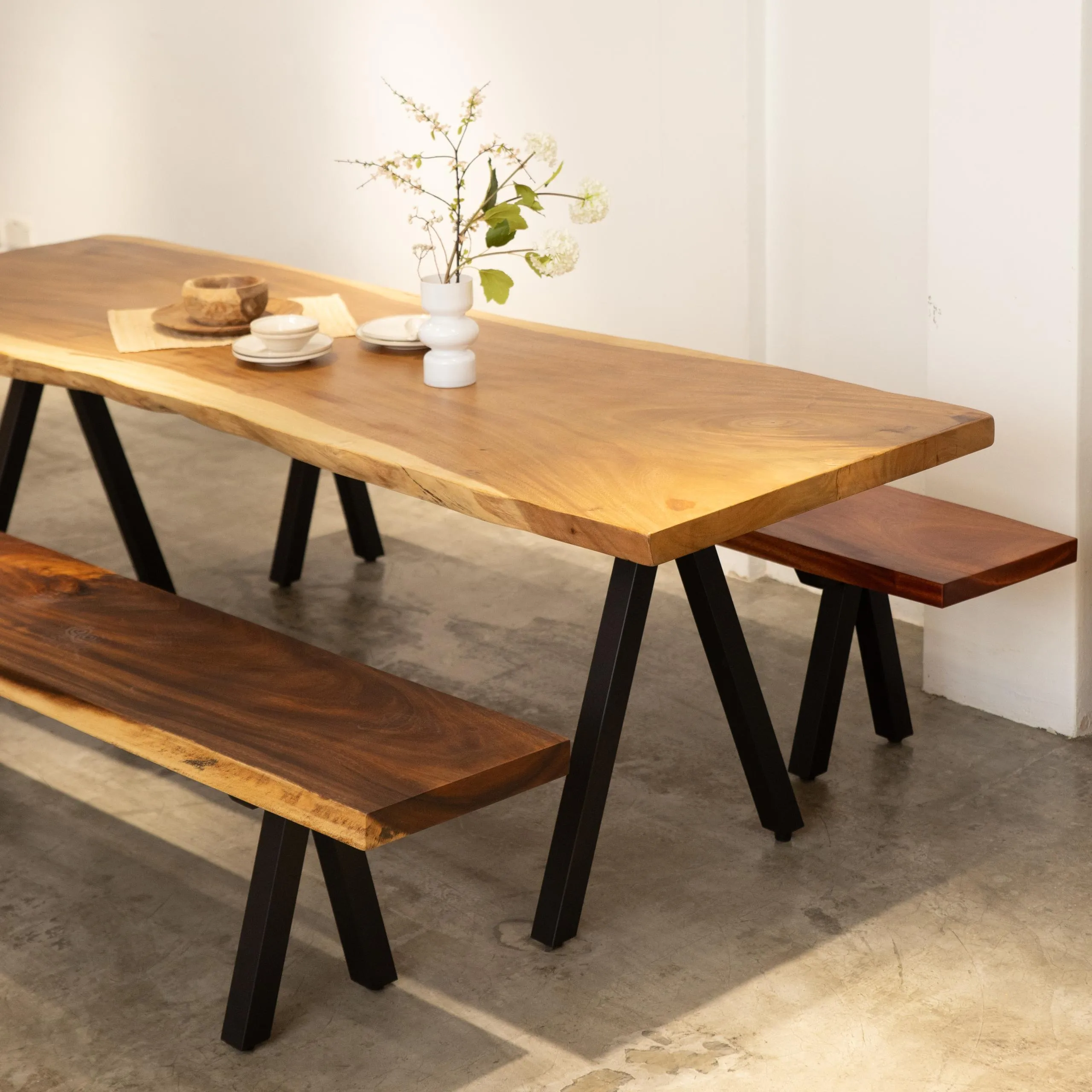
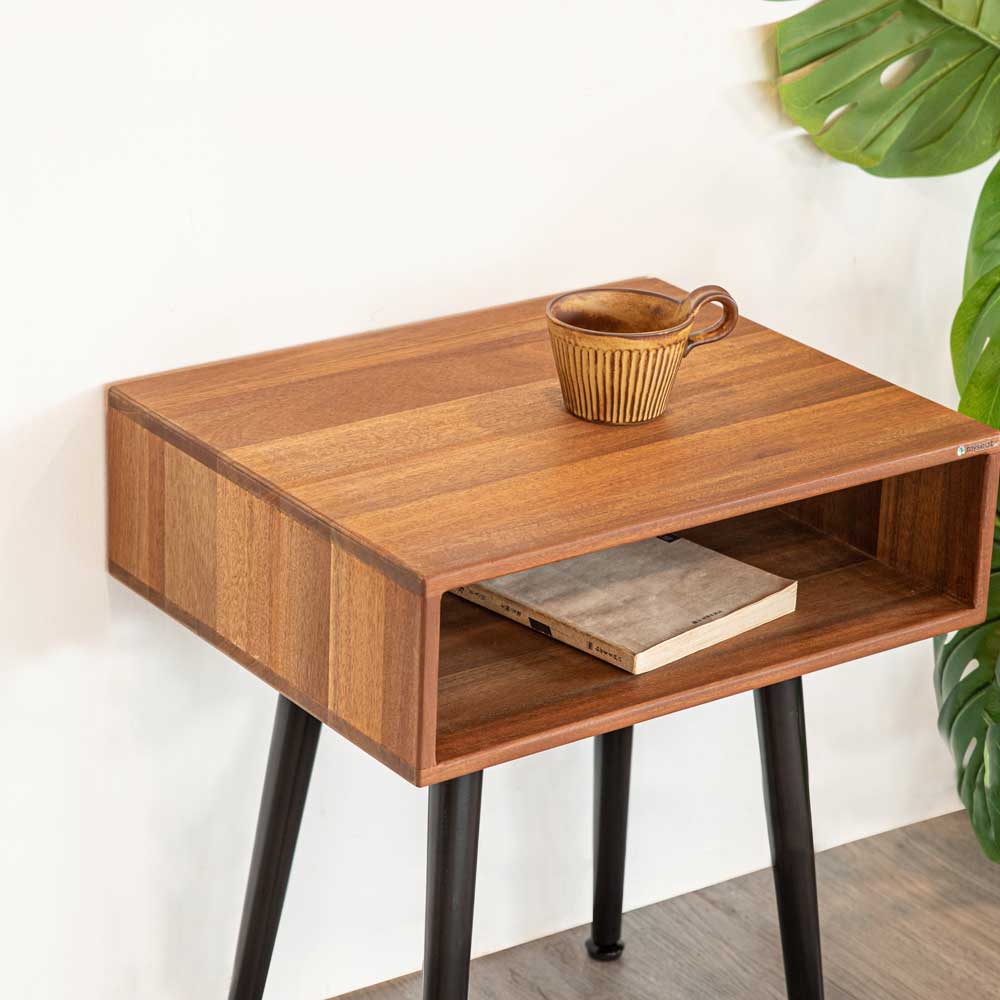
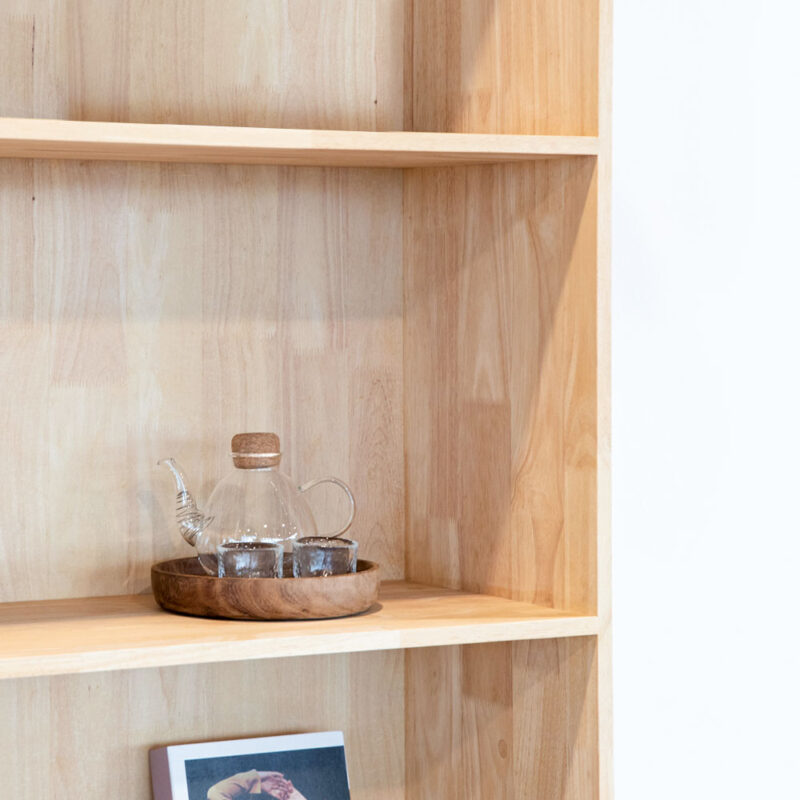
Wood grain of rubberwood bookshelf

Cost Comparison: The Numbers Most People Don't See

This is often the deciding factor, so let’s look at realistic Singapore pricing.

Built-in carpentry bookshelves typically cost between $2,500 and $8,000 depending on size, material grade, and design complexity. A simple floor-to-ceiling unit spanning one wall in a study room might come in around $3,000 to $4,500. More elaborate configurations with integrated lighting, glass doors, or mixed open/closed storage push higher.

These quotes usually include material, labour, on-site installation, and basic finishing. What they often don’t include: the time cost. Carpentry work typically takes 4 to 8 weeks from measurement to completion, during which the room may be unusable. If the carpentry is part of a full renovation, the timeline is absorbed into the overall project. If it’s a standalone job, that lead time can feel long.

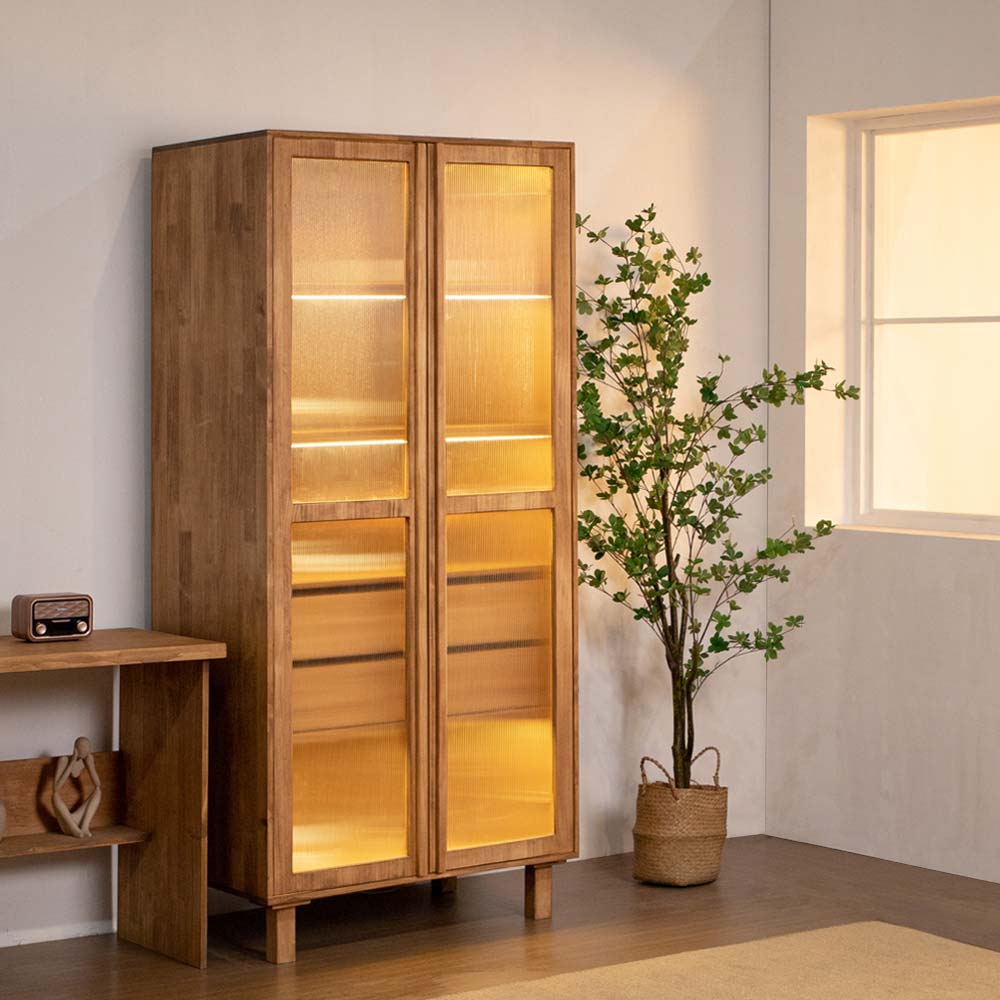
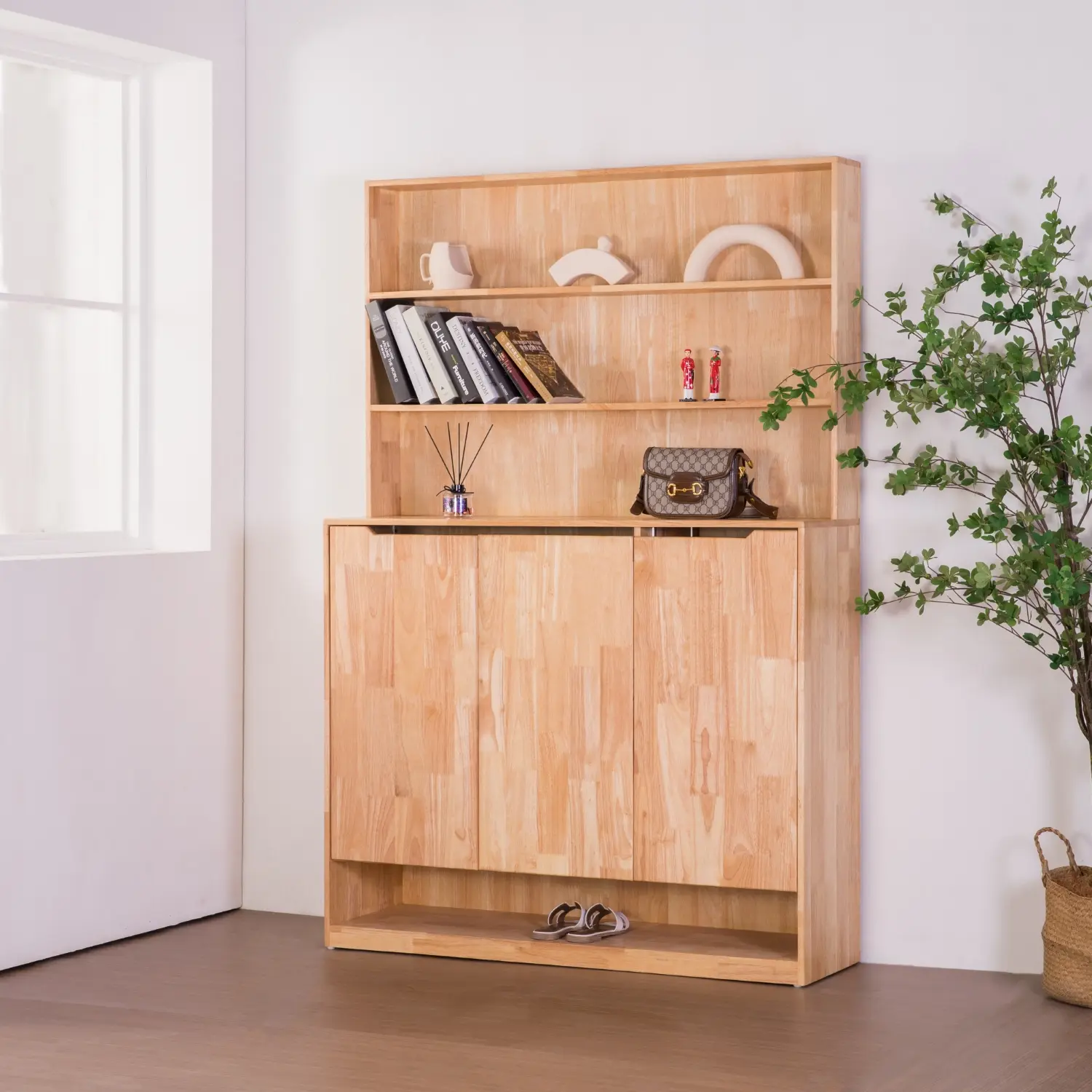
Freestanding solid wood bookshelves in Singapore generally range from $300 to $1,200 per unit, depending on size, wood type, and features (doors, drawers, glass panels). A standard 180 cm tall, 80 cm wide solid wood bookshelf in rubberwood with open shelves typically falls in the $300 to $500 range. A premium hardwood option in oak or walnut with mixed door/open configurations sits in the $600 to $1,000+ range.

The per-unit cost is significantly lower. Even if you place two or three units side by side to cover a full wall, the total is often still less than a single built-in installation. Delivery and assembly for freestanding furniture is usually within 1 to 2 weeks.

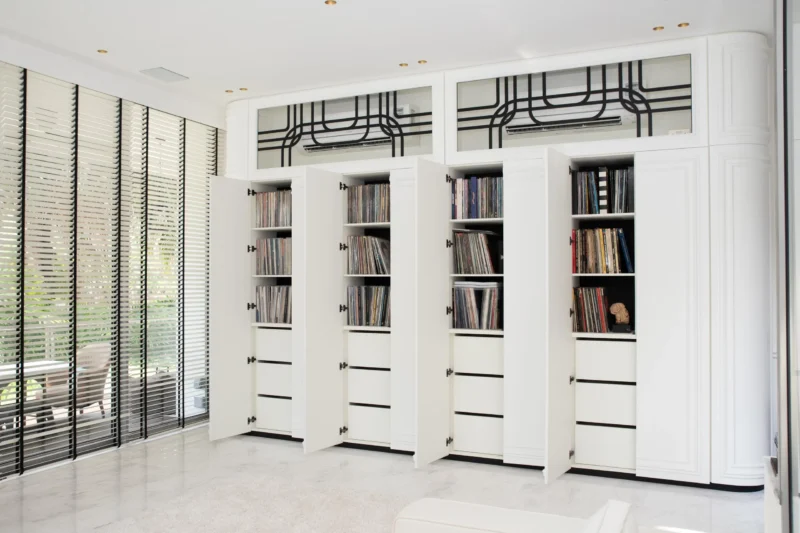
One caveat to be fair about: built-in carpentry can achieve a closer-to-wall-to-wall look that freestanding pieces cannot perfectly replicate. That said, “seamless” is relative. Walls and floors in Singapore HDB and condo units are rarely perfectly level or plumb, so even built-in carpentry requires edge finishing and trim work to close the gaps between the unit and the wall or ceiling. It’s not as plug-and-play as it looks in the portfolio photos. Still, if your wall has an unusual angle, a deep recess, or you need shelving that wraps around a corner or spans above a doorframe, built-in carpentry handles those situations more gracefully. A freestanding bookshelf sits against a wall; it doesn’t become part of it.

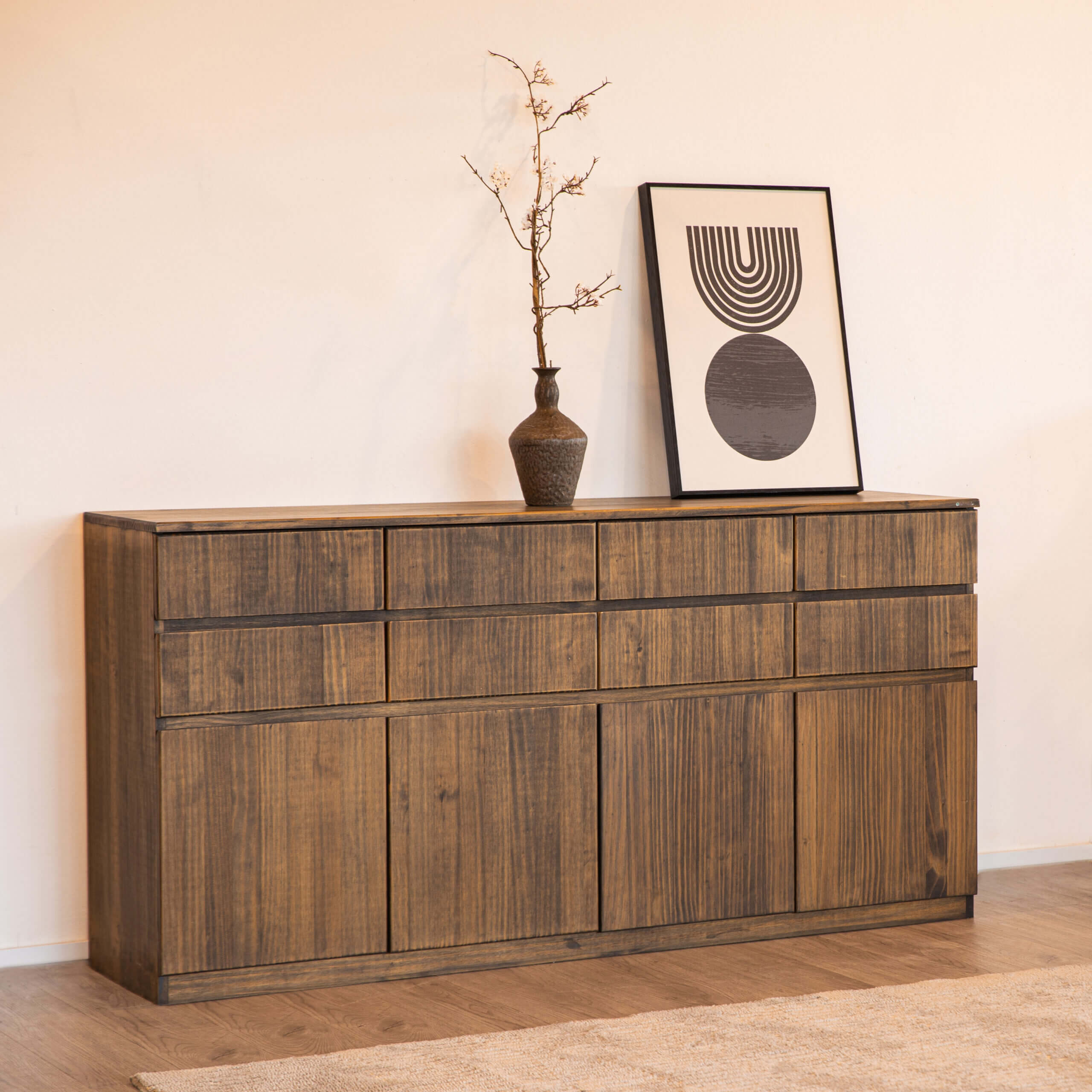
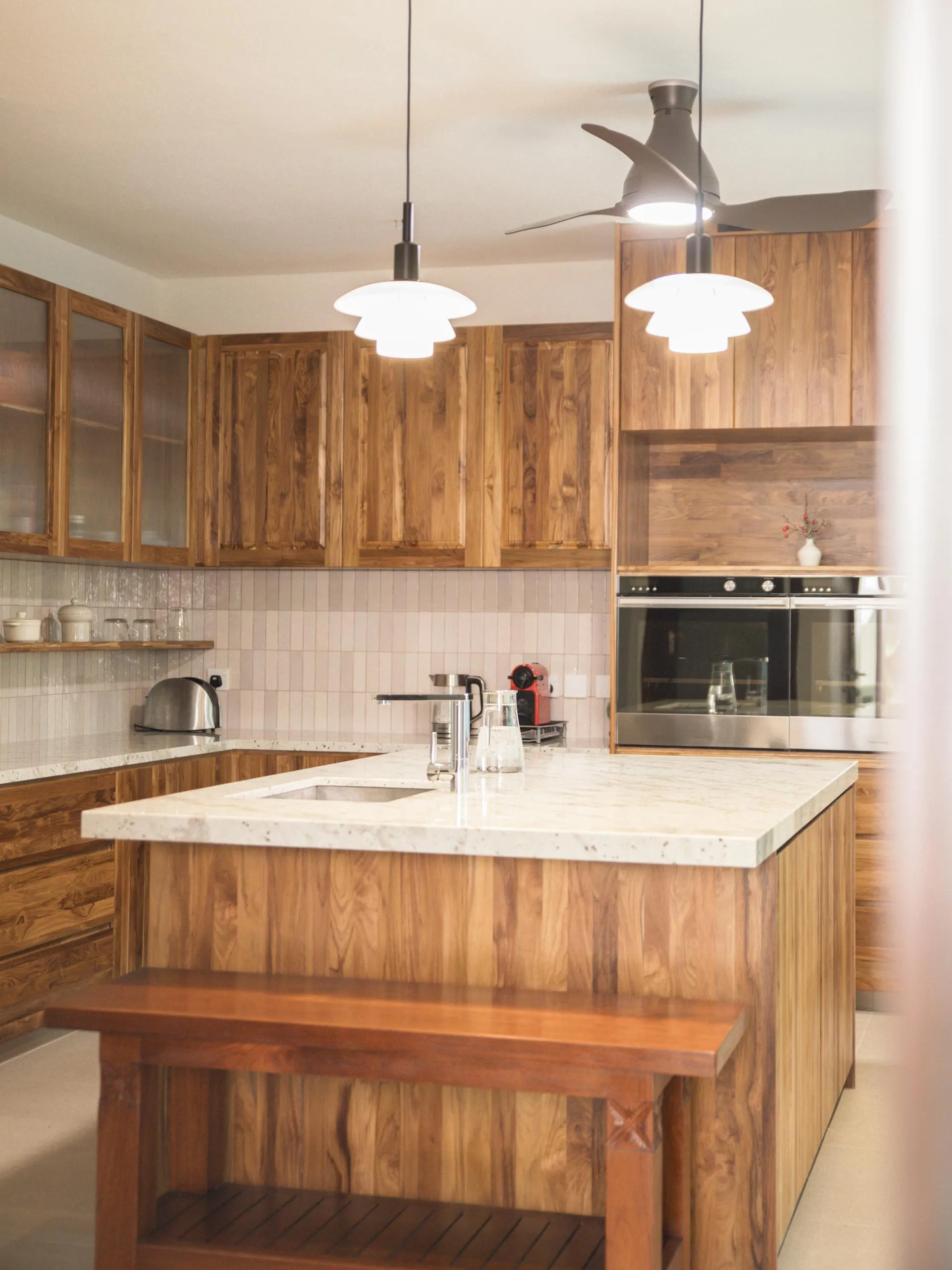
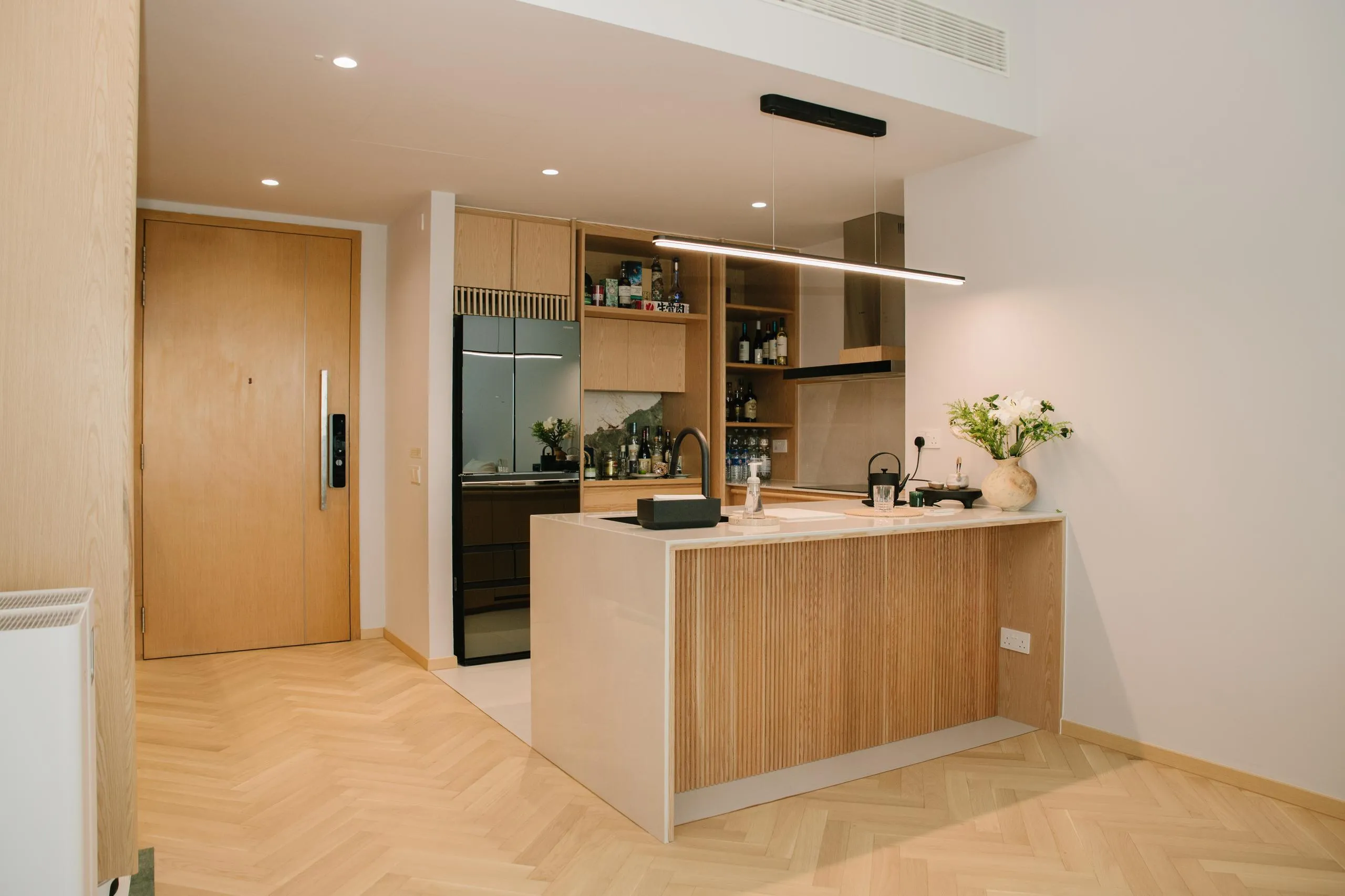
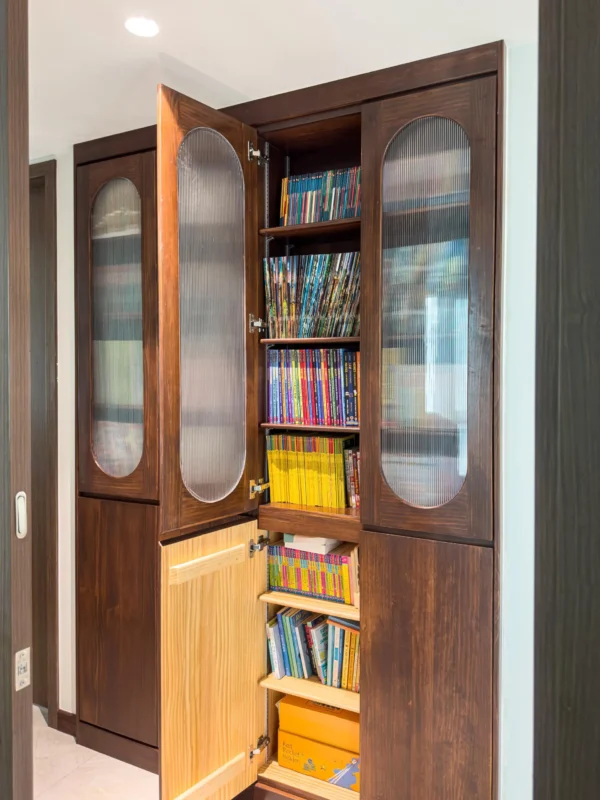
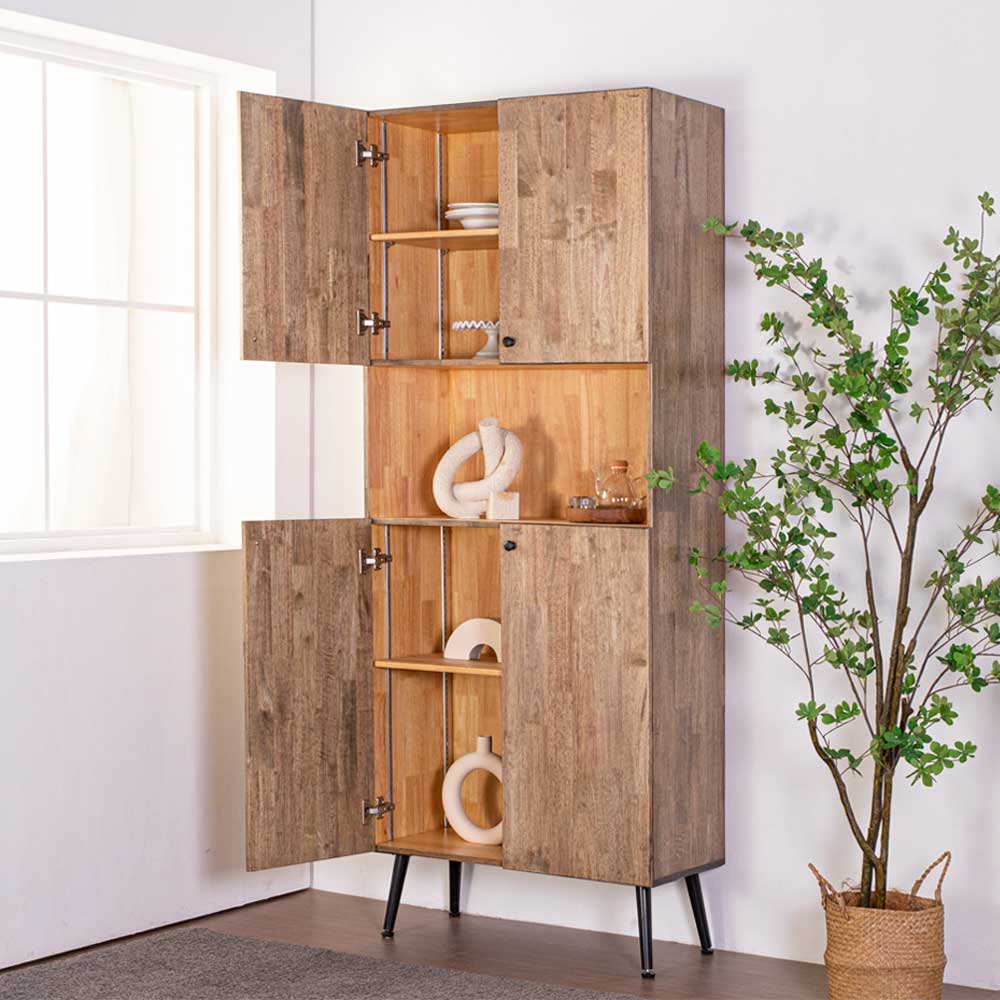
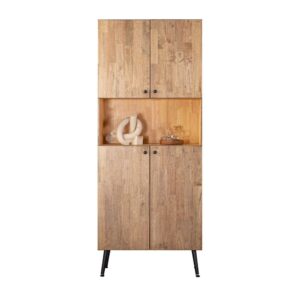
Built-in vs freestanding bookshelf (both solid wood)Built-in vs freestanding bookshelf (both solid wood)
Built-in vs freestanding bookshelf (both solid wood)

Material Quality: What's Actually Holding Your Books?

This is where the two options diverge most sharply, and it’s worth understanding why.

Built-in carpentry (typical material): Plywood carcass with laminate finish. Plywood is reasonably strong and more moisture-resistant than particleboard. However, laminate surfaces can bubble or peel in Singapore’s humidity over time, particularly if the unit is against an exterior-facing wall with poor ventilation. Laminate cannot be repaired. Once it peels, the only fix is to replace the panel or re-laminate, which often means calling the carpenter back.

Some budget carpentry uses MDF or particleboard. Both are engineered from wood particles or fibres bonded with formaldehyde-based resins. In Singapore’s 70-90% humidity environment, these materials are more prone to swelling and deterioration. MDF and particleboard also release volatile organic compounds (VOCs) through off-gassing, a concern worth considering for bookshelves placed in children’s rooms or bedrooms where occupants spend extended hours.

Freestanding solid wood: Natural hardwood throughout, finished with a non-toxic wood wax or water-based sealant. Solid wood handles Singapore’s humidity cycling (air-conditioned cool to tropical ambient) better than engineered composites because its natural fibre structure allows it to absorb and release moisture gradually without structural failure. If the finish wears, it can be sanded and recoated. If a surface gets scratched, it can be buffed out or touched up.

Solid wood is also formaldehyde-free by nature. There are no resin binders in the material itself. Combined with a non-toxic finish, this makes solid wood bookshelves a safer option for homes with children or family members with respiratory sensitivities.

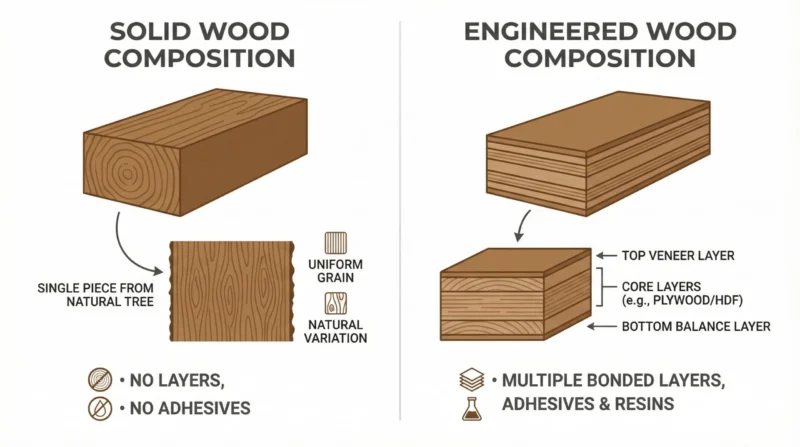
Solid wood vs engineered wood composition

Flexibility: The Factor People Underestimate

Built-in furniture is permanent. It’s designed for one specific wall in one specific room. If you sell your flat, the new owner may not want your bookshelves. If you rearrange your layout, the built-ins stay put. If you move to a new home, you leave them behind.

This matters more than most people think during renovation, when the excitement of designing a space can overshadow the reality that living situations change. Young couples may upgrade from a 3-room to a 4-room BTO. Families may move for school proximity. Some homeowners rent out their flat after a few years.

A freestanding bookshelf moves with you. It can shift from the study to the living room, or from one home to the next. If your needs change, you can sell it on Carousell or pass it along. A well-made solid wood piece retains value far better than a laminate built-in, which has zero resale value once it’s removed from the wall.

When Built-In Carpentry Is the Better Choice

To be straightforward: there are scenarios where built-in shelving genuinely makes more sense.

  • Irregular wall shapes. Sloped ceilings (like in maisonettes), alcoves beside structural columns, or oddly angled walls are hard to fit with standard freestanding furniture. Custom carpentry fills these spaces cleanly.
  • Floor-to-ceiling, wall-to-wall coverage. If you want an entire wall transformed into a library, built-in carpentry gets closer to that seamless look. Keep in mind that edge finishing is still needed to close gaps against uneven walls, floors, and ceilings, but the final result is more integrated than placing freestanding units.
  • Integrated features. If you need your bookshelf to incorporate a fold-down desk, a concealed bomb shelter door, a TV recess, or built-in lighting, these require carpentry integration.

If any of these apply to your situation, built-in work may be worth the investment. Just ask your ID to specify the exact materials being used, including the carcass material (plywood vs particleboard), the laminate brand and grade, and whether any components use MDF.

When a Freestanding Solid Wood Bookshelf Is the Smarter Move

For most standard wall layouts in Singapore homes, a freestanding bookshelf covers the practical requirements and offers advantages that built-in carpentry cannot match.

Consider a freestanding solid wood bookshelf if:

  • You want genuine solid wood rather than laminate-finished plywood, at a lower total cost.
  • You value flexibility to rearrange, relocate, or resell your furniture in the future.
  • You prefer a shorter timeline: delivery in 1-2 weeks rather than 4-8 weeks of carpentry work.
  • You’re furnishing a children’s room or bedroom and want formaldehyde-free, non-toxic materials.
  • Your wall space is a standard flat wall without unusual angles or recesses.
  • You want the option to customise dimensions (width, height, depth) to fit your space without committing to a permanent installation.

Two or three well-sized freestanding units placed side by side can approximate the wall-of-books look that most homeowners are going for. You will notice small gaps between units and between the furniture and the wall, which is normal in Singapore homes where walls and floors are rarely perfectly level. For most people this is barely noticeable. If it bothers you, simple edge finishing or trim work can be done to close those gaps cleanly without a full built-in commitment.

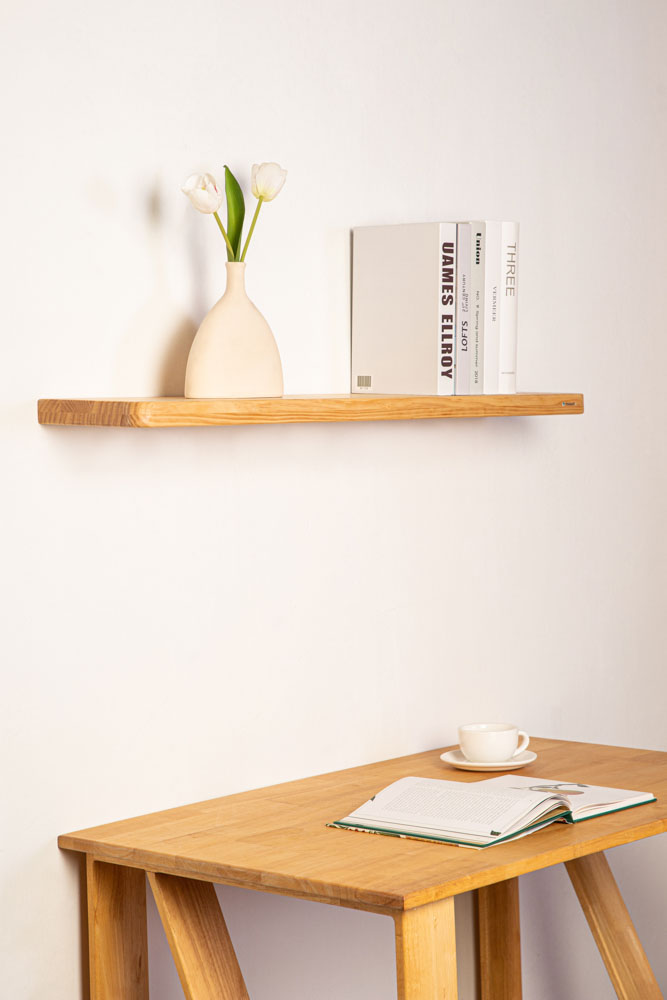
For walls where a full bookcase feels like overkill, solid wood floating shelves are worth considering. They mount directly to the wall, so they save floor space entirely, and they work well above a desk, beside a doorway, or in a narrow corridor where a freestanding unit wouldn’t fit. They do require drilling into the wall, but that’s a far simpler job than full carpentry. At Myseat.sg, our wall-mounted shelves are made from the same solid wood range as our freestanding bookshelves, so you can mix and match both types in the same room if your layout calls for it.

Invisible floating shelf above desk

Making Your Decision

Here’s a quick framework to help you decide:

Factor Built-In Carpentry Freestanding Solid Wood
Material (typical) Plywood + laminate Natural hardwood
Cost (full wall) $2,500 – $8,000 $600 – $2,400 (2-3 units)
Lead time 4 – 8 weeks 1 – 2 weeks
Moveable? No Yes
Repairable? Limited (laminate cannot be refinished) Yes (sand and recoat)
Formaldehyde-free? Depends on material Yes (solid wood + non-toxic finish)
Irregular spaces Best fit (edge finishing still needed) Standard wall layouts only
Resale value None (stays with the flat) Retains value

Neither option is universally better. The right choice depends on your room layout, your renovation timeline, how long you plan to stay in your current home, and whether material quality or seamless integration matters more to you.

At Myseat.sg, we also offer carpentry services with edge finishing for customers who genuinely need the built-in approach. But for most homeowners, we honestly believe a freestanding solid wood bookshelf covers the job well, costs less, and gives you more flexibility in the long run.

Where to Start

If you’re leaning toward a freestanding solid wood bookshelf, it helps to see and touch the actual wood options before deciding. Grain, colour, and weight all feel different in person compared to photos on a screen.

At Myseat.sg, every bookshelf is made from natural solid wood with customisable dimensions, wood type, colour finish, and configurations (open shelves, glass doors, drawers, or a combination). You can browse the full bookshelf collection online or visit the showroom for a hands-on look at the materials and a consultation on sizing for your specific space.

Browse Our Designs

Explore our latest creations, featuring fresh designs and timeless craftsmanship.

Solid woods, solid homes

Become a subscriber

Subscribe to our newsletter for special offers, plus find out new products, trends, and promotions.

Affiliate Links

FOLLOW US

Copyright © 2016-2025 MYSEAT.SG. All rights reserved.

Shopping cart

0
image/svg+xml

No products in the cart.

Continue Shopping
Like What You See?

Join the community to receive updates on latest deals, new launches and inspirations.
Plus, enjoy a special offer just for you.

Before You Go

Subscribe for latest deals, new launches and inspirations.

Plus, enjoy a special offer just for you.

Before You Go

Subscribe for latest deals, new launches and inspirations.

As a token of appreciation, enjoy a special offer just for you.