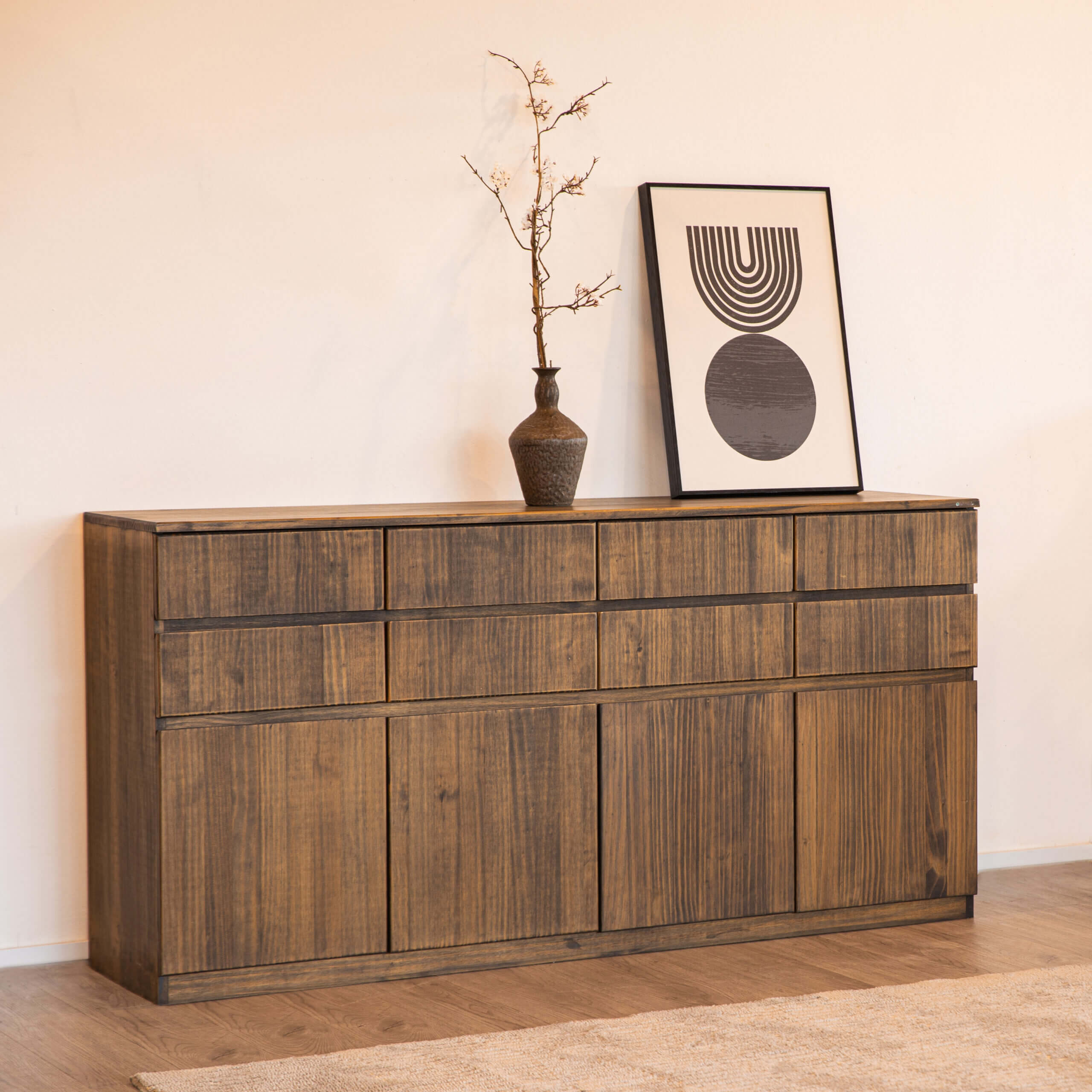
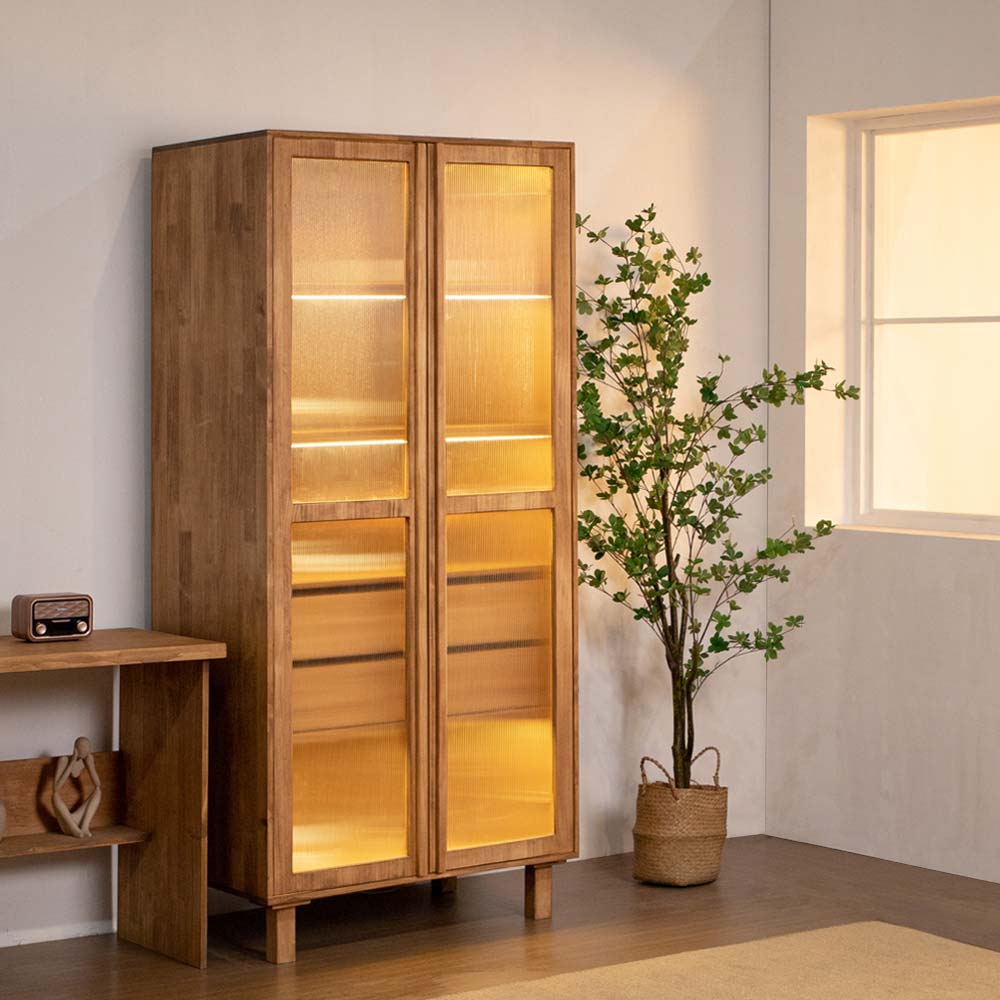
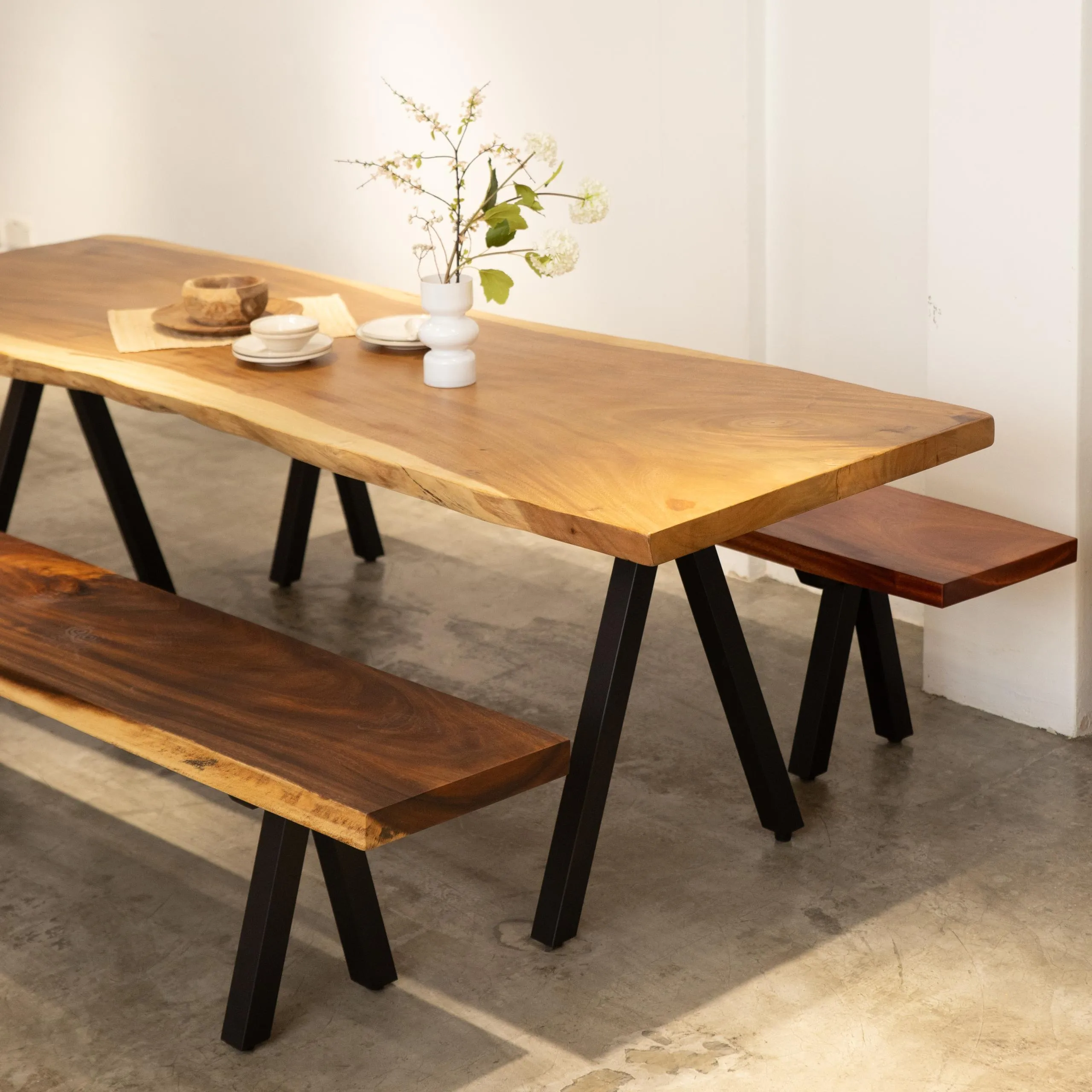
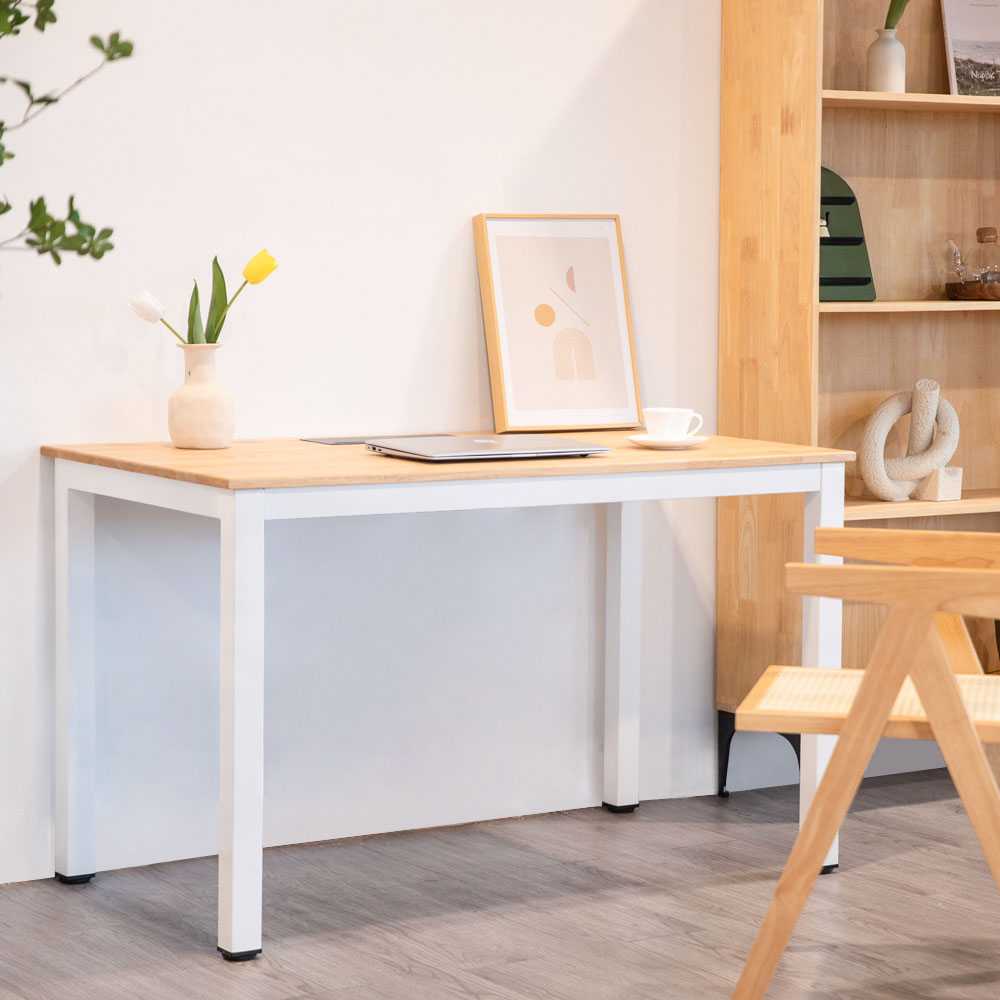
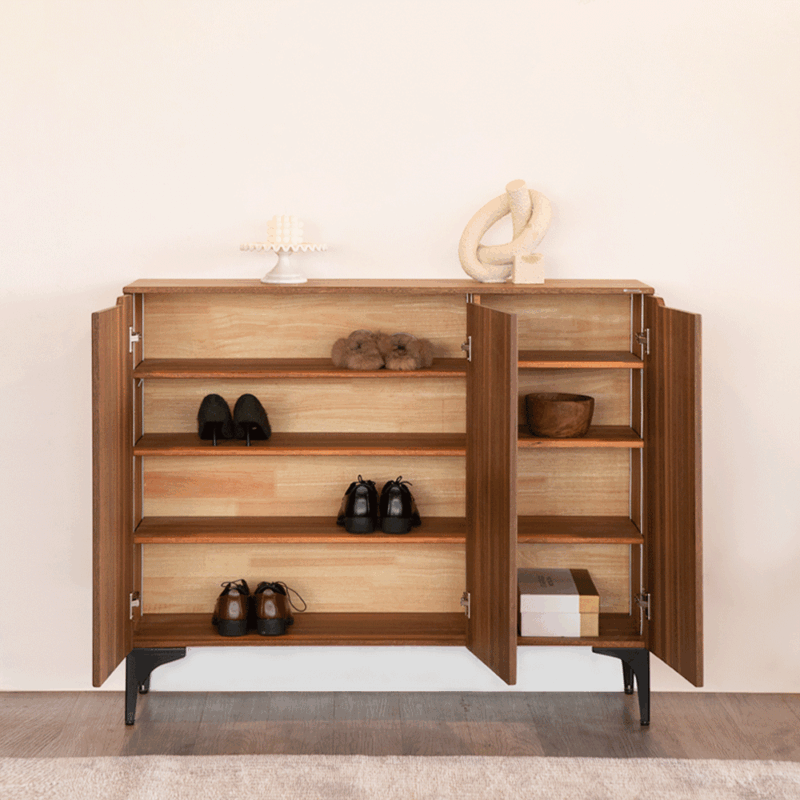
This is where the two materials diverge most sharply, and it’s the single most important factor for furniture placed in a Singapore home.
Singapore’s average relative humidity sits between 80% and 90% year-round. Entryways, where shoe cabinets live, are especially exposed because front doors open directly to humid outdoor air. On top of that, shoes brought in from rain or after a long day carry additional moisture into the cabinet.
How MDF responds to moisture
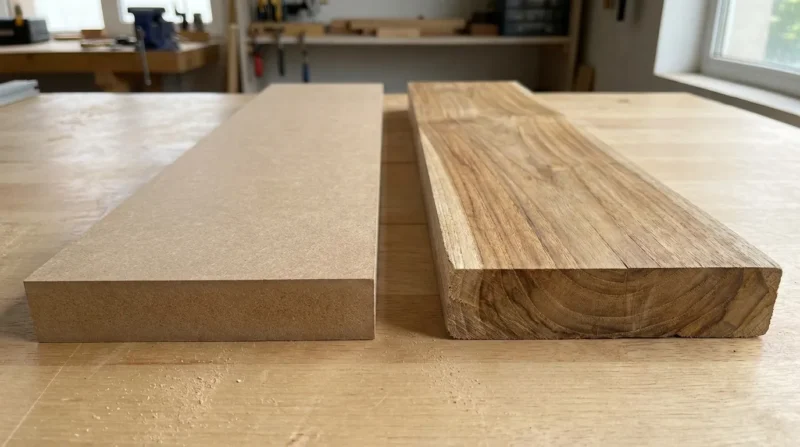
MDF absorbs moisture through any exposed or damaged edge. Once water penetrates the laminate surface (through a chip, scratch, or cut edge that wasn’t properly sealed during manufacturing), the fibreboard core swells irreversibly. You’ve likely seen this before: the bottom shelf of a cabinet bubbling up, door edges warping so they no longer close flush, or the laminate layer peeling away from the board underneath.
This process is gradual, not immediate. A well-made MDF cabinet with fully sealed edges can hold up reasonably well for the first one to two years. But in a humid entryway where damp shoes are stored daily, the degradation tends to accelerate after that point. Replacing a shoe cabinet every two to three years is a common pattern among homeowners who go the budget route.
How solid wood responds to moisture
Wood is a hygroscopic material, meaning it naturally absorbs and releases moisture in response to its environment. However, unlike MDF, this process is reversible. Wood swells slightly in humid conditions and contracts in drier ones (such as in air-conditioned rooms), but it returns to its original dimensions rather than permanently deforming.
Harder tropical hardwoods like rubberwood (Janka hardness rating of 960–1,000) and teak are particularly well-suited to Singapore’s climate because they grew in similar conditions. When finished with a quality sealant such as natural wood wax or water-based lacquer, the surface is protected while the wood itself can still “breathe” at a micro level, helping to regulate moisture inside the cabinet.
This doesn’t mean solid wood is immune to humidity. Prolonged direct contact with standing water will damage any material. But under normal household conditions, solid wood maintains its structural integrity for a decade or longer.