Shoe Cabinet Ideas for Singapore HDB & Condo Homes: A Practical Design Guide

A practical guide to choosing the right shoe cabinet design for Singapore HDB and condo entryways. Covers sizing, features, materials, and layout tips.

If you have ever stood in your entryway staring at a pile of shoes on the floor, wondering how you ended up with more pairs than storage space, you are not alone. In Singapore, where the average HDB entryway is barely a few square metres and shoe collections grow faster than anyone plans for, finding the right shoe cabinet is one of the most common (and most frustrating) furniture decisions homeowners face.

This guide walks you through the main design types, features, and layout considerations that actually matter when choosing a shoe cabinet for a Singapore home. Whether you are moving into a new BTO, renovating a resale flat, or simply replacing a cabinet that has seen better days, the goal here is to help you match the right design to your specific space and lifestyle.

Start With Your Entryway

Before browsing designs, measure your entryway. This sounds obvious, but most shoe cabinet regrets come from skipping this step. Here is what to note:

  • Available wall width (in centimetres, not rough estimates)
  • Corridor depth, meaning the distance from the wall to the opposite wall or obstruction. In many HDB corridors, this is between 90 cm and 120 cm.
  • DB box and electrical panel locations. These protrude from the wall and can block taller cabinets if you do not account for them.
  • Door and gate swing clearance. Both your main door and metal gate need room to open fully without hitting the cabinet.

A standard shoe cabinet depth of 35 cm is the most common for enclosed cabinets that store shoes lying flat. This works well in most HDB and condo entryways without making the corridor feel cramped. If your corridor is particularly narrow (under 100 cm total width), you may want to consider a slim flip-down style at around 20 to 25 cm depth, though these store shoes at an angle and hold fewer pairs per shelf. Most solid wood shoe cabinets, including the ones we make at Myseat.sg, use the 35 cm depth as a practical standard.

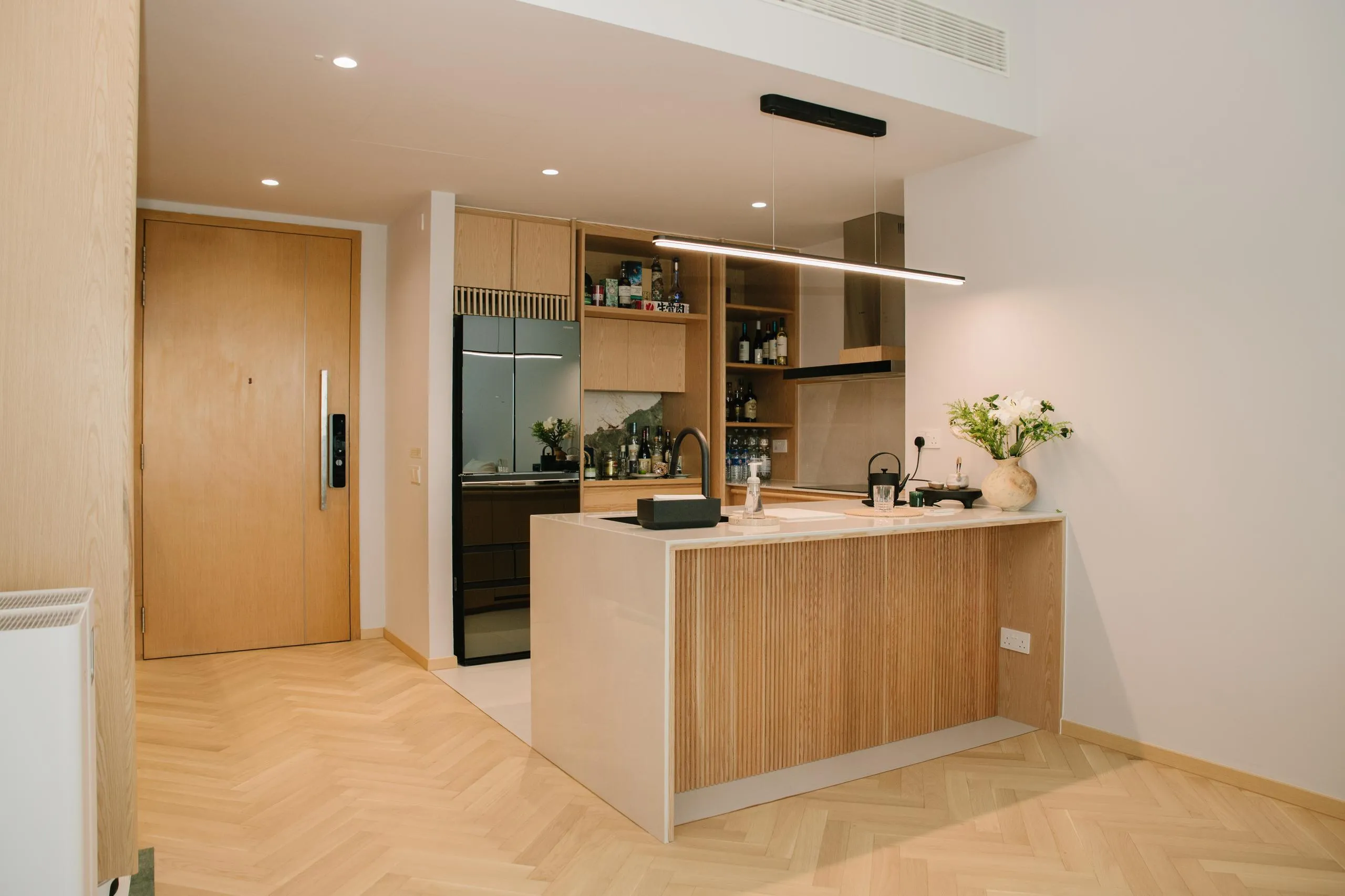
HDB entryway with built-in shoe cabinet

Common Design Types and Who They Suit

Standard Enclosed Cabinets

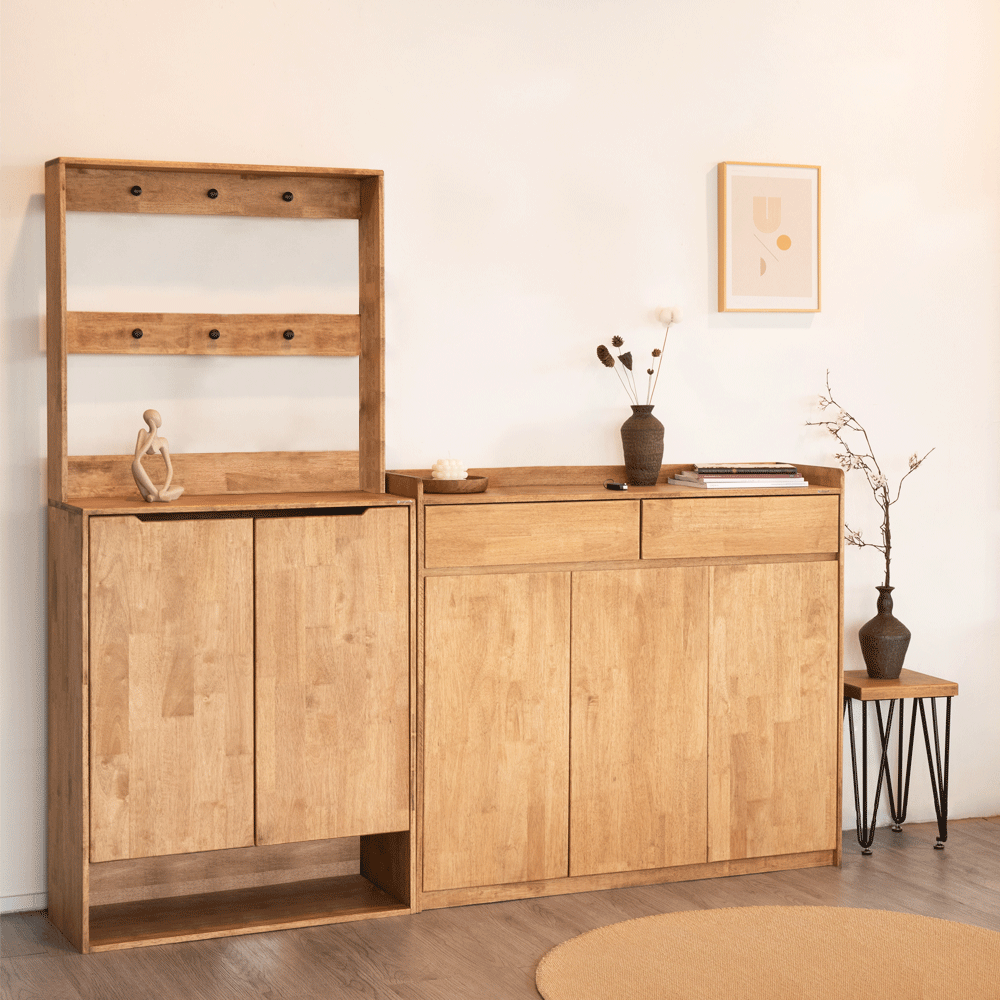
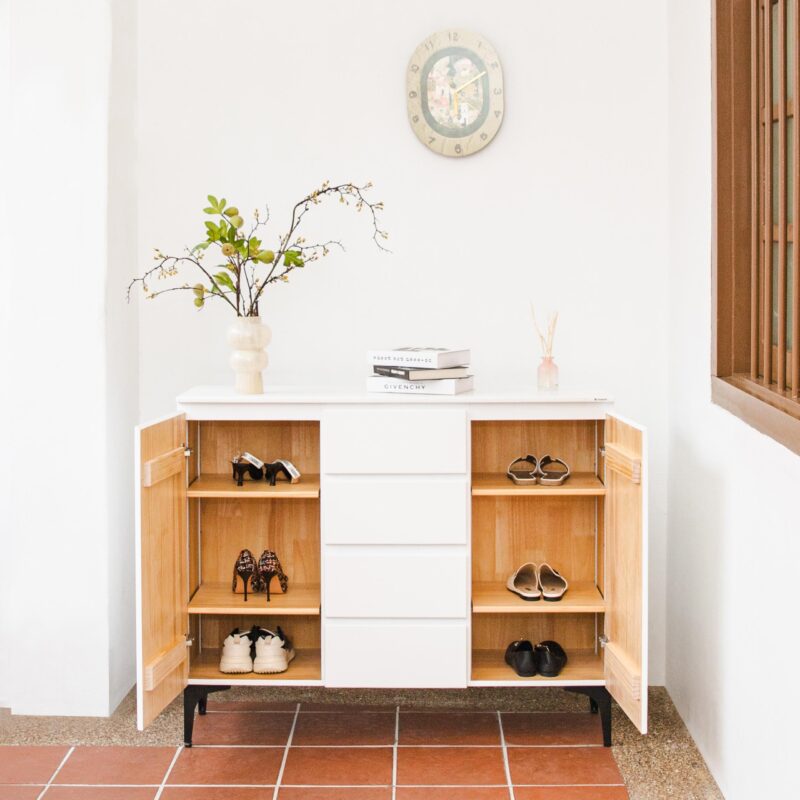
This is the workhorse design: a box with doors, internal shelves, and a clean exterior that hides everything behind a flat panel. Doors can swing open, slide, or use soft-close hinges.

Best for homeowners who want a tidy, clutter-free look. If your entryway is the first thing guests see when they walk in, an enclosed cabinet keeps the visual noise to zero.

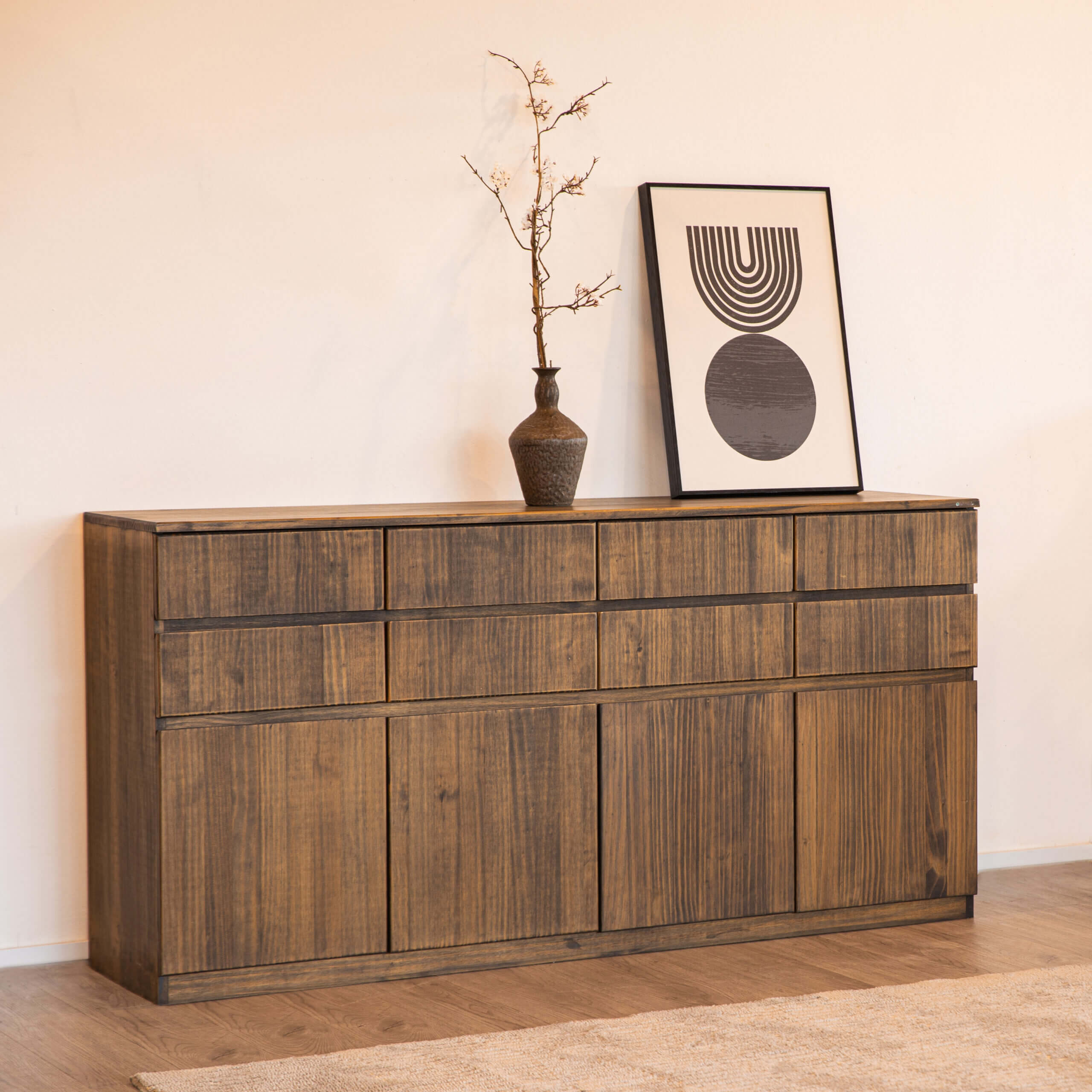
Things to look for: adjustable shelf heights (so you can fit sandals, sneakers, and heels without wasting vertical space), and some form of ventilation, whether through back panel cutouts, louvred sections, or simply leaving the base open.

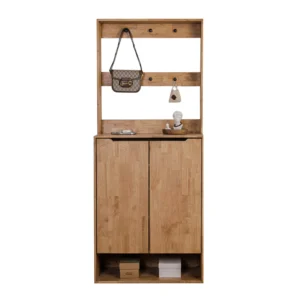
At Myseat.sg, models like the ABELIA and KYLE fall into this category. They use solid wood panels with adjustable internal shelving and elevated legs that allow airflow underneath, which helps in Singapore’s humidity.

Tall / Full-Height Cabinets

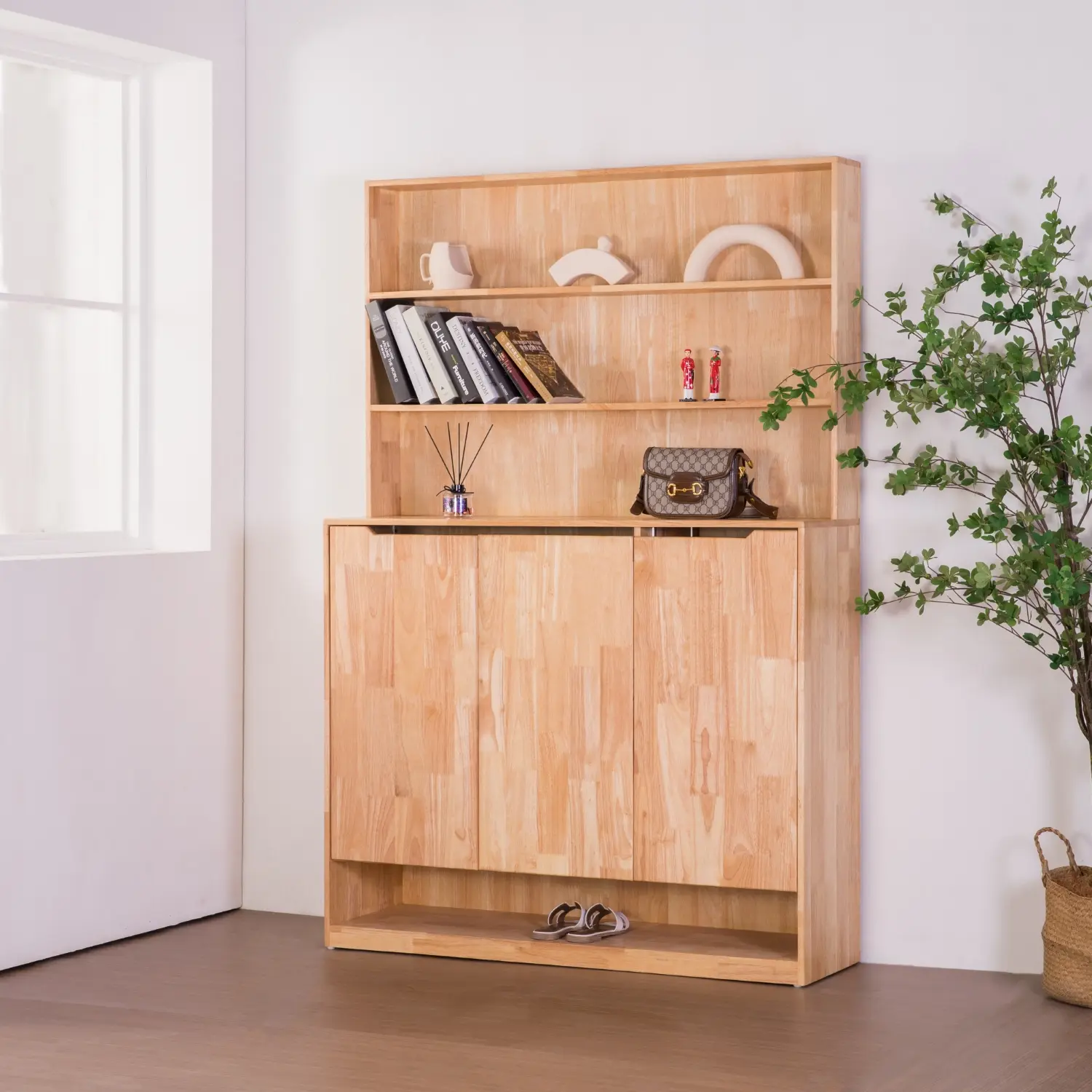
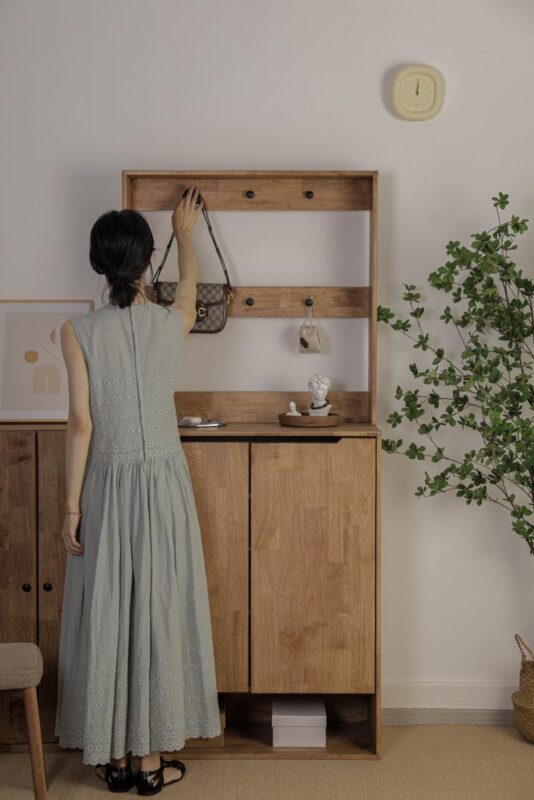
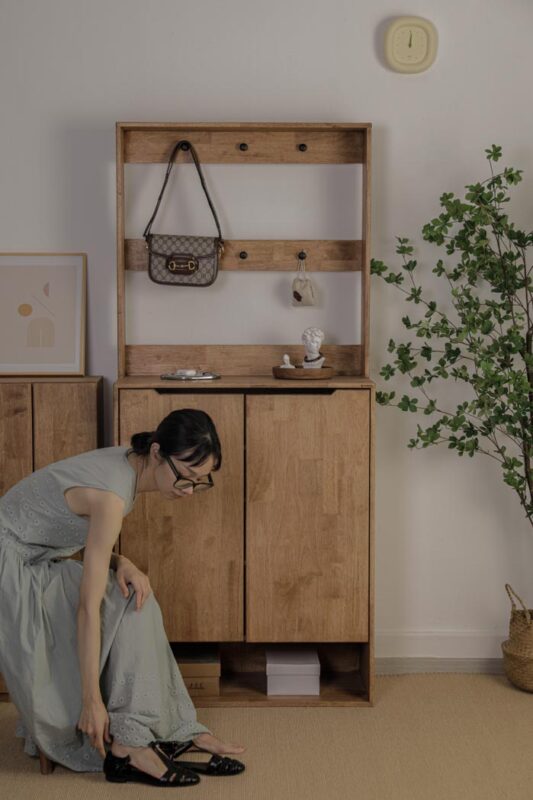
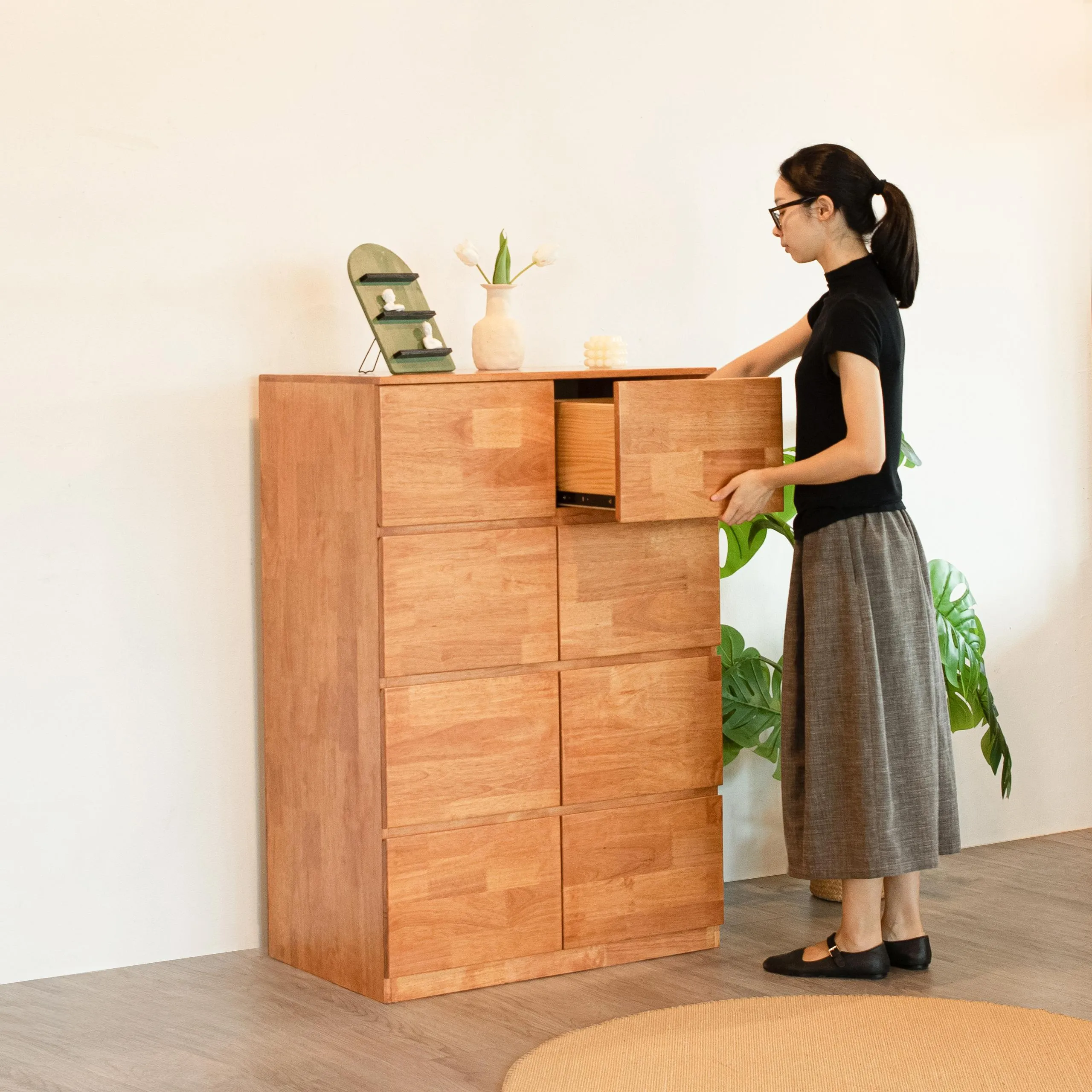
If you have a family of three or more, a standard low cabinet holding 12 to 15 pairs will not be enough. Tall cabinets stretch upward to 150 cm or more, making use of vertical space that would otherwise go empty. They can hold 24 to 36 pairs depending on configuration.

Best for families with larger shoe collections, or anyone who wants to consolidate all footwear into a single piece rather than spreading storage across multiple racks.

One practical note: tall cabinets are heavier and harder to move once placed. Make sure you are confident about the location before installation. Also check that the height clears your DB box or any wall-mounted fittings.

Shoe Cabinets With Bench Seating

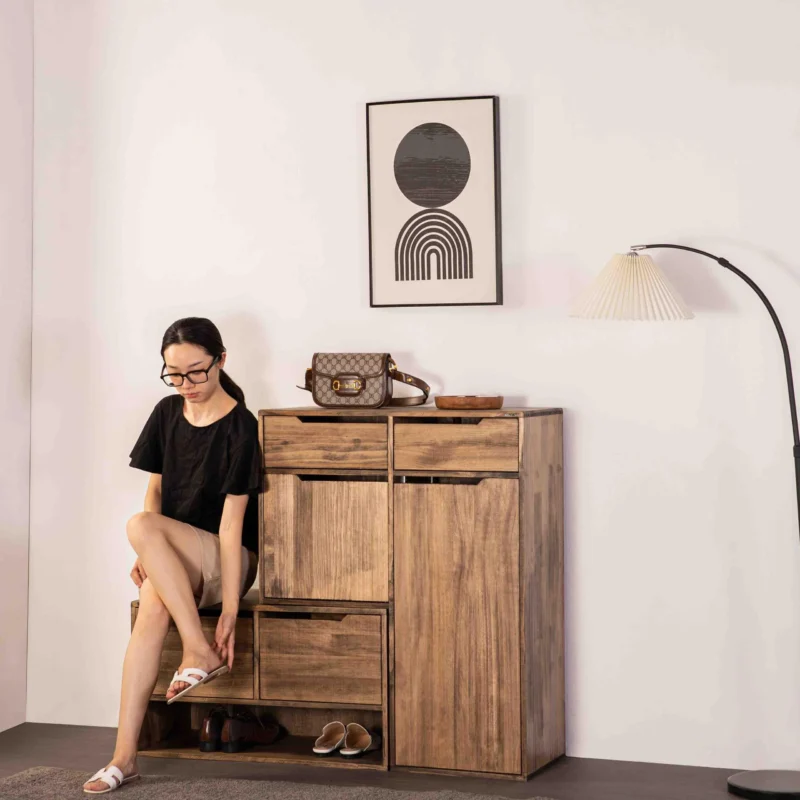
This design combines a shoe cabinet with a flat seating surface on top, sometimes with a cushion. It is one of the more practical designs for Singapore households, especially those with elderly family members or young children who need a stable surface to sit on while putting on or removing shoes.

The bench height is typically around 45 to 50 cm, which is comfortable for most adults. Shoes are stored in a compartment below the seat, often accessed through a front-facing door or an open shelf underneath.

Our KALA and HANSON models follow this bench-style approach. If you have parents or grandparents living with you, this is worth prioritising. It is a small ergonomic detail that makes a noticeable difference in daily routines.

Open Shoe Racks (No Doors)

Open racks skip the enclosure entirely. Shoes sit on exposed shelves, fully visible and fully ventilated.

The advantage is maximum airflow. In Singapore’s humid climate, this is meaningful. Shoes dry faster, and the mould risk that comes with enclosed storage drops significantly. The trade-off is obvious: your entryway looks messier, and shoes collect dust.

Open racks are a good choice if you have a dedicated shoe area that is not immediately visible from the living space, or if you prioritise ventilation above aesthetics. They also tend to be cheaper since there are fewer components.

Slim Flip-Down Cabinets

Flip-down (or tilt-out) designs store shoes vertically behind hinged flap doors. They are the thinnest option available, typically 20 to 25 cm deep, which makes them popular for extremely narrow HDB corridors.

We do not currently make this form factor at Myseat.sg since our solid wood construction works best at the standard 35 cm depth, which allows shoes to lie flat and gives the structure enough material integrity. If your corridor is genuinely too tight for a 35 cm unit, a slim flip-down from another maker may be the more practical choice. Prioritise one with quality hinges (rated for at least 50,000 open/close cycles) since the tilt mechanism takes more mechanical stress than a regular door.

Shoe cabinet with seat design

Features That Matter More Than You Think

Adjustable Shelves

Fixed shelves are the most common source of wasted space inside a shoe cabinet. A pair of flat sandals needs about 10 to 12 cm of vertical clearance. Sneakers need 15 to 18 cm. Heels and ankle boots can need 20 cm or more. If your shelves are fixed at a single height, you either waste space above flat shoes or cannot fit taller footwear at all.

Look for cabinets where shelves can be repositioned in increments. All of Myseat.sg’s shoe cabinets use adjustable shelving so you can configure the internal layout to match your actual collection.

Top Shelf or Surface

A flat top surface on a shoe cabinet is more useful than it looks. It becomes a natural drop zone for keys, wallets, sunglasses, and mail. Some designs include a shallow drawer beneath the top surface for these small items, keeping them contained rather than scattered.

If your entryway does not have a console table, the shoe cabinet top surface effectively fills that role.

Elevated Legs vs. Flush Base

Cabinets with raised legs (typically 10 to 15 cm off the ground) offer two benefits: airflow underneath the unit, and easier floor cleaning. You can sweep or vacuum beneath the cabinet without moving it.

Flush-base (no leg) designs sit directly on the floor. They look more like a built-in piece and can feel more anchored, but they trap dust and moisture underneath, which is not ideal in a humid climate. For Singapore homes, elevated legs are generally the better choice unless you have a specific aesthetic reason to go flush.

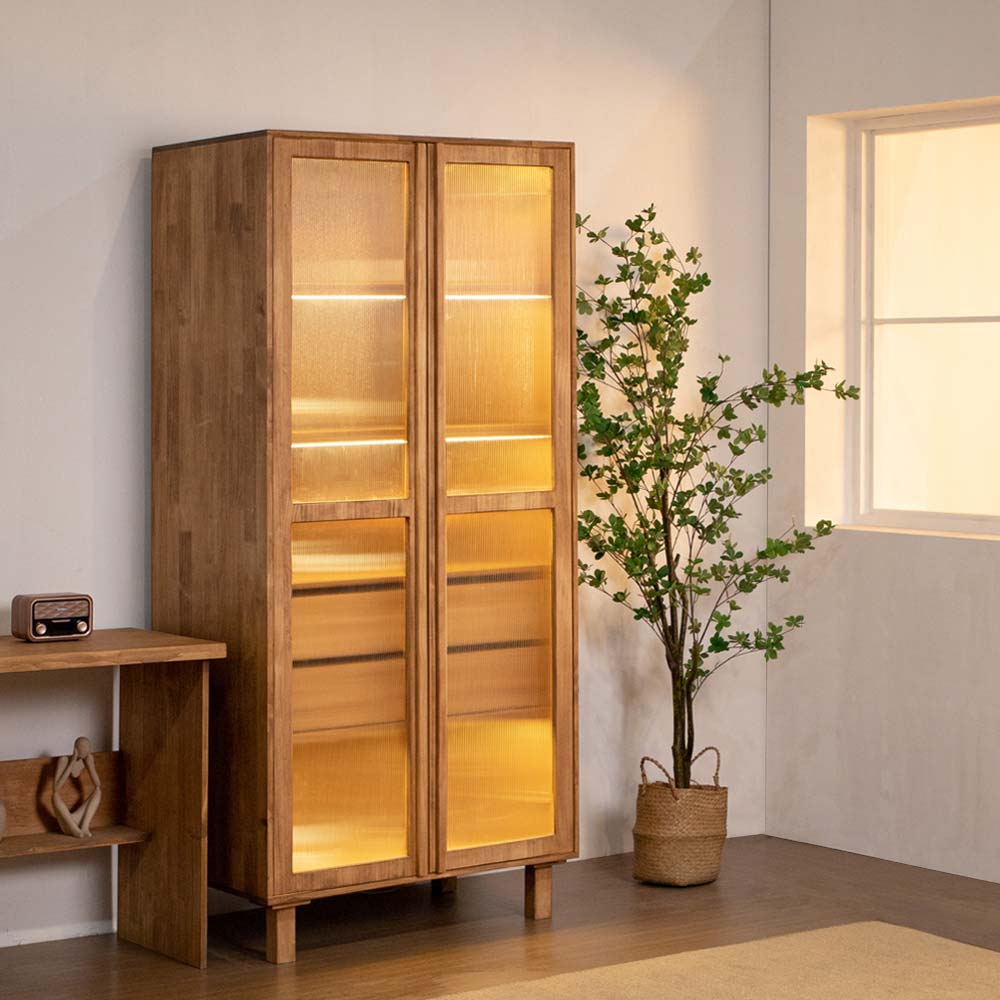
Fluted Panel Detailing

A small aesthetic detail that has become popular in Singapore interiors: fluted (vertically grooved) front panels on cabinet doors. This adds visual texture to an otherwise flat surface without making the design busy. It pairs well with Scandinavian and Japandi interior styles, which remain the dominant aesthetic in Singapore residential design.

Myseat.sg offers fluted panel options on select shoe cabinet models for homeowners who want that added tactile quality.

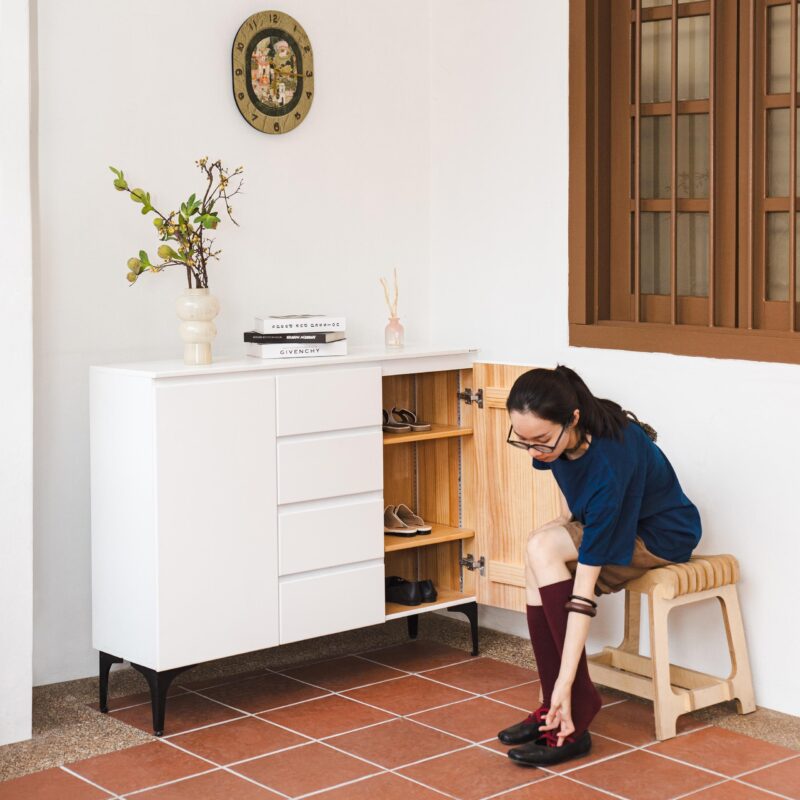
Drawer Integration

Some shoe cabinet designs include one or two pull-out drawers, either at the top or integrated into the main body. These are useful for storing shoe care items (brushes, polish, insoles), or small entryway essentials. It is not a must-have, but if your entryway lacks any other storage furniture, having a drawer saves you from adding a separate organiser.

adjustable shoe cabinet with drawers on elevated legs

Matching the Design to Your Home Type

3-Room or 4-Room BTO

Entryways in newer BTO flats tend to be compact. A standard-width cabinet (80 to 100 cm) at 35 cm depth fits most layouts without blocking movement. If you have a family of two to three, a mid-height cabinet (around 90 to 120 cm tall) should handle 15 to 24 pairs comfortably. Consider a model with a bench seat if you do not have space for a separate entryway stool.

5-Room BTO or Executive Flat

More generous entryway space allows for a taller or wider unit. A full-height cabinet or a combination of a shoe cabinet plus a small console is feasible here. Families of four or more should plan for at least 30-pair capacity.

Resale HDB

Layouts vary significantly in older resale flats. Some have unexpectedly deep alcoves or corner niches beside the front door that suit a tall, narrow cabinet perfectly (this is actually the scenario a HardwareZone forum user described when asking about custom shoe cabinet options). This is where custom sizing becomes genuinely valuable. Measure the niche precisely and look for a maker who can build to those exact dimensions rather than forcing a standard size into an awkward gap.

Condo

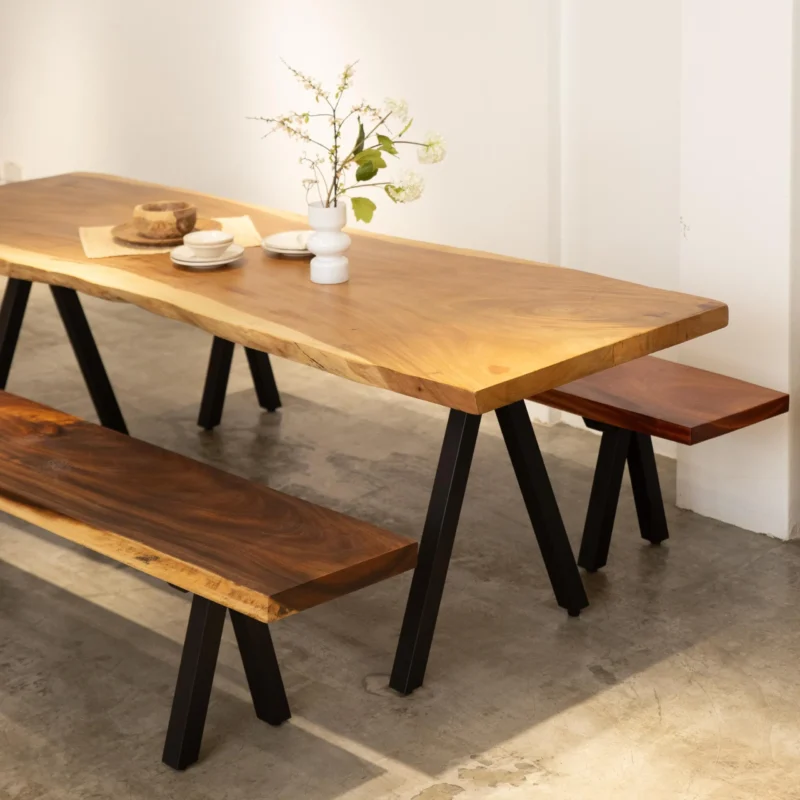
Condo entryways are often wider but shallower than HDB corridors. The foyer area may be open-plan to the living room, which means the shoe cabinet is not just functional storage; it is visible furniture. Design and finish quality matter more here. Solid wood in a warm oak or walnut tone, with clean detailing like fluted panels or handle-free push-to-open doors, tends to integrate well with contemporary condo interiors.

A Note on Materials and Longevity

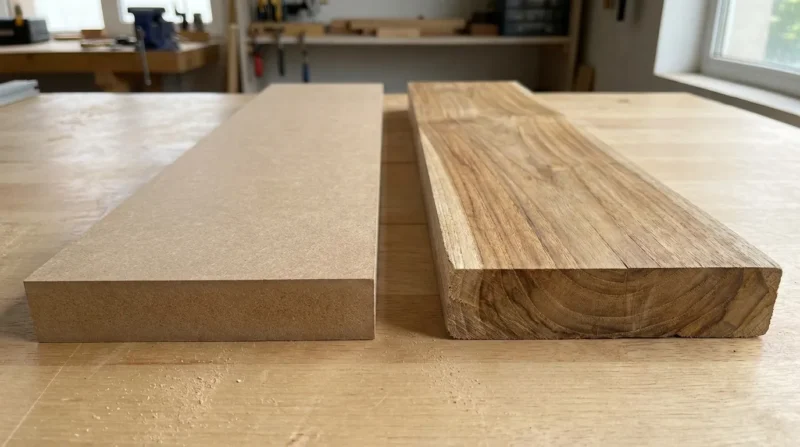
This guide is focused on design and layout, but material choice is just as important. In Singapore’s climate, where humidity regularly exceeds 80%, enclosed shoe cabinets made from particleboard or MDF are prone to moisture swelling, edge peeling, and mould growth, particularly when damp shoes are stored inside.

Solid wood handles humidity better because it is naturally porous. It absorbs and releases small amounts of moisture rather than trapping it against a sealed laminate surface. Paired with a natural wood wax finish that is free of formaldehyde and volatile chemicals, a solid wood cabinet is both more durable and safer for households with children.

All Myseat.sg shoe cabinets are made from FSC-certified solid wood with a choice of seven wood types, from rubberwood at the accessible end to black walnut at the premium end. Each can be stained in different colour finishes to match your interior. They come with a 10-year warranty, which reflects how long we expect them to last, well beyond the two to three year replacement cycle that is common with lower-cost alternatives.

If you would like to go deeper on material comparisons, we have covered the differences between solid wood and MDF in more detail here.

MDF vs solid wood
MDF vs solid wood

Finding the Right Fit

The best shoe cabinet is the one that matches your actual entryway dimensions, holds your real shoe count, and is built from materials that can handle Singapore’s conditions year after year. Everything else, including the style, finish, and features, should follow from those fundamentals.
If you are still unsure about what design suits your home, Myseat.sg’s showroom team offers complimentary consultations where you can see and touch the different wood types, discuss custom sizing, and work through layout options with a sales designer. Walk-ins are welcome, or you can browse the shoe cabinet collection online to see what is available. Custom modifications on dimensions and features are standard for us, so if you need something slightly different from what you see, just ask.

Shop Our Designs

Explore our latest creations, featuring fresh designs and timeless craftsmanship.

Solid woods, solid homes

Become a subscriber

Subscribe to our newsletter for special offers, plus find out new products, trends, and promotions.

Affiliate Links

FOLLOW US

Copyright © 2016-2025 MYSEAT.SG. All rights reserved.

Shopping cart

0
image/svg+xml

No products in the cart.

Continue Shopping
Like What You See?

Join the community to receive updates on latest deals, new launches and inspirations.

Plus, enjoy a special offer just for you.

Before You Go

Subscribe for latest deals, new launches and inspirations.

Plus, enjoy a special offer just for you.

Before You Go

Subscribe for latest deals, new launches and inspirations.

As a token of appreciation, enjoy a special offer just for you.