E0 Standard Furniture Explained: What Every Homeowner Should Know
As awareness grows around air quality and home health, especially in humid environments like Singapore, more homeowners are choosing formaldehyde-free furniture. Labels like E0 and now ENF are becoming more common—but what do they really mean?
This article breaks down what these emission standards are, what they mean for your family’s health, and why solid wood furniture is the gold standard for eco-conscious buyers.
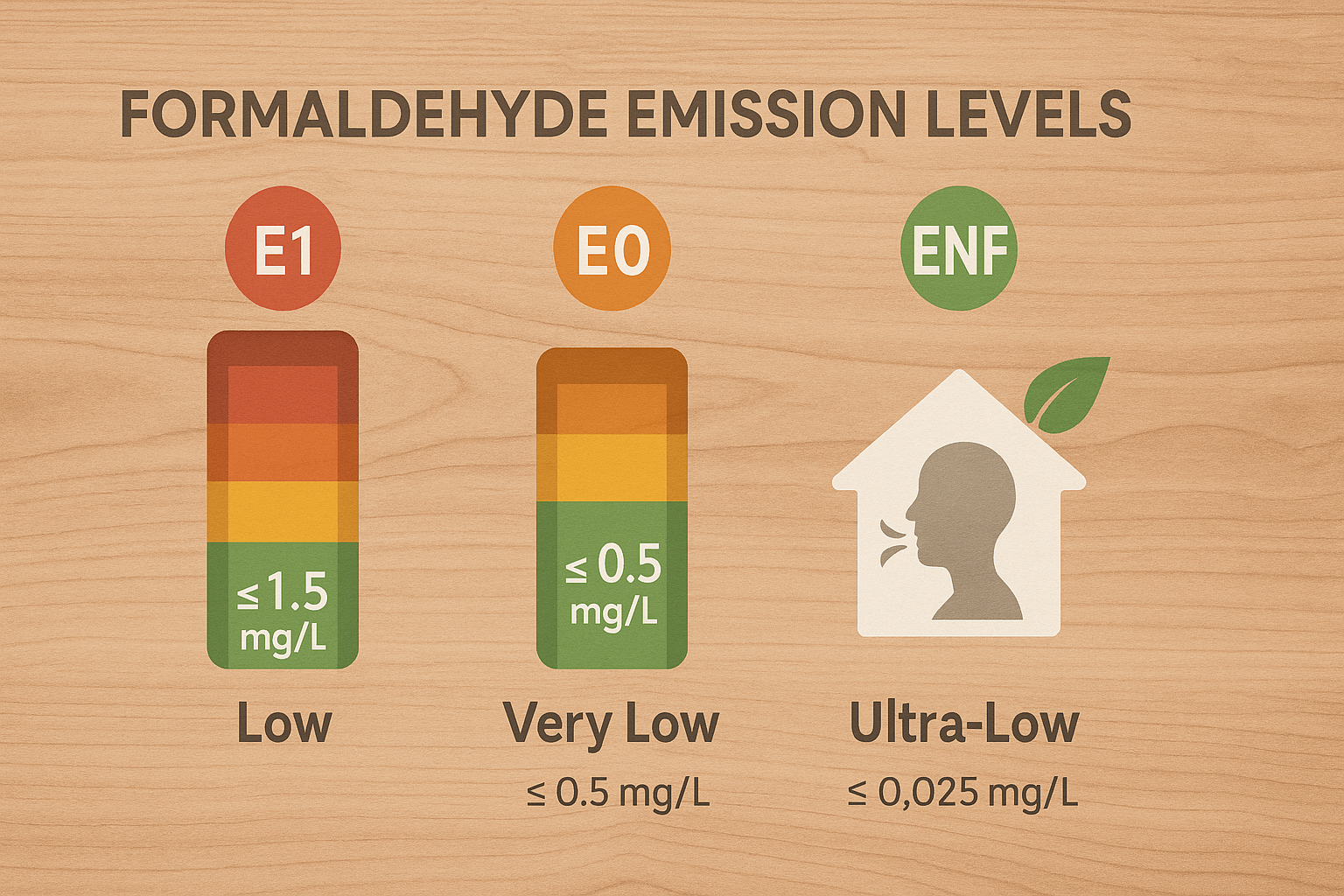
Formaldehyde Emission Levels for Furniture in Singapore
What Is E0 Standard?
The E0 standard is a low-formaldehyde emission rating commonly used for furniture materials and wood-based panels.
It means the material releases a lower level of formaldehyde compared with standard engineered boards. This makes E0 furniture a better choice for bedrooms, children’s rooms, study areas, and modern homes where ventilation may be limited.
For homeowners in Singapore, E0-certified furniture can help reduce indoor air pollution, especially in homes that are often enclosed and air-conditioned for long hours.
Introducing the ENF Grade: An Ultra-Low Formaldehyde Standard
While E0 is already considered a low-emission option, ENF grade takes it one step further.
ENF stands for Extremely Low Formaldehyde. It refers to an ultra-low formaldehyde emission standard for wood-based materials.
ENF-grade materials are especially suitable for families who are more concerned about indoor air quality, such as households with young children, elderly family members, pets, or people with allergies and respiratory sensitivity.
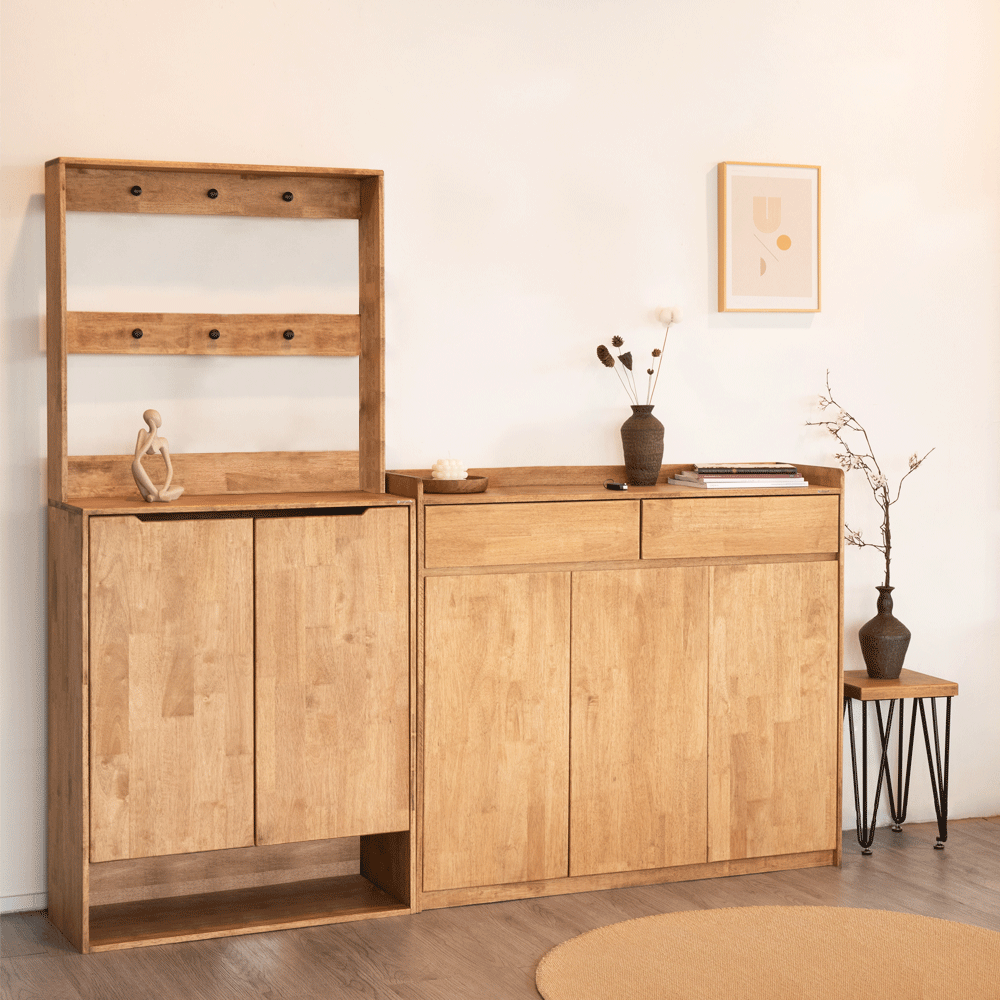
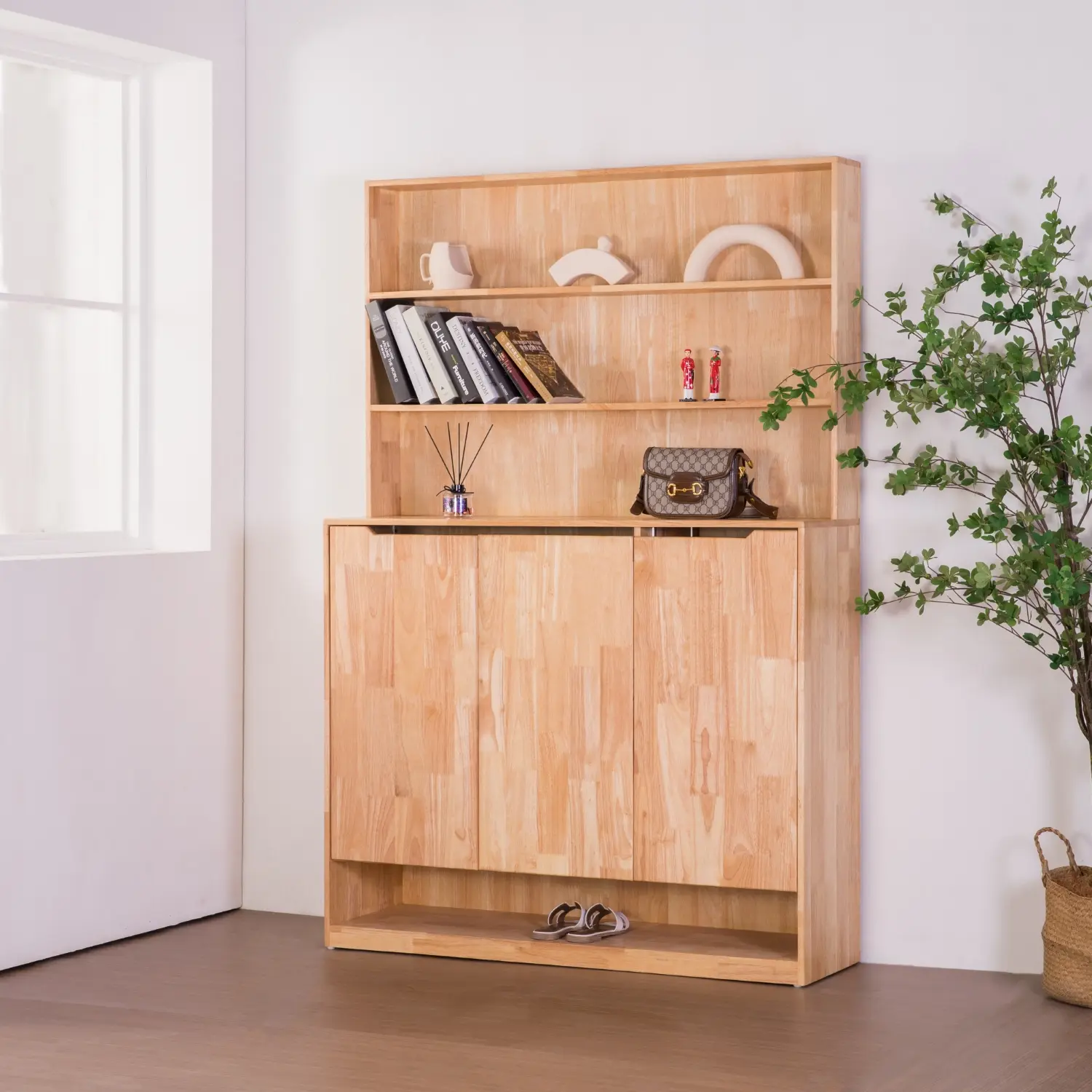
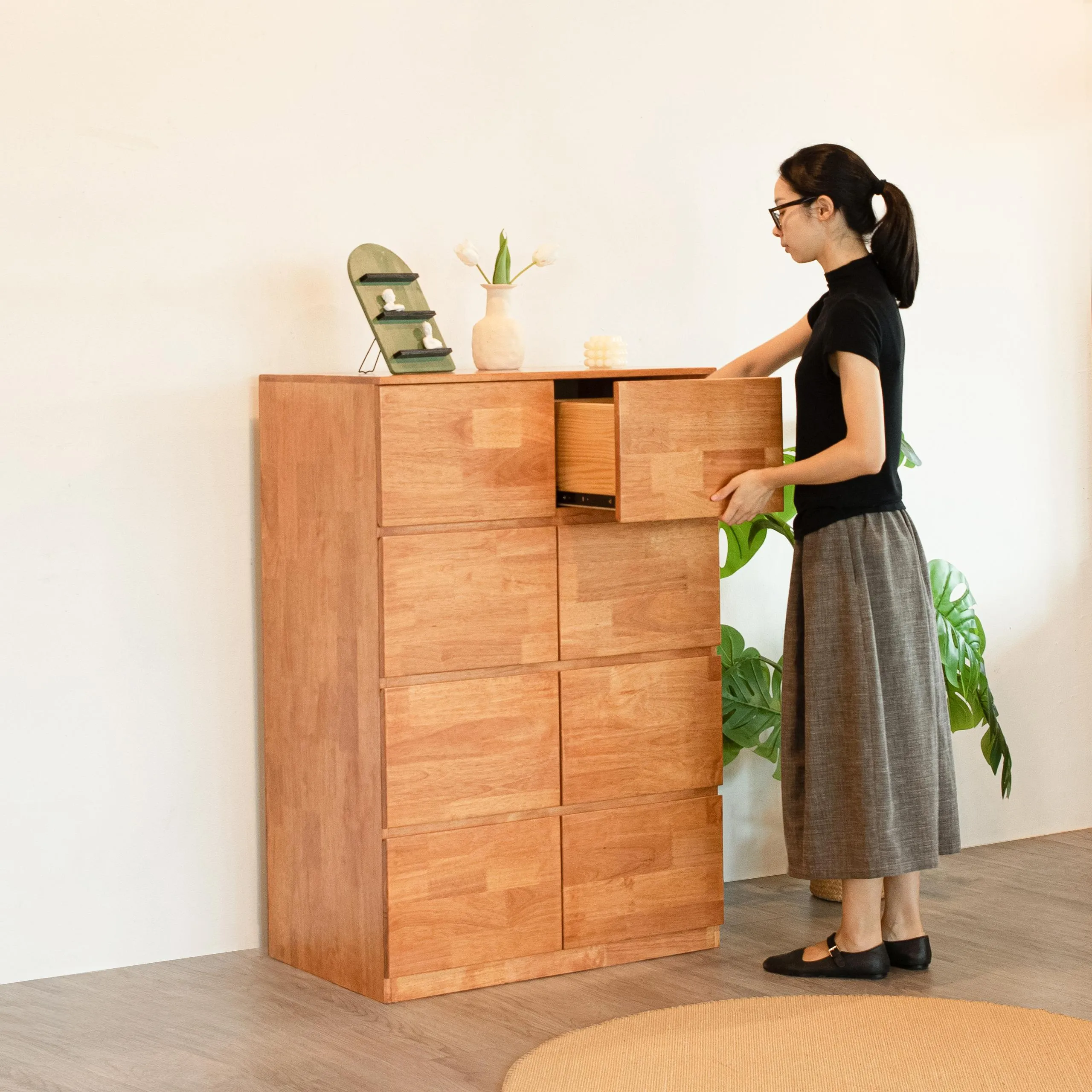
Good News: Solid Wood Is Naturally Low in Formaldehyde
Unlike engineered wood such as MDF, particleboard, or plywood, solid wood does not rely heavily on glue, resin, or synthetic binders to form the main board structure.
Because of this, solid wood is naturally low in formaldehyde. When finished with safer options such as water-based coating, natural oil, or low-VOC finishes, its formaldehyde emission can be very low.
This makes solid wood furniture one of the best choices for homeowners who want safer, healthier, and longer-lasting furniture.
enf-certified-e0-furniture-product-tag-singapore
Why Does This Matter in Singapore?
Singapore homes often have limited ventilation because many households use air-conditioning and keep windows closed for long periods.
Over time, indoor pollutants from furniture, flooring, cabinets, adhesives, paints, and renovation materials may build up inside the home.
Choosing E0, ENF, or solid wood furniture can help improve indoor air quality and reduce unnecessary exposure to formaldehyde.
This is especially important for children, seniors, pets, and people who are sensitive to odours, allergies, or breathing discomfort.
Choosing E0 or ENF Furniture in Singapore Helps To:
Improve long-term indoor air quality.
Protect children, seniors, pets, and sensitive family members.
Reduce exposure to unnecessary formaldehyde emissions.
Minimise strong chemical odours from lower-grade engineered boards.
Create a healthier and more comfortable living environment.
Support a more eco-conscious furniture choice.
How to Recognise E0 or ENF Furniture
Look for clear labels such as E0, ENF, CARB Phase 2 compliant, EPA TSCA Title VI, or low-VOC certification.
Ask your furniture supplier what material is being used. Solid wood, plywood, MDF, and particleboard are not the same.
Where possible, request lab reports or formaldehyde emission test results.
Choose furniture with safer finishes such as water-based coating, natural oil, or low-VOC finishing.
Be careful with vague terms such as “eco board”, “green board”, or “formaldehyde-free” if there is no supporting information.
Formaldehyde Emission Comparison
Grade
Max Emission
Common In
E2
≤ 5.0 mg/L
Outdated, rarely used now
E1
≤ 1.5 mg/L
Standard particleboard
E0
≤ 0.5 mg/L
Premium engineered boards
ENF
≤ 0.025 mg/m³
Top-grade, ultra-low emission
FAQ
1. What is ENF grade furniture?
ENF grade furniture refers to furniture made with ultra-low-formaldehyde materials. It is stricter than E0 and is suitable for health-conscious households, especially bedrooms, nurseries, and children’s rooms.
2. Does solid wood meet E0 or ENF standards?
Solid wood is naturally very low in formaldehyde because it does not rely on synthetic adhesives to form the main board structure.
With safer finishes such as water-based coating, natural oil, or low-VOC finishing, solid wood furniture is one of the best choices for homeowners looking for low-formaldehyde furniture in Singapore.
3. How is ENF different from E0?
E0 is a low-formaldehyde emission grade, while ENF is an even stricter ultra-low-formaldehyde emission grade.
In simple terms, ENF has a lower emission limit than E0, making it a better choice for homeowners who want stronger indoor air quality protection.
4. Why are low-emission standards important in Singapore?
Singapore’s humid climate and air-conditioned homes often mean windows stay closed for long hours. This can trap indoor pollutants inside the home.
Choosing E0, ENF, or solid wood furniture helps reduce formaldehyde exposure and supports cleaner indoor air, especially in long-term air-conditioned environments.
5. Is ENF-certified furniture worth the price?
Yes, ENF-grade furniture can be worth considering if indoor air quality is a priority.
However, solid wood furniture is also an excellent long-term choice because it is naturally low in formaldehyde, durable, repairable, and long-lasting.